Brazil and US Gain Ground as Spain Loses Share in Japan’s Frozen Pork Market
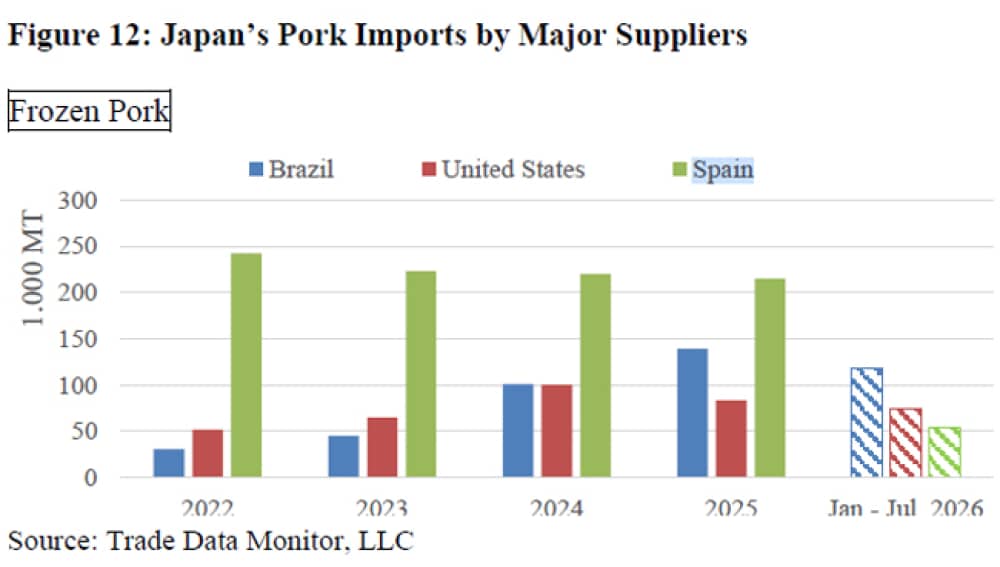
Brazilian and US frozen pork is gaining ground in Japan at the expense of Spanish supply, Eurocarne reports. The shift comes as the USDA expects Japan’s beef production, consumption and imports to decline in 2027, pointing to broader pressure on the country’s meat market.
Supplier competition intensifies in Japan
Brazil and the United States are beginning to displace Spain in Japan’s frozen pork market, according to Eurocarne, which cited a report from the US Department of Agriculture. The development indicates a change in the competitive position of three major pork suppliers in a large import-dependent Asian market.
The available report summary does not provide import volumes, prices or market shares for the three suppliers. It nevertheless identifies a clear direction: Brazilian and US product is gaining ground while Spain is losing part of its position. For exporters, the shift matters because frozen pork contracts are shaped not only by production costs but also by freight, exchange rates, specifications and the ability to provide consistent volumes.
Spain has built an important presence in international pork markets, while Brazil and the United States operate large export-oriented industries. Stronger competition from both origins gives Japanese buyers more options when negotiating supply. Spanish processors and traders, meanwhile, face greater pressure to defend customer relationships and match the commercial terms offered by their American competitors.
Demand pressure extends across the meat market
The supplier shift is taking place against a weaker outlook for Japan’s broader meat sector. According to the USDA report cited by Eurocarne, Japanese beef production, consumption and imports are all expected to decline in 2027. The report summary says three factors are behind that contraction, but the available source material does not identify them.
The beef forecast does not establish that pork demand will fall by the same measure. It does, however, show that Japanese meat consumption and procurement are operating in a more difficult environment. When total demand is under pressure, importers can become more selective on price, cut inventories or redistribute purchases among suppliers without increasing overall import requirements.
That distinction is important for interpreting the gains made by Brazil and the United States. A larger supplier share does not necessarily mean that Japan’s frozen pork market is expanding. It may instead reflect substitution within an existing or contracting pool of demand, with one origin gaining the business lost by another.
Commercial implications for exporters
For Spain, the immediate issue is whether the loss of ground is temporary or becomes embedded in Japanese purchasing patterns. Restoring competitiveness could require changes in pricing, product mix, logistics or customer terms, although the source material does not specify which factor is driving the movement. Any sustained reduction in Japanese orders would increase the importance of alternative destinations for Spanish frozen pork.
Brazilian and US suppliers have an opportunity to consolidate their gains, but they will still be exposed to Japan’s underlying demand outlook. Importers and distributors will watch whether the supplier shift affects landed prices, contract duration and inventory strategy. Producers and processors across all three exporting countries will need to distinguish genuine demand growth from a redistribution of market share as Japan approaches the weaker meat-market conditions forecast for 2027.