Brazil suspension and US tariff pause redirect global beef trade
The European Union is suspending Brazilian beef imports from September 3 over insufficient guarantees on antibiotic compliance. Meanwhile, a 90-day US tariff suspension could draw 300,000 tonnes of beef from Brazil and Mexico into the ground-beef market.
EU suspends Brazilian beef imports
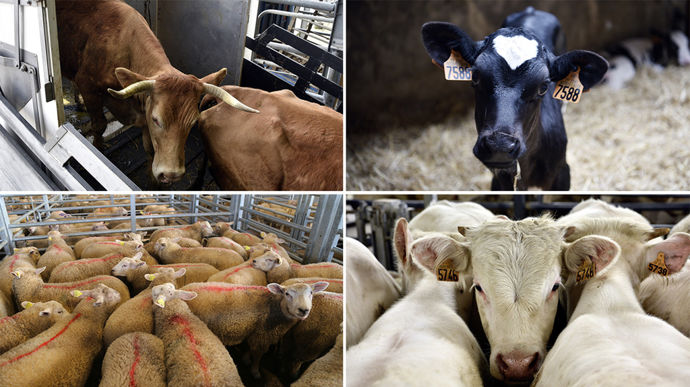
The European Union is suspending imports of Brazilian beef from Thursday, September 3, after the European Commission concluded that Brazil had not provided sufficient guarantees that its products complied with EU rules on antibiotic use in livestock farming, La France Agricole reported. The measure follows a summer in which imported volumes, particularly from Brazil, disrupted the European young-cattle market and affected prices across other cattle categories.
The suspension reduces immediate pressure on EU livestock farmers but does not close the European market to Mercosur beef. Argentina, Uruguay and Paraguay are not covered by the measure. Large trading companies can therefore redirect procurement toward those origins while Brazilian suppliers await clarity on whether the restriction will remain temporary. South American processors have also prepared to meet European standards, and lower customs duties have encouraged imports of both premium cuts and lower-value meat used in ground beef.
US demand opens another outlet
At the same time, a sharp contraction in the US cattle herd is driving strong beef-price inflation. Donald Trump has announced a temporary 90-day suspension of import tariffs, according to La France Agricole. Brazil and Mexico are positioned to supply 300,000 tonnes intended for the US ground-beef segment. The policy could provide Brazilian exporters with an alternative destination as access to the EU is restricted.
These decisions illustrate how quickly trade policy can alter flows in a market dominated by a small group of large producing countries. Europe still has a substantial production deficit, while the United States needs imported material for processing. In the EU, free-trade agreements that attract less public attention collectively bring significant volumes into the bloc. France is exposed even when imported meat does not appear directly in French shops because those supplies compete with French products in neighbouring European markets.
French cattle prices remain firm
Meat trading has strengthened in recent weeks, supported by back-to-school promotions and renewed activity at abattoirs. However, school canteens and large contract-catering groups remain under pressure from persistent inflation and limited budgets. Meat is increasingly removed from menus for cost reasons and because establishments must offer meat-free meals. Demand for slaughter cattle is moving without major difficulty but also without a strong acceleration.
Standard Charolais heifers and young cows are trading steadily, with prices for standard cattle stable at €6.70-€7.00 per kilogram. Prim’Holstein P+ cows are around €5.25 per kilogram. Young-cattle exports remain uncertain amid Brazilian competition, although the EU suspension could change that balance. Good Charolais, Limousin and Blonde d’Aquitaine feeder males below 380 kilograms are firming after substantial recent declines; animals weighing 300-350 kilograms trade at €5.00-€5.30 per kilogram, while heavier cattle remain near €4.80. Export-suitable females weighing 280-350 kilograms are scarce and hold near €5.20 per kilogram for Italy. Standard dairy calves fetch €150-€180, while dairy crosses and Montbéliards trade at €250-€400, reaching €500 for good heavy animals. Demand from Spain, Italy and Poland remains active, but higher finishing costs and uncertainty over silage-maize quality and volumes continue to constrain buyers.