Brazil soy crushing capacity rises 13.1% as R$7.65 billion investment pipeline advances
Brazil’s installed soybean processing capacity reached 86.4 million tonnes a year in 2026, up 13.1% from 2025. Planned investments of R$7.65 billion could add another 7.4 million tonnes of annual capacity within 12 months.
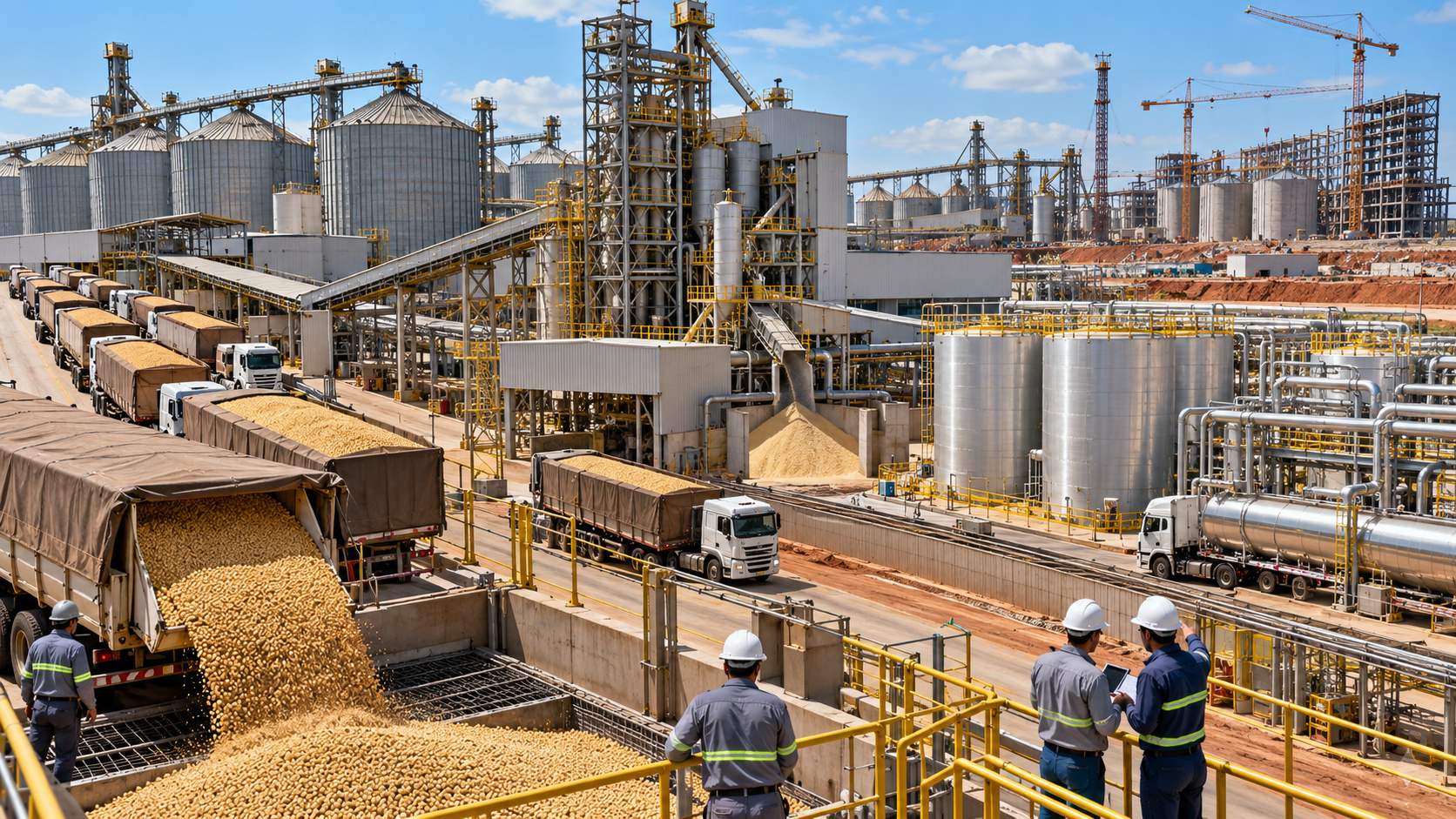
Capacity reaches 86.4 million tonnes
Brazil’s installed soybean processing capacity rose 13.1% in one year to 86.4 million tonnes annually in 2026, according to an annual survey by the Brazilian Association of Vegetable Oil Industries, Abiove, released on October 6. Click Petróleo e Gás reported that the increase amounted to approximately 10 million tonnes compared with capacity of about 76.4 million tonnes in 2025.
The number of active processing plants increased from 131 to 148 over the same period. Idle facilities fell from 12 to six, while the survey identified three plants under construction. The figures indicate that the expansion came from both additional operating sites and investment in the country’s industrial base, rather than solely from productivity improvements at existing facilities.
The Center-West accounts for 42.9% of national processing capacity, reflecting the concentration of soybean production in the region. Mato Grosso alone represents 21.6%, the largest share among Brazilian states. Locating crushing plants near farms can reduce the distance travelled by raw soybeans while shifting more storage, energy, transport and industrial-service demand into producing regions.
R$7.65 billion pipeline could add 7.4 million tonnes
Abiove has identified approximately R$7.65 billion in announced investments covering new factories and expansions of existing plants. If the projects proceed within the association’s 12-month horizon, they could add 7.4 million tonnes of annual processing capacity and take Brazil’s total close to 93.8 million tonnes. The investment estimate stood at approximately R$5.76 billion in 2025.
The projected additions remain separate from the capacity already operating in 2026. This distinction matters because installed capacity is rising faster than actual crushing. Abiove expects processors to crush a record 63.5 million tonnes of soybeans in 2026, compared with a projected 58.5 million tonnes in 2025. Capacity therefore increased by approximately 10 million tonnes, while expected processing grew by about 5 million tonnes.
The gap does not translate directly into equivalent idle capacity. Nominal annual capacity and actual output are affected differently by maintenance shutdowns, seasonality, regional availability of soybeans and plant operating rates. It does, however, show that companies are creating room to handle considerably more grain than the industry currently processes.
Biodiesel and animal feed underpin demand
Daniel Furlan Amaral, Abiove’s director of economics and regulatory affairs, linked growth of more than 13% to stronger demand for soybean meal and oil. Soybean oil remains Brazil’s principal biodiesel feedstock, meaning higher biofuel demand increases the need for vegetable oil and, in turn, for soybean crushing. The same process produces meal used in animal feed for the country’s poultry, pork and other protein industries.
This combination gives processors access to energy, food, feed and export markets from the same raw material. It also strengthens the economic case for processing soybeans domestically rather than shipping only unprocessed beans. The planned projects could create about 13,400 jobs during plant expansion and construction, according to estimates associated with the survey, although construction and subsequent operations require different workforce levels. For producers, traders and investors, the central issue will be whether demand for meal, oil and biodiesel grows quickly enough to absorb the new industrial capacity.