Brazil's sorghum crop climbs to 7.5 million tonnes as China opens and four ethanol plants take the grain
Brazilian sorghum production has risen from about 6 million to roughly 7.5 million tonnes, according to Abramilho figures reported by Click Petróleo e Gás. The opening of the Chinese market pushed exports past 250,000 tonnes in the year to date, against a record 180,000 tonnes in all of 2024, while four ethanol plants now process the cereal alongside corn.
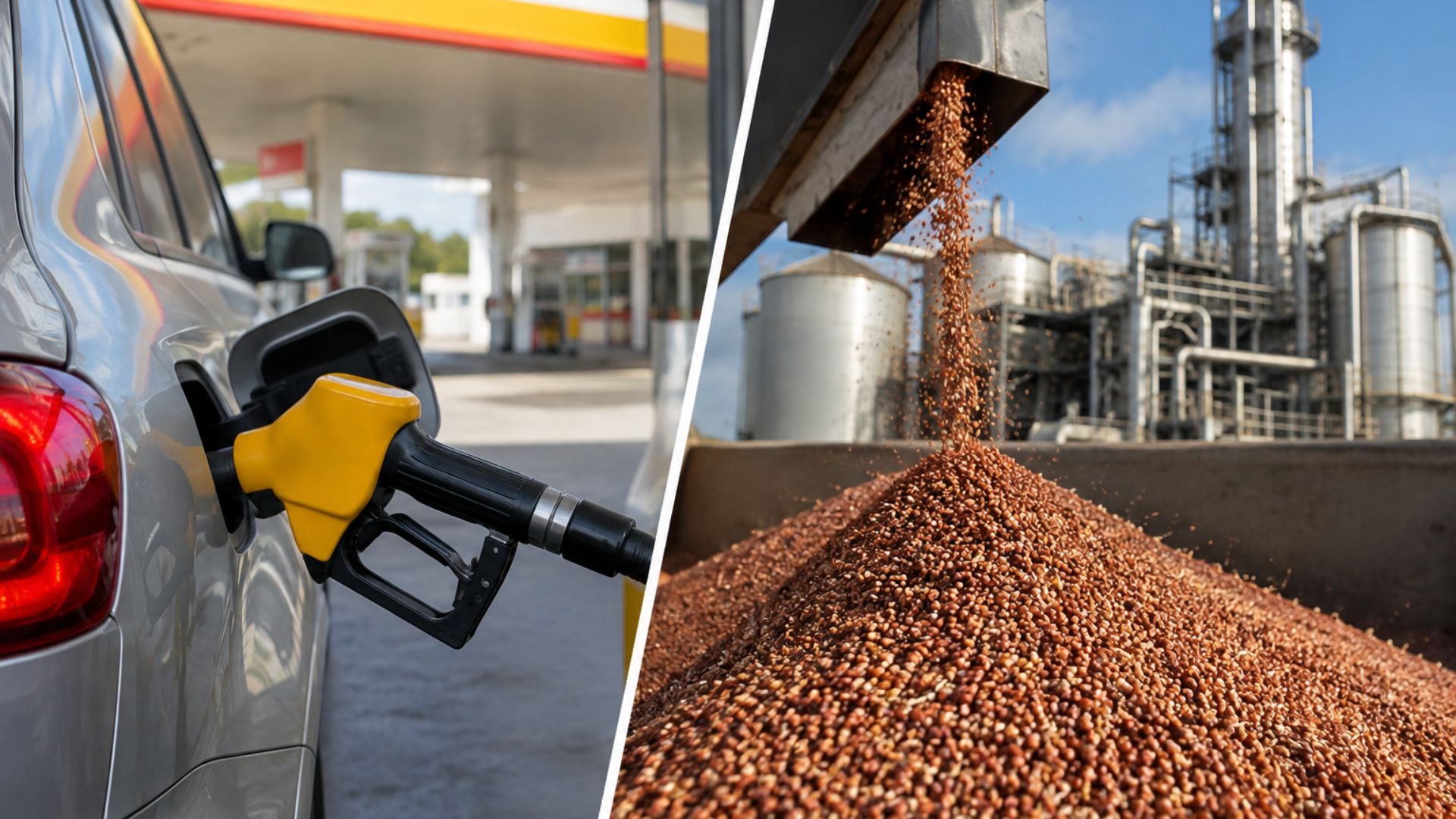
Brazilian sorghum production has risen from approximately 6 million tonnes to around 7.5 million tonnes, according to Daniel Rosa, director of the Brazilian Association of Corn and Sorghum Producers (Abramilho), in figures reported by Click Petróleo e Gás. The increase coincides with two new sources of demand for a cereal long confined to animal feed: ethanol plants in the interior and, for the first time, the Chinese import market.
Goiás leads output with approximately 2 million tonnes, followed by Minas Gerais with about 1.4 million tonnes, based on data presented by the association. Expansion is also reaching newer areas, with Rosa pointing to production growth of 110% in Maranhão.
The agronomic case for area expansion
Part of the move is driven by the crop's agronomic profile. Sorghum tolerates water deficit better than corn and can occupy second-crop area when a delayed soybean harvest shortens the window considered safe for planting corn. Rosa described a staggered approach in which corn goes into the first areas and sorghum follows once the calendar advances. He identified Matopiba and parts of Mato Grosso do Sul as regions with room to expand that use, including in later plantings.
The trade-offs are explicit. Sorghum can require less fertiliser and is not attacked by the corn leafhopper, a pest that demands specific control in corn fields. Against that, it delivers lower yields and has historically commanded a lower price, obliging growers to weigh cost, expected output, quotations and weather risk. Rosa also rejected the notion that the plant's hardiness removes the need for proper management: inadequate fertilisation can cut yields and push the crop to draw on soil nutrients, with possible consequences for the following planting.
China opens the export channel
The opening of the Chinese market changed the export options for Brazilian sorghum, which historically sold mainly into domestic animal feed. Before the change, Brazil had exported roughly 180,000 tonnes in 2024 — a record at the time — with South Africa the standout destination.
Abramilho took part in a mission in which Chinese technical staff toured farms and processing units in Minas Gerais and Goiás. After that stage, the protocol allowing the Brazilian cereal into the market advanced. “China is the world's main sorghum importer. They produce there, but they still depend on international sorghum,” Rosa said.
At the time of his remarks, Brazilian exports had already passed 250,000 tonnes in the year to date. Rosa also cited a projection from the National Cereal Exporters Association (Anec) that shipments could reach 1 million tonnes in September, presented as an estimate rather than a consolidated result. He linked the combination of export and industrial demand to a shift in domestic negotiations, noting cases in that harvest where producers sold sorghum above the corn price — unusual behaviour in the Brazilian market.
Four ethanol plants and a low-cost retrofit
Biofuels added a second demand stream. Rosa said four plants had been mapped processing corn and sorghum, located in Balsas (Maranhão), Luís Eduardo Magalhães (Bahia), Ulianópolis (Pará) and Sidrolândia (Mato Grosso do Sul).
Uptake is helped by the ability to adapt structures already built for corn. “Every corn ethanol plant is a potential sorghum ethanol plant. The adjustments you need to make to the industrial plant to run on sorghum are small,” he said. Processing also generates DDG, a co-product used in animal feed, though industrial results differ between the two grains: in Rosa's assessment, sorghum yields more DDG while corn produces more oil and a larger volume of ethanol.
Animal feed remains a significant market. Sorghum is used in poultry, swine and cattle diets and can replace part of the corn ration provided formulations account for nutritional differences. “Corn will have soy as a protein source and corn as an energy source, and sorghum sits in between. It has slightly more protein but less energy,” Rosa said.
Capacity outlook and logistics
Abramilho sees further room to grow through both area expansion and higher yields. Rosa cited an Embrapa projection that Brazil could reach 15 million tonnes of sorghum between 2030 and 2035, effectively double the 7.5 million tonnes recorded for the period under review.
Logistics is a second-order consequence. Rosa said a large share of exports moves through the Port of Santos, but the need to keep sorghum segregated from other grains was already encouraging the search for alternatives, among them the Port of Tubarão in Espírito Santo.