Brazil seeks soybean supply role in Indonesia’s free nutritious meal program
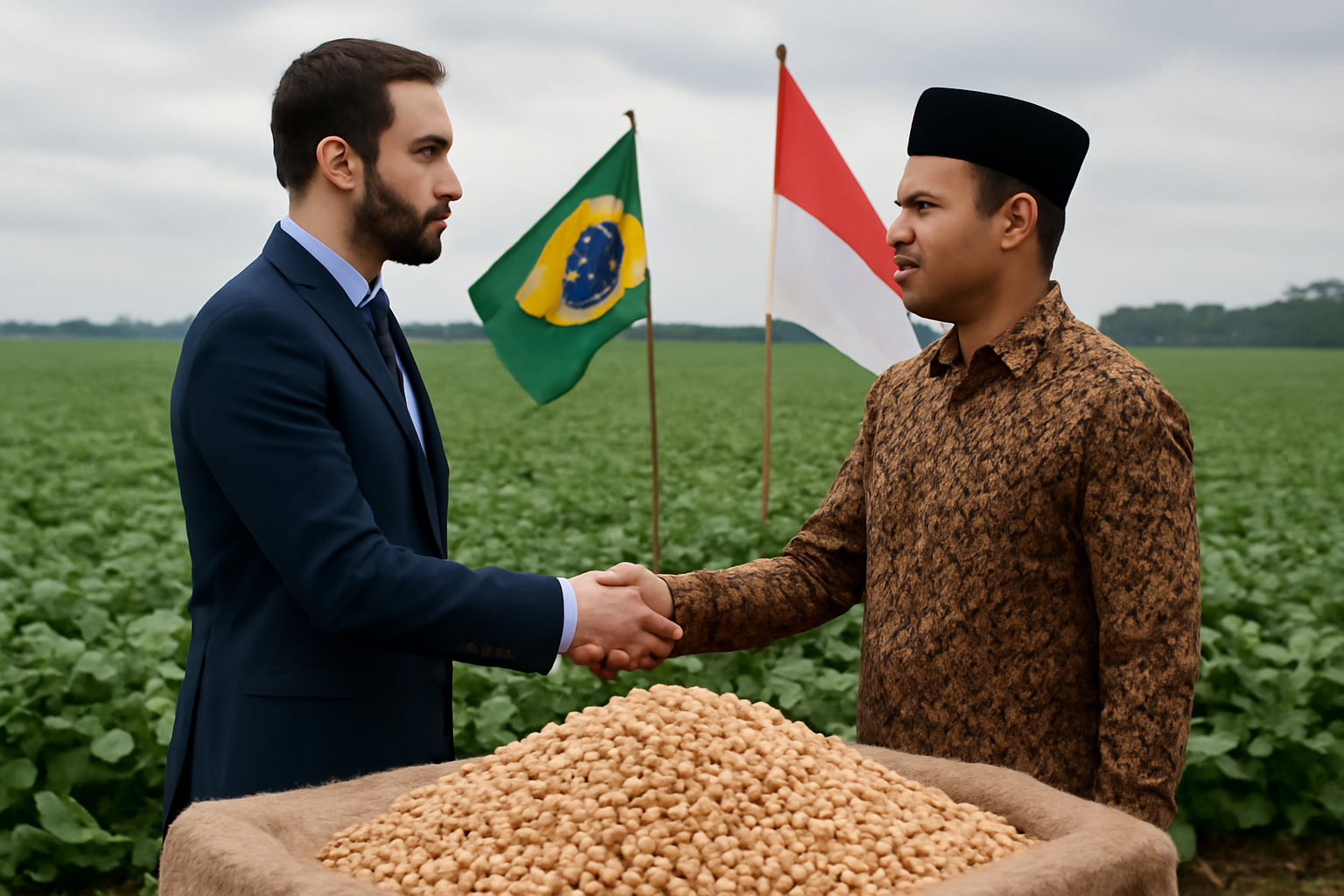
Brazil has expressed readiness to supply soybeans for Indonesia’s Free Nutritious Meal program. The proposal could create a new bilateral sales channel, although no purchase volume, timetable or commercial agreement has been announced.
Brazil offers soybeans for nutrition program
Brazil is positioning itself as a potential soybean supplier for Indonesia’s Free Nutritious Meal program, known locally as MBG. Carlos Turchetto, agricultural attaché at the Brazilian Embassy in Jakarta, said his country was ready to supply soybeans for the initiative, according to Indonesian publication JPNN. The statement signals Brazil’s interest in linking its agricultural export capacity with demand generated by one of Indonesia’s public nutrition programs.
The available report does not identify a proposed supply volume, delivery schedule, price, participating companies or procurement mechanism. It also does not indicate that the two countries have signed a contract or reached a government-to-government purchasing agreement. Brazil’s position should therefore be understood as an expression of supply interest rather than confirmation of a completed soybean transaction.
A possible new channel for Brazilian suppliers
For Brazilian producers and trading companies, the program could provide an additional outlet in Southeast Asia if soybean products are included in Indonesian procurement. Brazil already has the production base and commercial infrastructure needed to approach large overseas buyers. However, participation would depend on the program’s product specifications, tender conditions, delivery requirements and the form in which soybeans are ultimately consumed or processed.
The opportunity could extend beyond the sale of raw beans. Soybeans used in institutional food programs may pass through local processors and food manufacturers before reaching beneficiaries. That would make quality, traceability, processing characteristics and coordination with Indonesian companies relevant to any future supply arrangement. The source material does not specify whether Brazil is proposing whole soybeans, processed ingredients or another soy-based product.
Details will determine the commercial impact
Indonesia’s domestic producers, processors and importers will be watching how any soybean purchasing plan is structured. Direct imports could increase competition among foreign suppliers, while local processing requirements could create business for Indonesian crushers, food companies and distributors. The effect on the domestic market would depend on procurement volumes and whether purchases supplement or replace soybeans obtained through existing channels.
For now, the initiative remains at the positioning stage. The next commercially significant developments would be the publication of procurement rules, confirmation of eligible soybean products and identification of buyers and suppliers. Until those details emerge, Brazil’s declaration establishes political and commercial intent but does not allow the value or likely trade flow to be calculated. For market participants, the central question is whether the diplomatic offer develops into a defined tender or supply contract.