Brazil Climbs from 31st to Second Place in World Beef Tallow Exports
Brazil has moved from 31st to second place in the global ranking of beef tallow exporters, according to Portal DBO. In 2015 the country shipped fewer than 1,000 tonnes a year of the rendered bovine fat. The climb reflects demand from renewable fuel producers, who treat animal fats as waste-based feedstock.
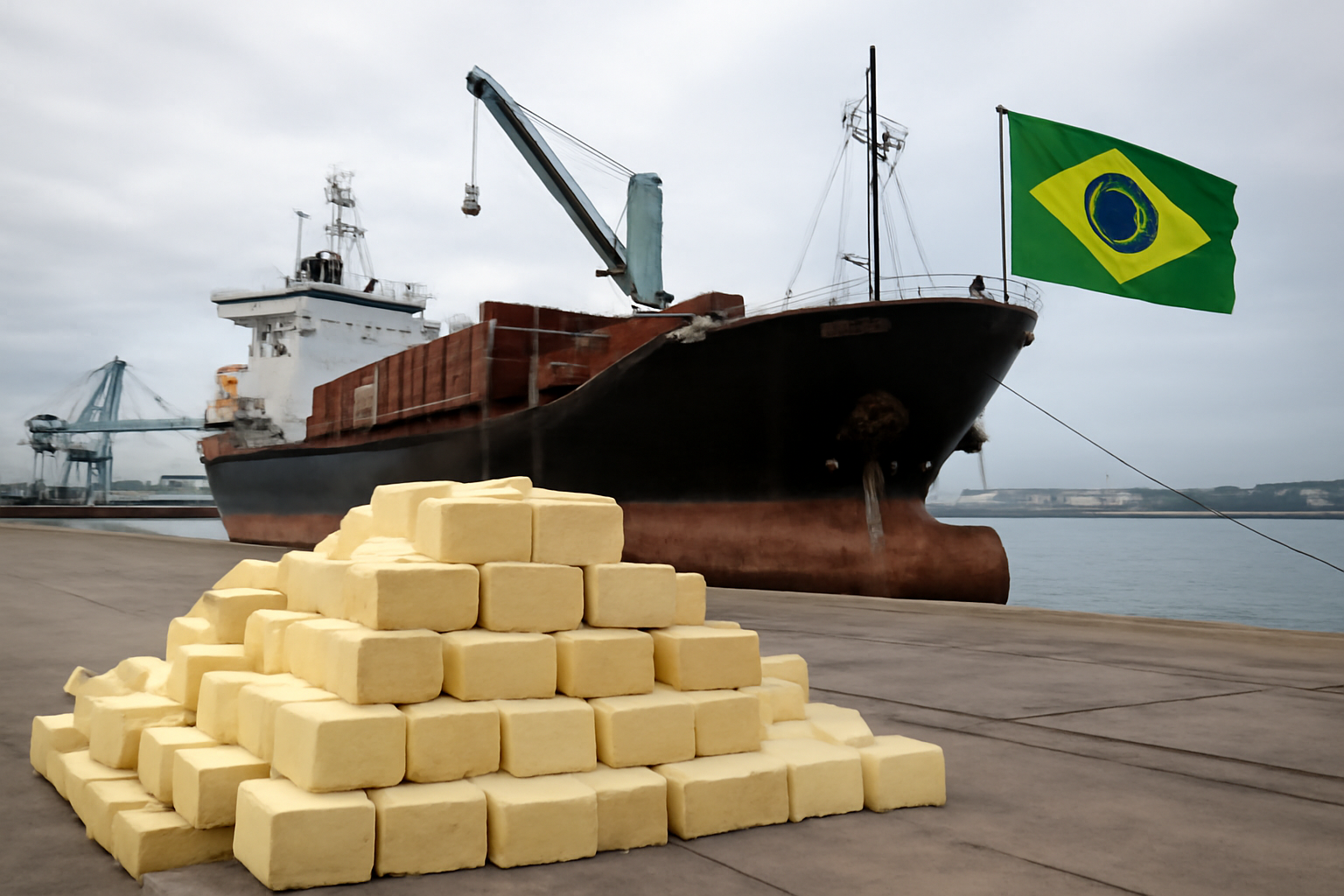
From 31st place to second
Brazil has moved from 31st to second place in the global ranking of beef tallow exporters, according to Portal DBO. The Brazilian publication puts the starting point in 2015, when the country shipped fewer than 1,000 tonnes of the rendered bovine fat per year — a volume closer to a trial cargo than to a commercial trade flow.
The scale of the climb matters more than the rank itself. Twenty-nine positions separate the two placements. At the 2015 baseline, Brazil was not a factor in price formation for animal fats in any market. Second place puts Brazilian renderers and meatpackers inside the small group of suppliers that importers have to price against when they build their annual coverage.
A slaughter co-product that found a fuel buyer
Beef tallow is not produced to order. It is rendered from trimmings, bones and offal that leave the slaughter line in fixed proportion to the number of cattle processed. Output therefore tracks slaughter volume, not the tallow price. What price does change is destination: how much stays in the domestic market for soap, fatty acids, animal feed and industrial lubricants, and how much is loaded for export.
That mechanism explains why a jump of this size is possible in a by-product category. For the supply to reach the export market, three conditions had to hold at the same time:
- a large and stable cattle slaughter base to generate the raw material in the first place;
- rendering capacity able to process it to export specification, including the quality and traceability terms buyers impose;
- an external buyer willing to pay more than domestic industrial users.
The third condition is what changed internationally. Animal fats and used cooking oil are classified as waste or residue feedstocks under most low-carbon fuel policies, which gives them an advantage over virgin vegetable oils in renewable diesel and biodiesel production. Refiners built around those rules have pulled tallow out of its traditional oleochemical uses and into the fuel chain, and they source globally rather than locally.
What a ranking position leaves out
A place in the ranking describes volume, not margin or durability. Beef tallow trades as an industrial feedstock, and its price is set at the margin against soybean oil, palm oil, used cooking oil and other waste fats. Brazilian exporters are therefore now exposed to vegetable oil markets and to fuel policy news that has nothing to do with cattle.
The demand side is regulatory in origin, and that is the principal risk. Blending mandates, feedstock eligibility rules and the import treatment of waste-based fats are set by governments and can be revised. A ranking built on that demand can unwind faster than the processing and logistics assets behind it can be repurposed. Domestic competition points the same way: Brazil's own biodiesel programme draws on animal fats, so any increase in mandated blending raises internal bidding for the same tonnage.
For the cattle chain, the immediate effect is on by-product revenue per head. Tallow, hides and offal determine how much of a carcass earns money beyond the cuts, and that spread is what separates plants during periods of weak beef prices. Operators that invested in rendering, tank storage and port logistics capture the export premium; those selling fat locally at industrial prices do not. Buyers should also expect documentation demands to travel: traceability and deforestation-related requirements applied to Brazilian beef are relevant to co-products drawn from the same slaughter base.
The tonnage behind Brazil's current second place was not disclosed in the Portal DBO report. The 2015 baseline of fewer than 1,000 tonnes a year remains the only volume figure attached to the move.