Brazil overtakes the EU as top live cattle supplier to North Africa and the Middle East
Over the past decade Brazil has displaced the EU as the leading exporter of live cattle to North Africa and the Middle East, driven by far more competitive prices. In 2025 Brazil alone shipped more than 1 million head, while EU exports to third countries fell to 500,000.
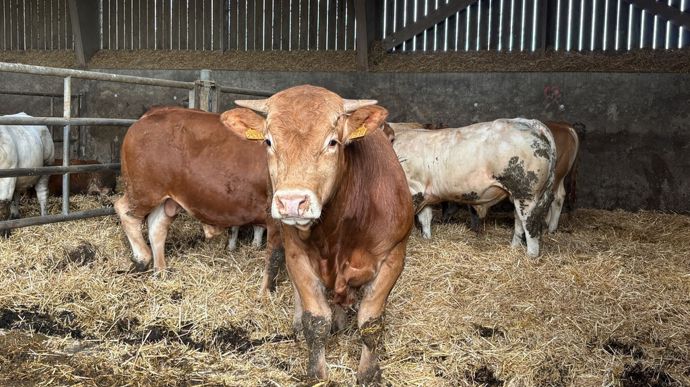
Brazil reshapes live cattle flows to North Africa and the Middle East
Over the past decade Brazil has displaced the European Union as the leading supplier of live cattle to North Africa and the Middle East, according to French agricultural outlet Web-agri, citing agroeconomists Maximin Bonnet and Cassandre Matras at an Idele event on world meat markets held on 12 June. In 2025, more than 4.7 million live non-breeding cattle were exported worldwide, excluding intra-EU flows, a market whose balance has shifted profoundly in ten years.
Global trade is organised into regional blocs: a closed North American loop between Mexico, the United States and Canada, and Southeast Asian flows dominated by Australian shipments to Indonesia. The North Africa and Middle East zone is the most contested and has seen the sharpest change.
Price drives the switch
In 2015 the EU was the main exporter to the region, with heavy flows to Israel, Turkey, Lebanon, Libya and the Maghreb. In 2025 Brazil alone exported more than 1 million cattle, mostly to this zone, with Turkey, Morocco, Egypt and Iraq the top buyers. Bonnet described an explosion of exports from South America to the Mediterranean over the past three years.
Price is the main lever. Between 2022 and 2025 the EU's average unit price for exported non-breeding live cattle jumped nearly 531 EUR/head, approaching 1,500 EUR/head in 2025. Over the same period Brazil's export price fell 60 EUR/head, Colombia's 35 EUR/head and Australia's 475 EUR/head. The gap leaves European exporters little room in markets made up largely of price-sensitive middle-income countries.
Morocco illustrates the shift. Until 2022 it imported almost only European cattle, mainly Spanish. In 2023 and 2024 European animals still dominated, but at prices rising from 800 to 1,500 EUR/head. In 2025 Morocco turned massively to Brazil and Uruguay, pulling its average import price down. Lebanon followed a similar path, and Turkey cut its European purchases to nearly zero.
Europe loses ground, Australia retreats
Total EU live cattle exports to third countries fell from more than 700,000 head in 2024 to 500,000 in 2025. Romania, Spain and Portugal are holding up, with Croatia and Hungary to a lesser degree, while France and Ireland have collapsed. For France, sanitary restrictions tied to lumpy skin disease halted shipments to third countries from last summer, Bonnet noted. A lack of supply is presented as the main cause of the European decline, which is expected to keep prices high and hold lean cattle on the continent.
Australia, the world's second-largest live cattle exporter a decade ago, is scaling back under public pressure over animal welfare and long-distance sea transport; it will ban live sheep exports by sea from 2028. Its non-breeding live cattle exports fell from over 1.2 million head in 2015 to about 650,000 in 2025, increasingly concentrated on Indonesia and, to a lesser extent, Vietnam.
Risks for 2026
Several factors weigh on 2026 flows. Very high global fertiliser prices, pushed up by the war in Iran, could hit fodder production in importing countries and their capacity to fatten imported animals, though Algeria could benefit from higher gas prices. Despite a US-Iran peace deal signed on 17 June, Middle East tensions remain, notably in Lebanon. A strong El Nino is expected to bring dry conditions to Australia, India and South America, potentially cutting export availability. On demand, the 2026 Hajj drew more pilgrims than last year, a positive signal for Saudi Arabia, whose live cattle demand remains significant.