Brado Logística and SLC Agrícola run first rail shipment of Matopiba cotton for export
Brado Logística and SLC Agrícola have completed the first rail movement of cotton from Brazil's Matopiba region destined for export, linking Maranhão to the Port of Santos. Revista Fator Brasil described the operation as unprecedented for the region and said it widens the export capacity available to cotton growers there.
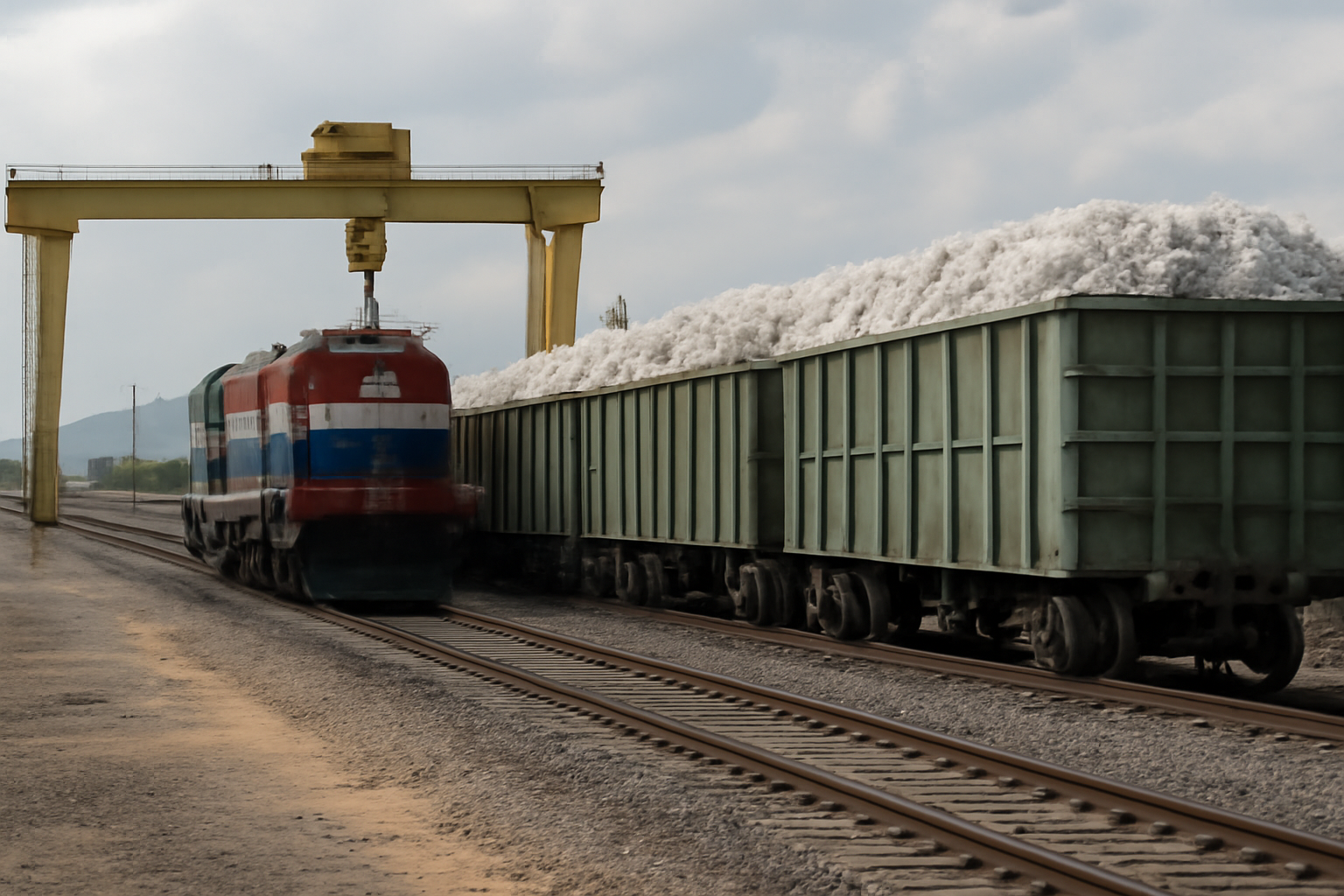
Brado Logística and SLC Agrícola have carried out the first rail movement of cotton from Brazil's Matopiba region destined for export, opening a corridor that connects the state of Maranhão to the Port of Santos, according to Revista Fator Brasil. The publication described the operation as unprecedented for the region's cotton and said it enlarges the export capacity available to growers in the area. The cargo belonged to SLC Agrícola, one of the large farming groups operating in the region, while Brado Logística handled the rail leg to the port.
A first for cotton from the agricultural frontier
Matopiba is the agricultural frontier formed by parts of Maranhão, Tocantins, Piauí and Bahia, and it has been one of the fastest-expanding cotton areas in the country. Its distance from the coast has always been the defining feature of its freight economics: the crop is produced far inland, and every bale has to cross hundreds of kilometres before it reaches a berth. Until this shipment, cotton leaving the region for export did not travel by rail on this route, which is precisely what makes the operation a first rather than an incremental change of carrier.
Revista Fator Brasil reported that the service links Maranhão to the Port of Santos, the country's main port complex. That routing is notable in itself. Maranhão sits alongside Brazil's northern port arc, yet the cargo moved south to São Paulo state. For exporters, port choice is rarely decided by distance alone — vessel calls, shipping-line coverage, equipment availability and terminal windows all weigh into the decision, and Santos concentrates more of those options than any other Brazilian gateway.
What changes for cotton shippers
The practical effect of the new corridor is to give cotton originating in Matopiba an additional modal option on a stretch that has been served predominantly by road. For an industry professional the relevant consequences are straightforward:
- A rail alternative on a long inland haul that has depended on trucking, reducing exposure to road freight availability at the peak of the harvest calendar.
- A direct connection between production in Maranhão and the shipping-line coverage concentrated at Santos, the country's largest port complex.
- Additional export capacity for a producing region whose growth has consistently outpaced the logistics built to serve it.
Open questions after the inaugural run
The announcement reported by Revista Fator Brasil did not specify the volumes moved, the frequency of the service, the duration of any commercial agreement between the two companies, or the freight rates involved. Those details determine whether the corridor becomes a structural route for the region's cotton or remains a single demonstration operation. Inaugural shipments are common in Brazilian agricultural logistics; repeat services through a full harvest cycle are the harder test, because they require committed cargo on the outbound leg and something to fill the wagons on the way back.
For the wider market, the operation is a signal about where cotton logistics in northern Brazil is heading rather than an immediate shift in trade flows. Cotton is a containerisable, relatively high-value commodity per tonne compared with bulk grains, which makes it a natural candidate for rail services that need cargo able to absorb terminal handling costs. If the route repeats, the first competitive effect will be felt in road freight quotes out of Maranhão, where cotton, soybeans and corn compete for the same trucks in the same weeks. Buyers and traders will be watching the next harvest for evidence that the corridor is running on schedule and at scale.