Brazilian consumers turn to chicken and pork as beef prices rise
Higher beef prices are prompting Brazilian households to buy more chicken and pork. Domestic beef availability fell despite record cattle slaughter in 2024, while July wholesale data showed pork becoming more competitive against chicken.
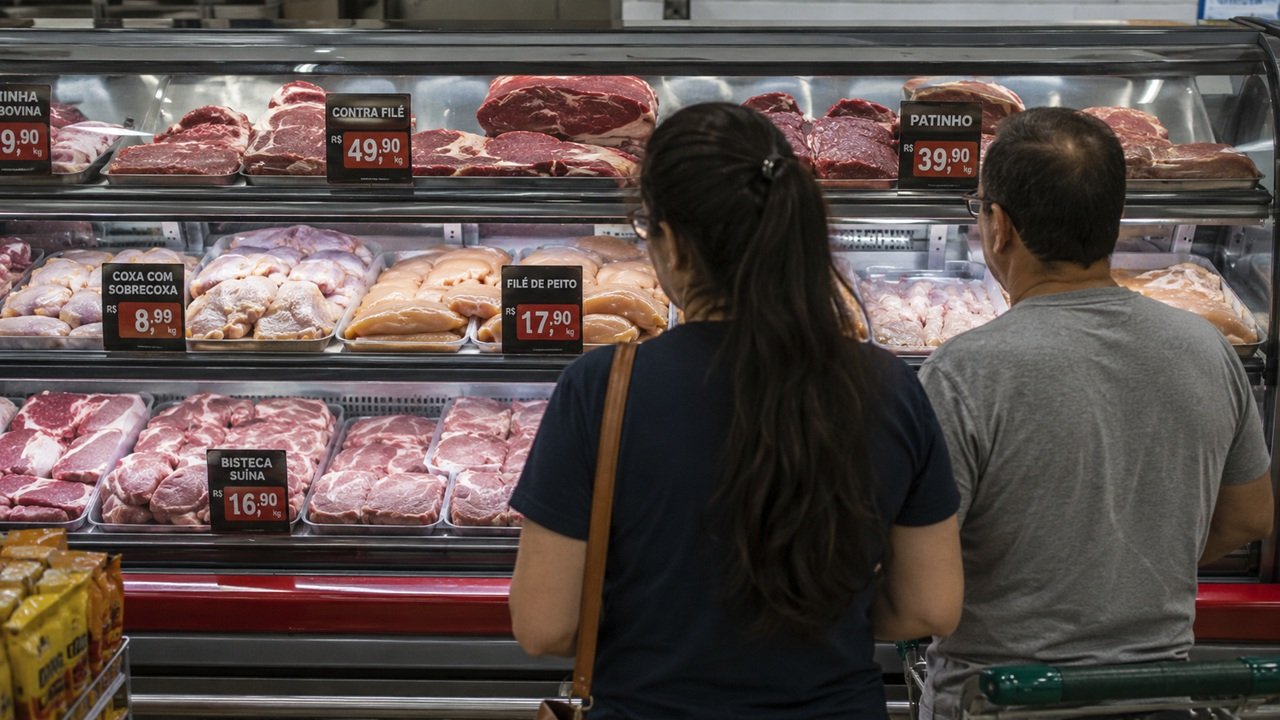
Price pressure changes household meat purchases
Brazilian consumers are replacing some beef purchases with chicken and pork as household budgets come under pressure. Brasil do Trecho reports that the shift is already visible in supermarket baskets, with families favoring proteins that provide more meals at a lower cost. The publication cites Conab as saying that cheaper proteins are competing directly with beef.
Brazil’s IPCA consumer price data showed that the meat category accumulated an increase of 20.84% in 2024. The effect is particularly significant for lower-income households. In October 2024, the basic food basket absorbed an average of 51.72% of the net minimum wage in the state capitals surveyed by Dieese. In São Paulo, the proportion reached 61.70%, leaving less income available for higher-priced meat after other food, housing, electricity and transport expenses.
Chicken and pork consumption moves higher
The Brazilian Animal Protein Association projected per-capita chicken consumption to rise from 45.5 kilograms in 2024 to 46.8 kilograms in 2025. Its estimate for pork increased from 18.6 kilograms to 19 kilograms per person over the same period. Chicken benefits from its relatively accessible price, simple preparation and range of cuts, while pork loin, chops and leg offer additional alternatives to beef.
Beef followed the opposite direction. Conab estimated that domestic availability would fall from 32.7 kilograms per person in 2024 to 30 kilograms in 2025. Availability does not measure each individual’s actual consumption; it represents the volume left for the domestic market after accounting for production, imports and exports. The figures nevertheless indicate a reduced supply of beef per resident at a time of elevated retail prices.
Record output coincides with record exports
The decline in domestic availability did not result from weak cattle production. According to IBGE data cited by Brasil do Trecho, Brazil slaughtered a record 39.27 million cattle in 2024. Beef exports also reached a record, totaling 2.55 million tonnes. The simultaneous records meant that a larger portion of production went abroad while Brazilian consumers continued to encounter high prices at retail counters.
That combination matters across the meat chain. Strong export volumes support demand for cattle and beef, but expensive beef encourages domestic retailers and food-service buyers to allocate more shelf and menu space to chicken, pork, eggs and preparations using ground meat. For processors, the substitution creates opportunities in affordable cuts and portion sizes. For beef suppliers, it increases the importance of promotions and lower-cost formats in retaining price-sensitive customers.
Pork narrows its premium over chicken
More recent wholesale data show that relative competitiveness is still changing. Notícias Agrícolas, citing Cepea, reported that pork and beef prices declined in the partial July period through July 28 compared with their June averages. Beef recorded the steeper fall, while chilled chicken prices remained practically stable.
In Greater São Paulo, excess pork supply relative to wholesale demand pressured special pork carcass prices. Market participants consulted by Cepea said the pressure was intensified by products arriving from Brazil’s South, the country’s main producing region. In July, the special pork carcass traded at 1.58 reais per kilogram above chilled whole chicken. That gap was 7.84% smaller than in June, making pork more competitive against poultry.
Against beef, however, pork lost some of its price advantage. The difference between the average prices of the beef carcass and pork reached 15.17 reais per kilogram in the partial July period, a reduction of 5.22%. The faster decline in beef prices narrowed the distance between the two products. Brazil’s consumers therefore face a moving price hierarchy: chicken remains the lower-priced benchmark, pork is closing part of its gap with poultry, and beef has become somewhat more competitive against pork at wholesale level.