Brazil says 96% of cocoa area can meet EU export requirements
Abicab says 96% of Brazil’s current cocoa area is capable of producing for export to the European Union. Traceability and cultivation on previously cleared land could strengthen the sector’s position, but exporters still need documentation linking eligible farms to individual shipments.
Industry presents traceability as a market advantage
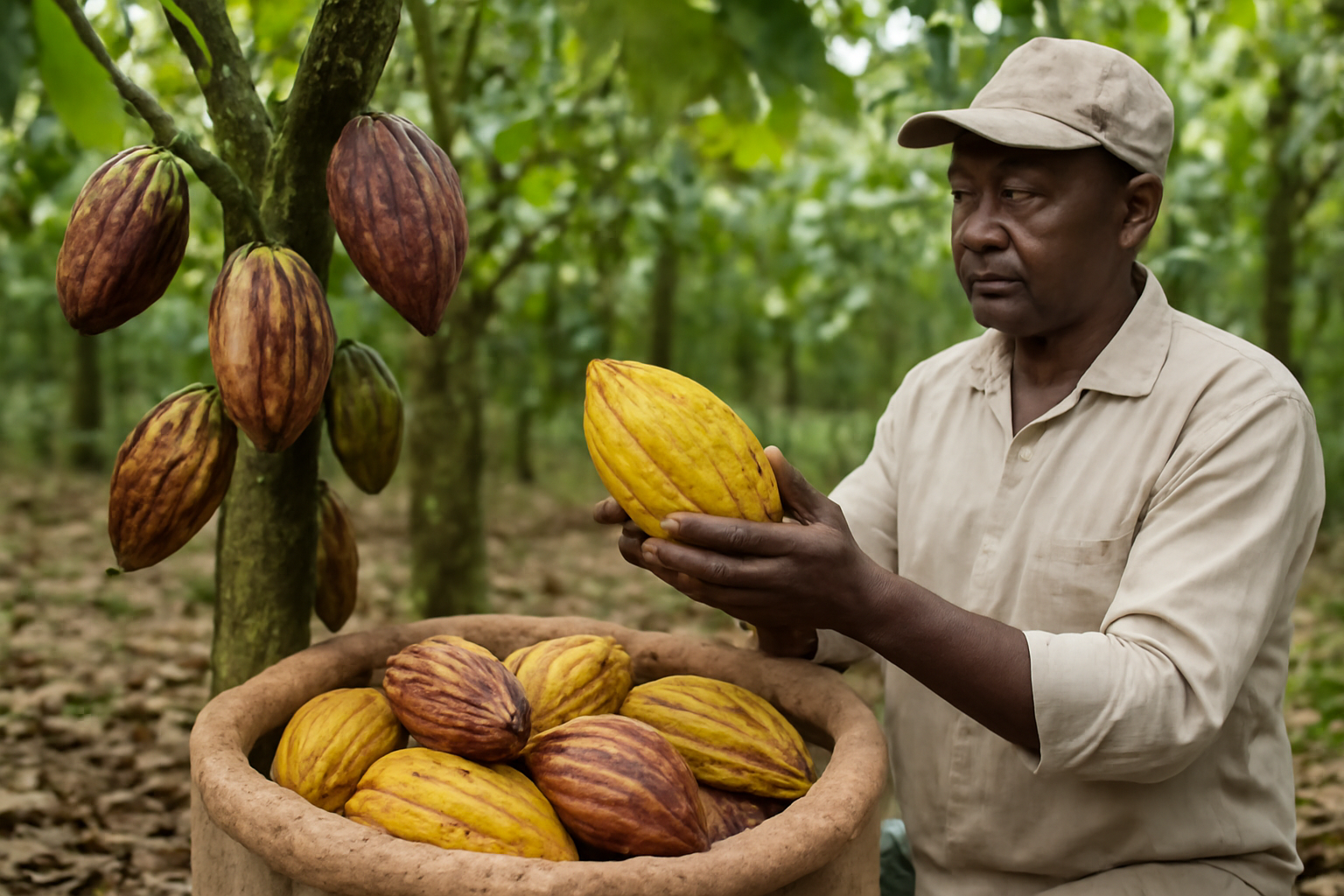
Brazil’s cocoa industry is positioning the country’s traceability and environmental credentials as a route to greater participation in the European market. Jaime Recena, executive president of the Brazilian Association of the Chocolate, Peanut and Candy Industry, known as Abicab, said 96% of Brazil’s current cocoa area is capable of producing for export to the European Union.
Recena made the assessment during ExpoCacau 2026, held in Bahia from 25 to 27 August. Canal Rural reported that he expects growing demand for proof of sustainable origin to improve the competitiveness of Brazilian cocoa. The discussion took place during a Nestlé podcast episode at the event focused on science, sustainability and the bioeconomy in the cocoa sector.
Eligibility must be converted into shipment-level evidence
The 96% figure is an industry assessment of the area able to supply the EU, rather than a measure of cocoa already sold to European buyers. Its commercial value will depend on whether producers, cooperatives, processors and exporters can preserve origin information through the supply chain and provide the documentation required for specific consignments.
Abicab identifies production traceability and the possibility of expanding cocoa cultivation on already degraded land as advantages for Brazil. In Pará, 80% of the cocoa-planted area is located on land deforested by 1998, according to Canal Rural. The industry argues that cocoa cultivation in these locations can help restore landscapes, improve soil structure, increase organic matter and sequester carbon.
Export base provides room for market expansion
Brazil exported 90,300 tonnes of products from the cocoa chain in 2025, generating $804.9 million, according to data from the Ministry of Development, Industry, Trade and Services cited by Canal Rural. The figures cover the broader cocoa chain, so they should not be read as exports of beans alone or as shipments exclusively destined for the EU.
For international buyers, the central issue is whether Brazil can turn broad land eligibility into consistent, verifiable supply. Producers able to document farm location and production history may gain better access to regulated markets, while processors and traders will need reliable links between purchased cocoa and its origin. Brazil’s position could therefore improve through compliance and recordkeeping, but the 96% estimate does not by itself guarantee additional sales, premiums or market share.