Brazil’s Center-South summer corn planting reaches 35.5% of projected area
Farmers had planted 35.5% of the projected 3.561 million hectares for Brazil’s 2026/27 Center-South summer corn crop by September 25. Progress was below last year’s 36.8% but ahead of the five-year average of 33.1%, with major differences among states.
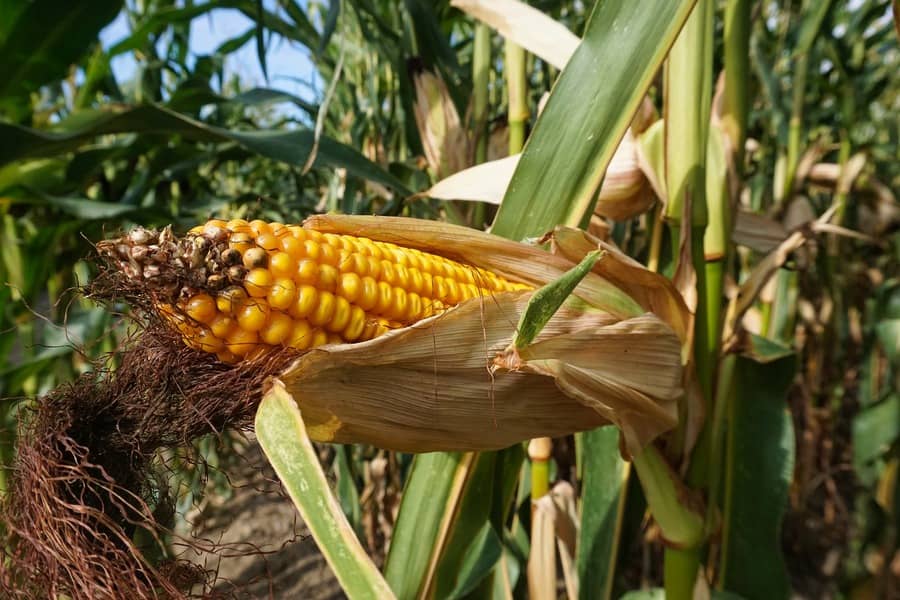
Planting covers 35.5% of projected area
Planting of Brazil’s 2026/27 summer corn crop had reached 35.5% of the projected area in the Center-South region by Friday, September 25, according to a Safras & Mercado survey published on September 28. The consultancy estimates that farmers will allocate 3.561 million hectares to the crop.
The reported percentage indicates that approximately 1.264 million hectares had been planted, based on the projected area and Safras & Mercado’s progress estimate. The figure describes the pace of fieldwork rather than expected production: the survey provided no yield or output forecast.
Planting was slightly behind the same stage of the previous campaign, when farmers had completed 36.8% of an estimated 3.608 million hectares. It nevertheless remained ahead of the five-year average of 33.1% for the period. The comparison places the current campaign between the recent seasonal norm and last year’s faster pace.
Southern states lead the campaign
Rio Grande do Sul recorded the most advanced planting, with 67.9% of its projected 940,000 hectares completed. Santa Catarina had planted 50.1% of an estimated 597,000 hectares, while Paraná was at 50.2% of a projected 537,000 hectares.
These three southern states account for 2.074 million hectares of the Center-South estimate, or more than half of the projected total. Their progress therefore represents the bulk of the area already planted and will have a strong influence on the timing of early crop development.
Fieldwork was much less advanced farther north. São Paulo had planted 6.5% of a projected 293,000 hectares, and Minas Gerais had reached 4.7% of an estimated 847,000 hectares. Planting had not yet started in Mato Grosso do Sul, Goiás and the Federal District, or Mato Grosso, according to Safras & Mercado.
Acreage and supply implications
The projected Center-South area is 47,000 hectares smaller than the 3.608 million hectares estimated at the comparable point last year, a decline of about 1.3%. Safras & Mercado did not provide a reason for the change, and the planting data alone do not establish whether the area difference will translate into lower production.
For producers, processors and grain traders, the immediate signal is that aggregate planting remains close to normal despite pronounced regional gaps. The southern states already have substantial acreage in the ground, while progress in São Paulo and Minas Gerais remains limited and planting in several central states has yet to begin. Future domestic supply will depend not only on completion of the remaining area, but also on weather and yields, for which no figures were included in the survey.