Brazil's Center-South sugar output falls 4.8% as cane crush rises 3.3%
Mills in Brazil's Center-South processed 51.9 million tonnes of cane in the second half of August, 3.3% more than a year earlier, according to Globo Rural. Sugar production over the same fortnight fell about 4.8% to 3.72 million tonnes, Forbes Brasil reported, as plants continued to direct cane to ethanol. The split between raw material supply and sweetener output is a direct signal for the global sugar balance.
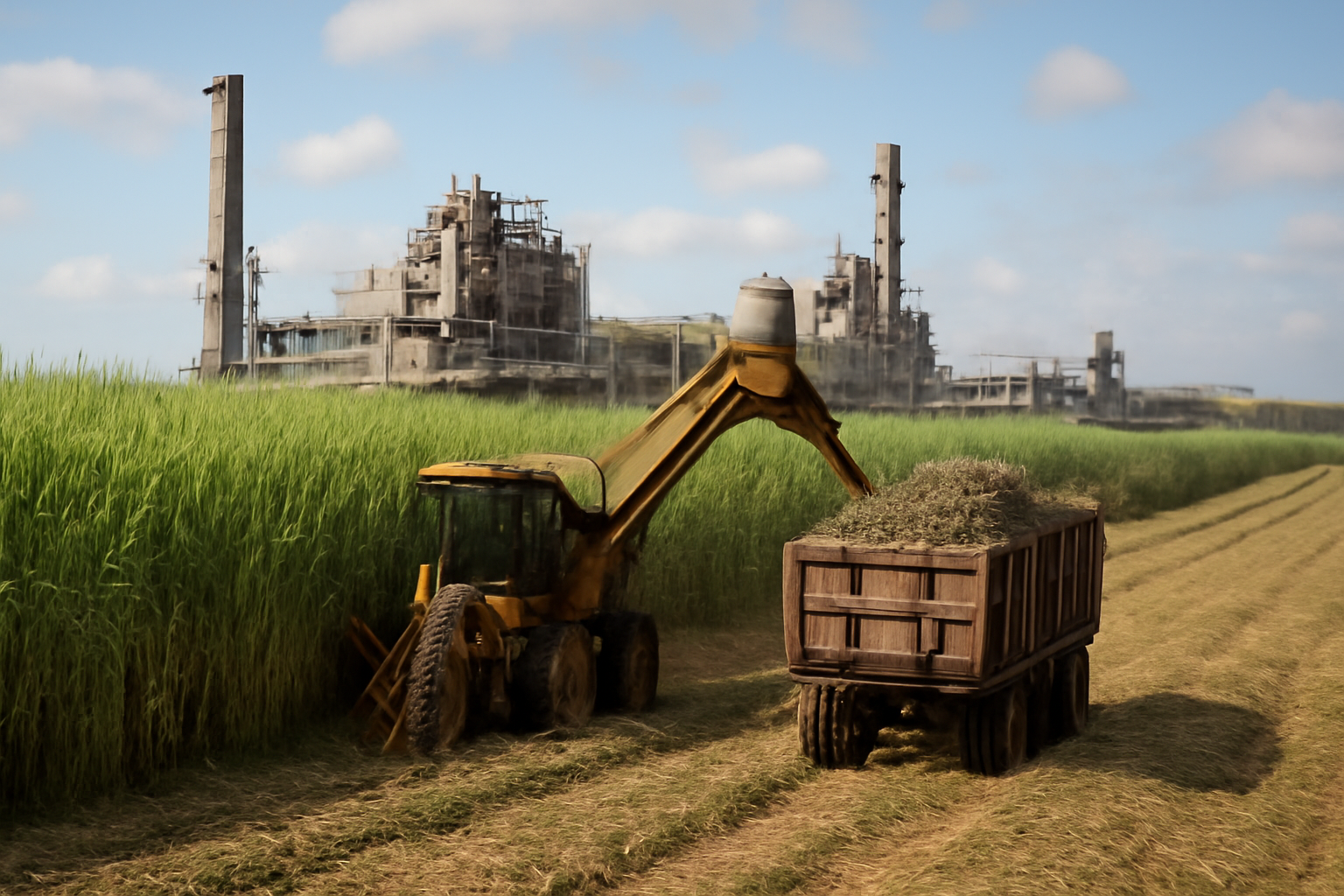
Sugar mills in Brazil's Center-South, the world's largest sugar-producing region, crushed more cane in the second half of August than a year earlier but converted less of it into sugar. Official figures reported by Forbes Brasil and Globo Rural point to a widening split between raw material supply and sweetener output.
Cane processing in the fortnight totalled 51.9 million tonnes, up 3.3% year on year, according to Globo Rural. Sugar production in the same period reached 3.72 million tonnes, a decline of about 4.8%, Forbes Brasil reported, with mills continuing to channel cane into ethanol.
More cane, less sugar
The divergence is the defining feature of the period. Additional cane volumes would normally lift crystal output; instead sugar production moved in the opposite direction. The shortfall therefore reflects a product mix decision taken plant by plant rather than a failure in the field, since the harvest delivered more raw material than in the comparable fortnight of the previous season.
Center-South plants are largely flex units. Within technical and contractual limits they can move juice and molasses between sugar crystallisation and ethanol distillation as relative returns shift. That flexibility is why Brazilian supply acts as the swing factor in the world sugar balance, and in the second half of August it was being exercised in favour of the fuel.
Ethanol takes the marginal tonne
When mills allocate the extra cane to distillation, the effect on the sugar market is immediate: a larger crop does not translate into a larger exportable surplus. Brazil ships raw sugar to refiners across Asia, North Africa and the Middle East, and fortnightly mix data is followed closely by traders as a near-real-time read on how much sugar will actually reach export terminals.
The allocation also has a domestic dimension. Ethanol volumes are absorbed mainly inside Brazil, where hydrous ethanol competes with gasoline at the pump and anhydrous ethanol is blended into it. Cane directed to fuel therefore leaves the international sweetener market entirely, unlike sugar, which is largely exported.
What it means for the global balance
For buyers, the combination of a bigger crush and smaller sugar output complicates supply planning. Crop-size forecasts remain a weak proxy for availability when the product mix can move within a single fortnight, and the August figures show the gap opening in the middle of the harvest rather than at its tail, when cane quality and mill capacity are usually at their most favourable for sugar.
- Cane crushed in the second half of August: 51.9 million tonnes, up 3.3% year on year, according to Globo Rural
- Sugar produced in the same fortnight: 3.72 million tonnes, down about 4.8%, according to Forbes Brasil
- Stated driver: mills continuing to direct cane to ethanol rather than sugar
For producers, the data show that capacity and cane availability are not the binding constraints this season; allocation is. For importers and refiners, the practical conclusion is that headline crop size says little about how much sugar will be offered for export. The next fortnightly readings will show whether the ethanol tilt persists through the remainder of the Center-South harvest or reverses as relative returns change.