EPE projects R$110 billion in Brazilian biofuel investment to 2035, lifting soy and corn demand
Projections from Brazil's Empresa de Pesquisa Energetica point to R$110 billion in biofuel investment between 2026 and 2035 and ethanol output of 51 billion litres a year by 2035. Corn ethanol, about 20% of Brazilian ethanol in 2024, could exceed 30% of the total, while biodiesel output is projected at 13.9 billion litres in 2035.
Energy investment becomes a crop demand driver
Brazil's biofuel sector is projected to draw R$110 billion in investment between 2026 and 2035, according to figures from the Empresa de Pesquisa Energetica (EPE) reported by fiis.com.br. Under the same projections, national ethanol production could reach 51 billion litres a year by 2035.
The relevance for agribusiness lies in the feedstock. Corn is gaining ground as a raw material for ethanol, while soybean oil is one of the main inputs for biodiesel. Both crops already supply the food and animal feed markets, and the energy industry is adding a further source of demand for the same harvests. That creates a direct connection between farm output and the fuel market, and it changes how producers weigh planting and marketing decisions.
Corn ethanol heads towards a third of production
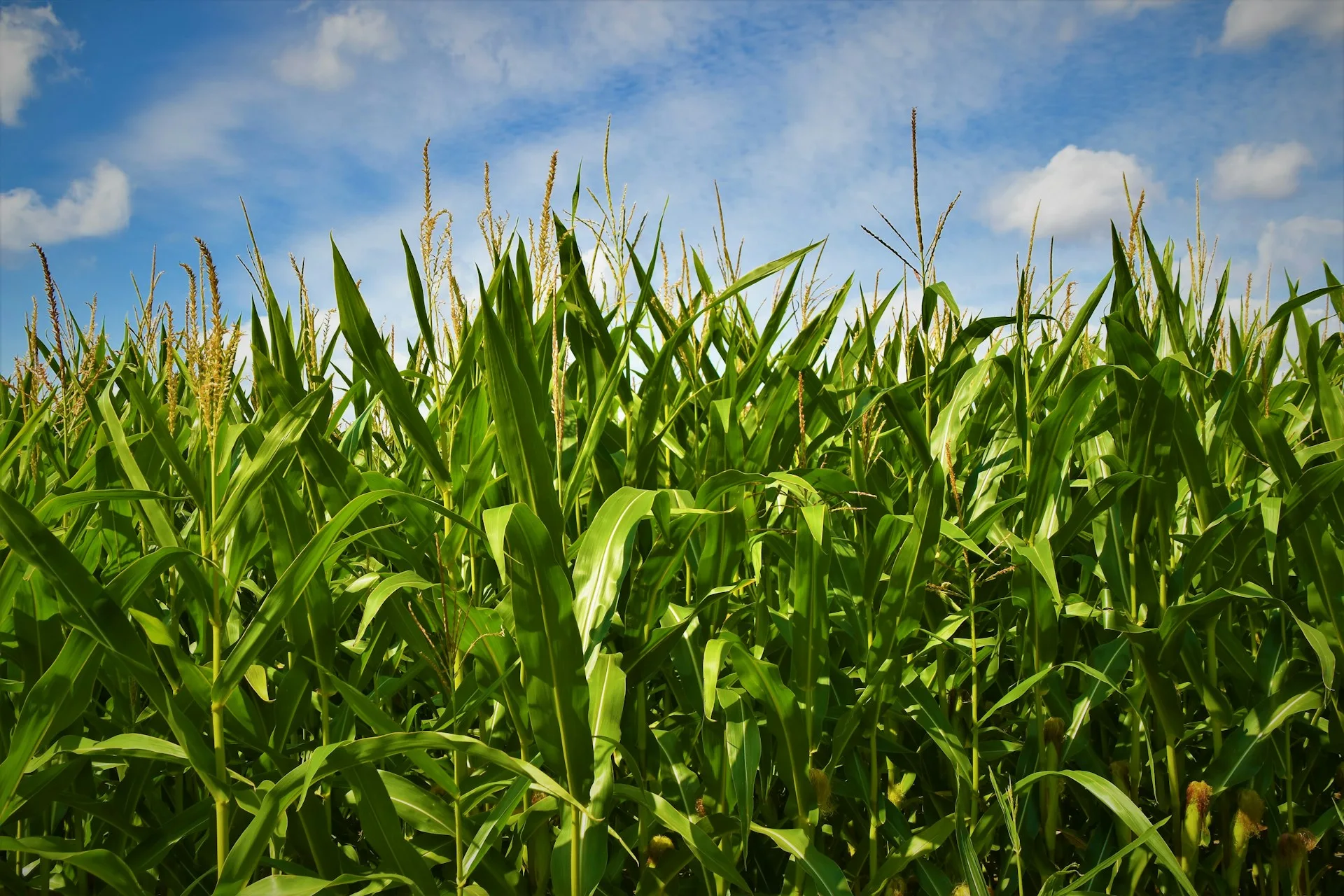
Fuel made from corn accounted for around 20% of Brazilian ethanol production in 2024, according to the data presented by fiis.com.br, and its share could exceed 30% by 2035. For growers, that means a second large-scale buyer for the crop. Alongside the feed industry, which absorbs a significant part of domestic corn, mills are now competing for the same grain.
The shift is most visible in the Centre-West, the region that concentrates an important share of Brazilian corn output and where the farms held by SNFZ11, a Fiagro managed by Suno Asset, are located. Proximity between grain supply and processing capacity is one of the reasons the model has advanced fastest there.
Processing also returns volume to agriculture. Corn ethanol plants generate DDG, a co-product used in animal nutrition, so grain routed to fuel does not leave the protein chain entirely: part of the by-products goes back into feed for cattle, hogs and poultry. In practice the result is an integrated chain, with field corn supplying the mills, the mills turning the cereal into fuel, and the residues returning to livestock.
Soybean oil ties the oilseed to fuel policy
Soybeans enter the equation mainly through biodiesel. Oil extracted from the oilseed is one of the principal feedstocks for the fuel, and the projection cited by fiis.com.br points to Brazilian biodiesel output of 13.9 billion litres in 2035, keeping soybeans among the strategic crops for the industry's expansion.
That leaves soybean demand resting on a wider combination of markets. The oilseed continues to serve human and animal nutrition through meal and oil, while the oil can also be directed to biodiesel production. The greater the call on soybean oil for fuel, the more weight falls on the domestic crushing chain.
Farmland contracts priced in soybeans
The link between crop demand and land assets is visible in how leases are structured. SNFZ11 holds six rural properties in Mato Grosso with a combined area of 3,160 hectares used for productive activity, tied mainly to the crops with a strong presence in the state, soybeans and corn.
- Total area: 3,160 hectares across six properties in Mato Grosso
- Irrigated area: 1,060 hectares, allowing greater control over water supply and the production calendar
- Lease terms: 25 bags of soybeans per hectare on irrigated land, with a floor of 15 bags per hectare on rainfed areas
Because those payments are denominated in soybeans rather than in cash, returns on the properties move with the performance of the commodities themselves. As soy and corn serve a growing number of end markets, investors and producers gain additional variables to track alongside the traditional food and feed balances.