Brazil’s 2026 barley crop forecast tops 600,000 tonnes as brewing demand expands
Brazil is forecast to harvest more than 600,000 tonnes of barley in 2026, led by a record expansion in Paraná. The larger crop could reduce import requirements, but domestic supply remains well below the brewing industry’s estimated demand.
Paraná drives a record expansion
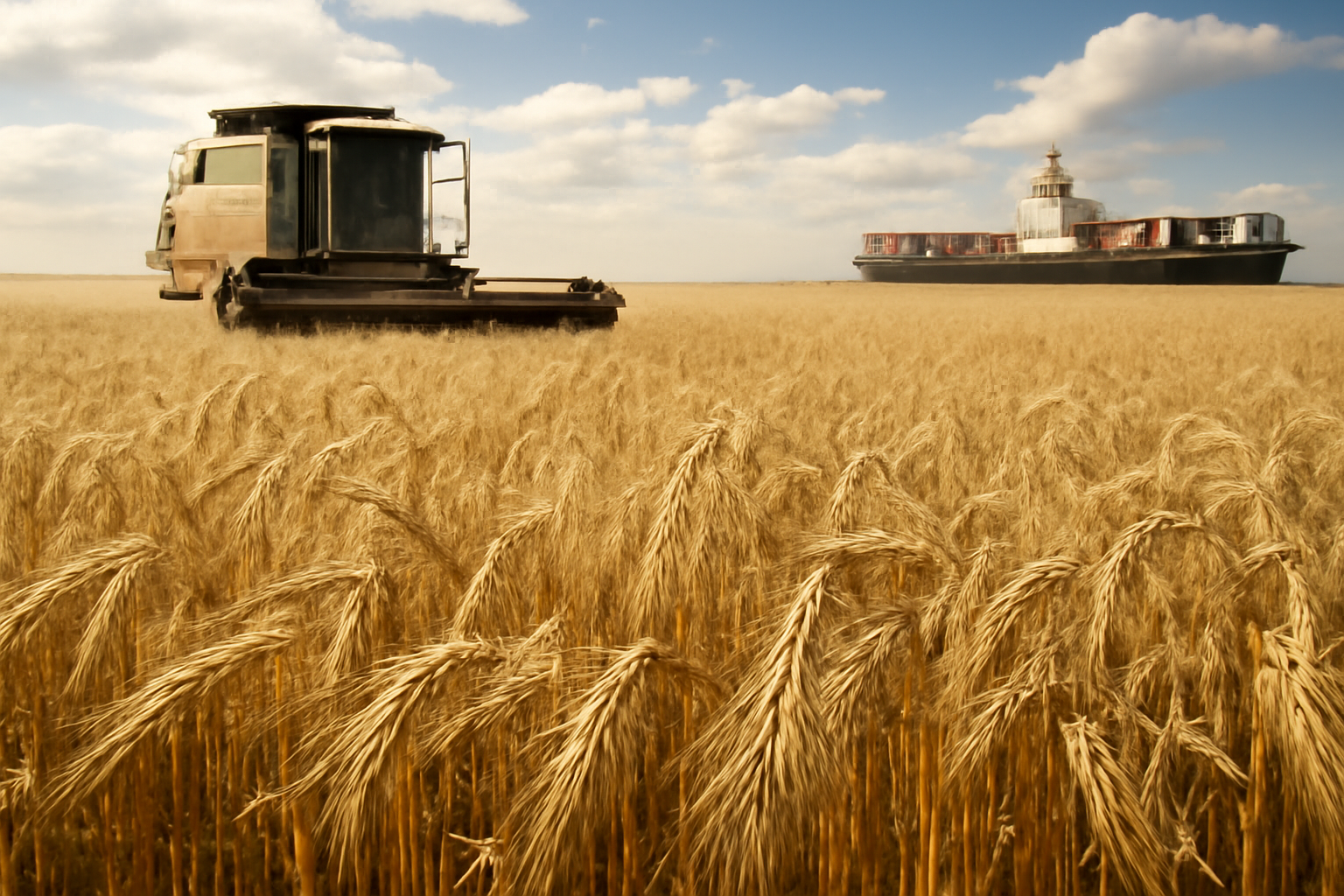
Brazil’s barley harvest is forecast to exceed 600,000 tonnes in 2026 as growers expand planting in response to demand from maltsters and brewers. Canal Rural reports that Paraná, the country’s largest producing state, expects output above 550,000 tonnes from a record 126,000 hectares. The planted area is 21% larger than the 104,000 hectares harvested in 2025.
National forecasts published by Canal Rural differ. A report citing the Brazilian Institute of Geography and Statistics, or IBGE, puts production at 678,700 tonnes, 7.2% above 2025. Another Canal Rural report gives a national estimate of 626,400 tonnes, representing growth of 3.3%. Both projections place the crop above 600,000 tonnes and confirm Paraná’s dominant role. Rio Grande do Sul, the second-largest producer, is expected to harvest about 100,400 tonnes under the higher national forecast.
Brewing capacity supports demand
The expansion is closely linked to industrial consumption. Two of Brazil’s largest malt houses are located in Paraná. Canal Rural reports that a malt house in Guarapuava used 129,000 tonnes of barley in 2024, while consumption rose to 197,000 tonnes in 2025. The state’s growing processing base gives farmers a nearby buyer but also creates a supply requirement that domestic production cannot yet cover.
Brazil’s maltsters need about 1.1 million tonnes of barley grain annually, Embrapa Trigo researcher Aloisio Vilarinho told Canal Rural in an earlier report. A separate assessment cited by the publication says national production would have to increase fourfold to meet broader brewing-sector demand of 2.3 million tonnes. The figures use different measures of demand, but both point to a substantial deficit. Brazil therefore remains dependent on imported barley and malt even if the 2026 harvest reaches the upper end of current forecasts.
Imports may ease, but the deficit remains
The scale of that dependence was visible in 2024. According to foreign-trade data reported by Canal Rural, Brazil imported 686,000 tonnes of barley between January and September, already exceeding the 616,000 tonnes purchased during all of 2023. More than 60% of the imported product entered through the Port of Paranaguá to supply Paraná’s malt houses. A larger domestic crop can replace part of these purchases, particularly when local grain meets malting specifications, but it will not eliminate the import requirement.
Crop quality remains the main operational risk. Favorable weather and adequate soil moisture supported planting in Paraná, which had reached 44% of the estimated area when the state assessment was released. However, the Paraná Department of Rural Economy warned that El Niño could bring heavier spring rainfall and damage grain quality around harvest. For growers, maltsters and traders, the decisive result will therefore be not only the harvested tonnage but the share accepted for malting. A record crop with strong quality would tighten the link between Paraná’s farms and processing plants, while quality losses would preserve demand for imported supplies.