Brazil awaits additional 55% Chinese tariff after beef import quota is exceeded
Brazil’s government expects China to impose an additional 55% tariff on Brazilian beef after the import quota was exceeded in July, Poder360 reported. The measure could raise costs in Brazil’s largest beef export market and redirect part of the supply toward other destinations or the domestic market.
Tariff expected after July quota breach
Brazil is preparing for a possible additional Chinese tariff of 55% on beef after the country exceeded its import quota in July. According to Poder360, the Brazilian government is awaiting the measure, which would make shipments to China significantly more expensive.
The report identifies the tariff as an additional charge. That distinction matters because it would increase the cost of Brazilian beef on top of the conditions already applied to the trade. The available information does not specify when China could introduce the tariff, how long it would remain in force or which beef categories would be covered.
The quota was exceeded in July, but the reported measure has not yet been presented as a completed tariff change. For producers, processors and traders, the immediate issue is therefore uncertainty: contracts and future shipments must be assessed against the possibility of a sharp increase in border costs.
Brazil’s largest beef market at risk
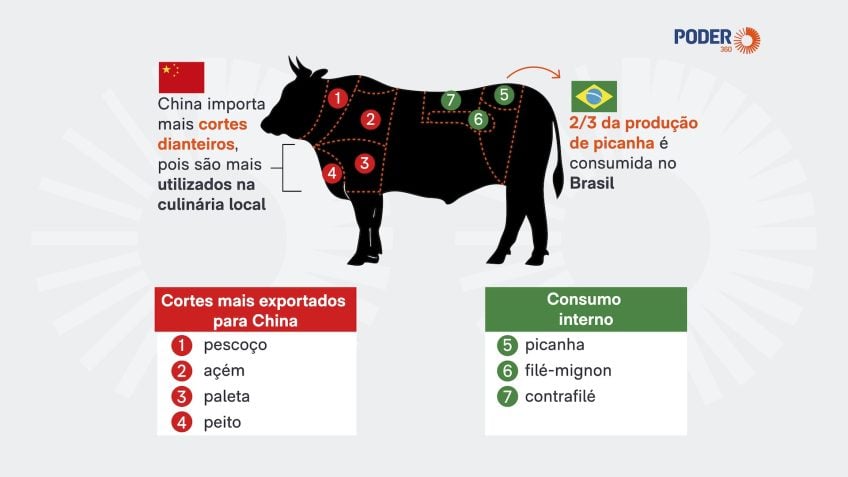
China is Brazil’s leading beef export market, making the potential 55% additional tariff commercially important even without further details on its duration. A charge of that scale could reduce the competitiveness of Brazilian product for Chinese importers, particularly where buyers can delay purchases, renegotiate prices or seek alternative suppliers.
The burden would not necessarily remain with one participant. Chinese importers could face higher landed costs, while Brazilian exporters might have to accept lower selling prices to preserve orders. Processors and cattle producers could also feel pressure if export margins narrow and companies reduce procurement for China-bound production.
The outcome will depend on how companies respond and whether the tariff is applied as expected. Some cargoes could still move if Chinese demand supports the higher cost. Other volumes could be offered to alternative foreign buyers or retained in Brazil, increasing competition among exporters and domestic distributors.
Domestic prices depend on trade response
Poder360 framed the expected Chinese taxation as a factor that could make beef more expensive in Brazil. The price effect, however, is not automatic. If exporters redirect more supply to the Brazilian market, additional availability could weigh on domestic wholesale prices. If companies instead cut production or recover lost export margins elsewhere in the chain, consumers could face different pressure.
Market participants will need confirmation of the tariff’s effective date, product coverage and treatment of cargoes already contracted or in transit. Until those terms are known, the 55% figure represents a substantial risk rather than a fully defined operating cost. For Brazil, the central challenge is managing exposure to its biggest beef buyer after the July quota was surpassed. For China, the measure could alter purchasing decisions and the relative position of Brazilian beef against competing origins.