Bosnia imports almost 5.5 billion KM of food a year while only 10% of Popovo polje is farmed
Bosnia and Herzegovina buys nearly 5.5 billion convertible marks of food abroad each year, with exports covering only 23 percent of that bill, agronomist Hamid Čustović told N1. Domestic wheat meets about 53 percent of demand, while just 10 percent of the 5,000-hectare Popovo polje is cultivated. More than 67 percent of total areas have already become overgrown.
Bosnia and Herzegovina imports almost 5.5 billion convertible marks (KM) of food a year, while domestic agriculture cannot meet market demand in most segments, agronomist Hamid Čustović, a member of the Academy of Sciences and Arts of Bosnia and Herzegovina, said on N1's programme Novi dan. Exports, he said, cover only 23 percent of that import bill.
“That is drastic and dramatic,” Čustović said, in remarks carried by n1info.ba and zvornikdanas.com. He tied the deficit to farmland that is being built over, abandoned or simply left uncultivated, including the country's single most productive field.
Where domestic output covers demand, and where it does not
Čustović put domestic wheat production at around 53 percent of national requirements. Several other basic products come close to covering the market, while the rest of the food basket is bought abroad because the volumes are not produced at home in sufficient quantity.
- Wheat: domestic production covers about 53 percent of needs
- Potatoes and maize: output largely covers market demand
- Eggs and milk: output largely covers market demand
- Most remaining categories: effectively imported
Popovo polje: 5,000 hectares, one tenth under cultivation
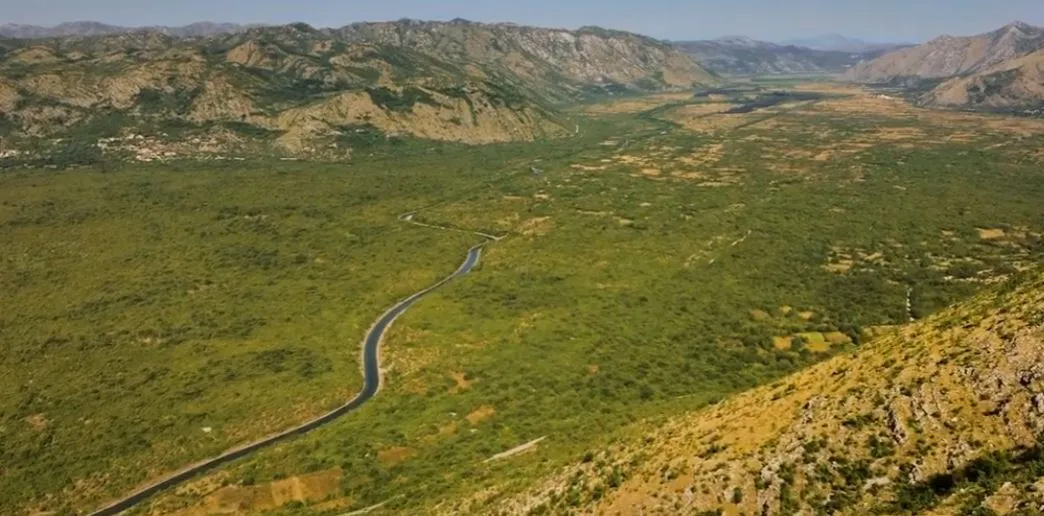
Čustović singled out Popovo polje as the clearest case of unused capacity: roughly 5,000 hectares of what he called the best agricultural land in the country. A water pipeline running some 30 kilometres along the field was built by Spanish contractors. Only 10 percent of the area is worked, he said, referring to the part of the field that lies in the Federation of BiH.
Research has already been carried out and a land consolidation study exists, he said. The municipality of Ravno is running consolidation on part of the land with its own funds, without broader support for such processes. Čustović argued the state should initiate and organise production there, drawing in potential investors and business, without becoming a producer itself.
Conversion permits and overgrown land
Data from Transparency International and the Atelje za društvene promjene Foundation, cited during the N1 broadcast, show that 1,300 land conversion permits were issued between 2014 and 2024, covering 2,800 hectares of forest and forest land, or about 29 square kilometres. Čustović said forest land cannot legally be converted except in special circumstances of general interest, a procedure that requires a change to the spatial plan and a municipal council decision.
Asked what converted land is used for, he pointed to private construction, citing Nišići, where houses stand inside forest areas and are subsequently legalised. On abandoned farmland, he said the analyses he referred to indicate that more than 67 percent of total areas have already become overgrown.
Subsidies, energy costs and EU accession
Agriculture's share of gross domestic product has fallen from more than 9 percent to 4.5 percent, according to Čustović, who called the sector neglected and said the agriculture ministry has neither the capacity nor the expertise, with no minister from the profession since 2010. He would abolish the current direct subsidy model outright and organise production through other instruments: cheaper mineral fertiliser and machinery, research projects, new varieties, production monitoring, secured markets and guaranteed prices for farm products.
He described this as the hardest year in more than a decade because of higher energy costs, and warned that entering the European Union at current capacity would leave the sector unable to survive, contrasting it with Croatia, which invested in new plantations and vineyards and expanded its cultivated area during accession. He also raised input intensity in some crops, citing spring cabbage in southern Herzegovina grown in 40 to 50 days, with more than 400 kilograms of KAN, a 27 percent nitrogen fertiliser, applied per dunum.