Bosnian energy expert warns of five-mark diesel, costlier pellets and electricity shortfall
Energy expert Nihad Harbas told N1 that Bosnia and Herzegovina can no longer delay reform of its energy sector, warning that diesel could reach five convertible marks per litre and that pellet prices are rising with no commodity reserves to cushion them. He said electricity exports have fallen 20 to 30 percent as coal supply tightens and thermal plants over 50 years old run below capacity.
Bosnia and Herzegovina can no longer postpone key reforms in its energy sector, and the country must accelerate its energy transition as far as possible, energy expert Nihad Harbas, a member of the programme board of Sarajevo Energy and Climate Week, said in an interview with the N1 programme Novi dan.
His remarks followed the opening of Sarajevo Energy and Climate Week in the capital, where domestic and international specialists are discussing security of supply, the energy transition, climate change, renewable energy development and alignment with European rules, N1 reported. Asked for the main message of the first day, Harbas answered: “Accelerate the energy transition to the maximum. That is the key.”
An ageing thermal fleet and falling output
Harbas said the energy sector has been in transformation for decades, particularly where fossil fuels and thermal power plants are concerned, with units now more than 50 years old. Such facilities can no longer operate at the capacities they once did, break down frequently, and banks will no longer finance either their repair or the construction of new thermal generation. That, he said, is pushing the system towards decentralised production — a larger number of solar plants, wind farms, biomass installations, hydropower and other renewable sources.
The effect is already visible in output and cross-border trade. According to Harbas, Bosnia and Herzegovina is producing steadily less electricity and exports have fallen by 20 to 30 percent compared with previous years, among other reasons because of insufficient quantities of coal and because thermal plants increasingly fail to run at full capacity. He added that the country never built new units that, in his view, it could have built 15 years ago. Circumstances have since changed significantly: CO2 levies have been introduced and banks no longer want to finance coal-fired plants.
“When you have a 30-year-old car, it breaks down often. I do not think anyone drives a 50-year-old car. We are still driving 50-year-old thermal power plants, and we did not replace them in time,” he said.
Diesel at five marks, pellets without reserves
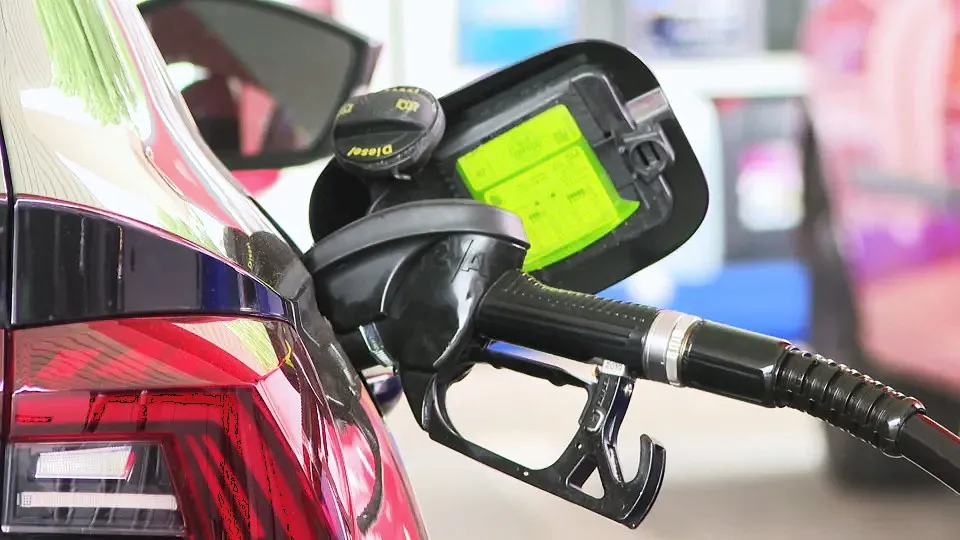
Harbas said the outlook for consumers heading into the colder months is not optimistic, with energy prices rising for years because of both domestic conditions and geopolitics, above all for the commodities the country imports — oil and natural gas, and increasingly electricity. “We see that fuel prices are such that we can expect even around five marks per litre, if we are talking about diesel and if the conflict in the Middle East continues, that is, if the pipelines from Turkey and Saudi Arabia are not put into operation,” he said.
He pointed to comparable problems with other fuels, including pellets. “We have no regulated market, we have no stocks, we have no commodity reserves and we do not have enough storage to be able to react when prices rise,” Harbas said.
Europe as a whole depends on imported energy for more than 50 percent of its needs, and Bosnia and Herzegovina particularly so, he said. On natural gas as a transitional solution, Harbas said the country has not built sufficient capacity, especially storage capacity.
Implementation, grids and small investors
Bosnia and Herzegovina has taken over part of the European directives and the acquis and incorporated them into legislation, but the key problem remains implementation, Harbas said. He noted that the European Union often cannot allocate funds precisely because concrete projects do not exist. “If you have no investment, there is no development of the state,” he said.
Network infrastructure is a further constraint. Transmission and distribution assets largely date from 50 years ago, and congestion on the distribution network is a particular obstacle to connecting smaller facilities. Bosnia and Herzegovina also still has no electricity exchange of its own.
One of the central conclusions of the conference, according to Harbas, is that the transition must be accelerated by 2030 — not only to meet obligations towards the European Union but primarily for the domestic economy and citizens. He argued for opening the market to small investors: anyone able to invest 10,000 or 20,000 convertible marks should be able to build a solar plant with support and subsidies from the authorities, insulate a house, replace windows or install a heat pump and cut their bill. Over the next 20 to 30 years, he said, the future lies in decentralised systems, microgrids, energy storage and other advanced technologies.
On the demand side, Harbas noted that more than 50 percent of energy is consumed in households and that citizens rely heavily on private cars, with public transport one available solution. “We often all heat to 24 or 25 degrees. For one degree you can save some six percent on the bill,” he said. Renovating the housing stock — including collapsing facades visible in urban areas — could deliver significant savings. The goal, he argued, should not be for citizens merely to save but to use energy more rationally, so that any surpluses could again be exported and generate revenue, particularly for public enterprises.