Blocked Odesa Ports Push Ukrainian Sunflower Seed Toward EU and Turkish Buyers
Lower domestic bids caused by blocked Odesa ports are attracting interest from sunflower processors in the EU and Turkey. Their willingness to pay more than Ukrainian buyers could redirect seed away from the domestic crushing industry.
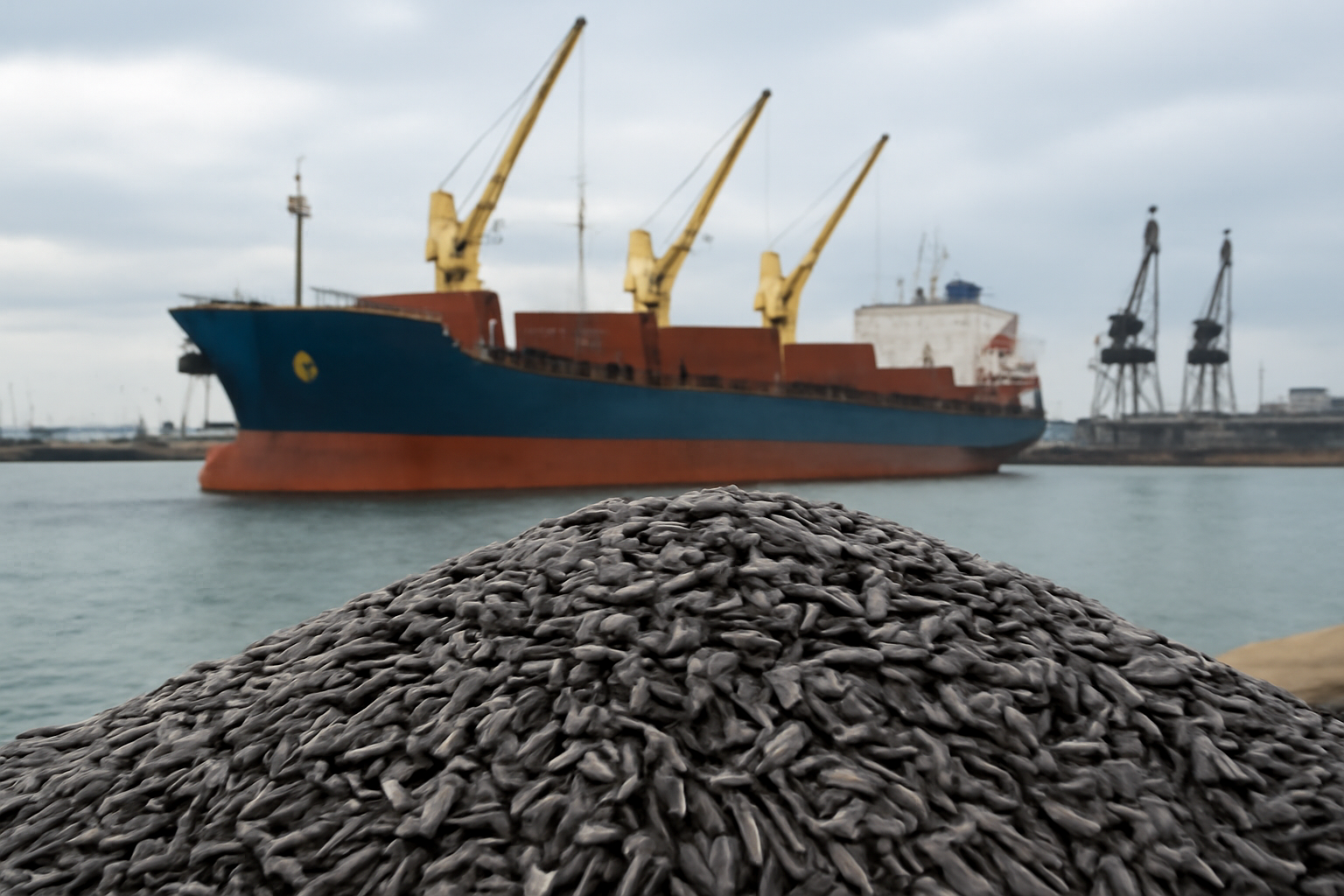
Port disruption weakens domestic bids
Blocked ports in Odesa have reduced Ukrainian domestic purchase prices for sunflower seed, creating an opening for processors in the European Union and Turkey. NV Business reports that foreign plants are prepared to offer more for the crop than Ukrainian buyers. That price gap is placing domestic crushers in direct competition with processors outside the country for available seed.
The situation reflects a change in the commercial options available to Ukrainian growers. When conventional maritime routes through Odesa are constrained, local buyers face greater uncertainty over sales of processed products and the cost of moving them to customers. Those pressures can translate into lower bids for raw seed, even when processing capacity remains interested in securing feedstock.
For farmers, the comparison is more immediate: the relevant offer is the price they can obtain after accounting for delivery and logistics. Interest from EU and Turkish processors gives sellers an alternative to depressed domestic bids. Whether that interest becomes a sustained flow will depend on the practical cost and reliability of transporting seed to foreign plants.
Processors compete for the same crop
Sunflower seed is the core input for crushing plants, which transform it into oil and other processed products. A buyer able to pay more for seed can attract volumes away from competing plants. Ukrainian processors therefore face pressure not only from disrupted port access but also from foreign companies seeking to use the resulting weakness in domestic prices.
EU processors have the advantage of access through Ukraine’s western borders, while Turkey is already identified as an interested destination in the report. However, the source material provides no figures for offered prices, prospective volumes or transport costs. It also does not specify which EU countries or companies are seeking Ukrainian seed, making it too early to quantify the redistribution.
The commercial contest is nevertheless significant because the location of processing determines where value is added. Exporting seed supports growers and logistics providers, but the crushing margin moves to the foreign processor. Keeping the crop in Ukraine supports domestic plants and related operations, although local buyers must offer terms that remain competitive after transport costs are considered.
Trade direction depends on logistics
The blocked Odesa ports are the central constraint. If exporters can move seed efficiently by alternative routes, the premium offered by EU or Turkish processors may outweigh the additional logistics burden. If those routes are costly, congested or unreliable, the nominally higher foreign bid may not produce a better net return for the seller.
Domestic crushers must weigh feedstock security against the economics of raising bids. Paying more can protect plant utilisation, but it can also narrow processing margins when outbound logistics remain difficult. Foreign processors face the opposite calculation: lower Ukrainian prices may look attractive, but only if the seed can reach their facilities at a competitive delivered cost.
For growers and traders, the next indicators are the spread between domestic and foreign bids, the availability of overland transport and any change in access to Odesa. For processors, the question is whether the current price gap is temporary or sufficient to support a durable redirection of seed. The information reported so far establishes buyer interest, but not completed contracts or confirmed shipment volumes.