Black and pinto beans in short supply as global dry bean production falls
Black and pinto beans will be in short supply this season after dry bean production was reduced in several growing regions, including Canada, according to The Western Producer. Because both classes are difficult to substitute in canning and prepared foods, the adjustment is likely to run through price and contract terms. No figure has yet been published for the size of the decline.
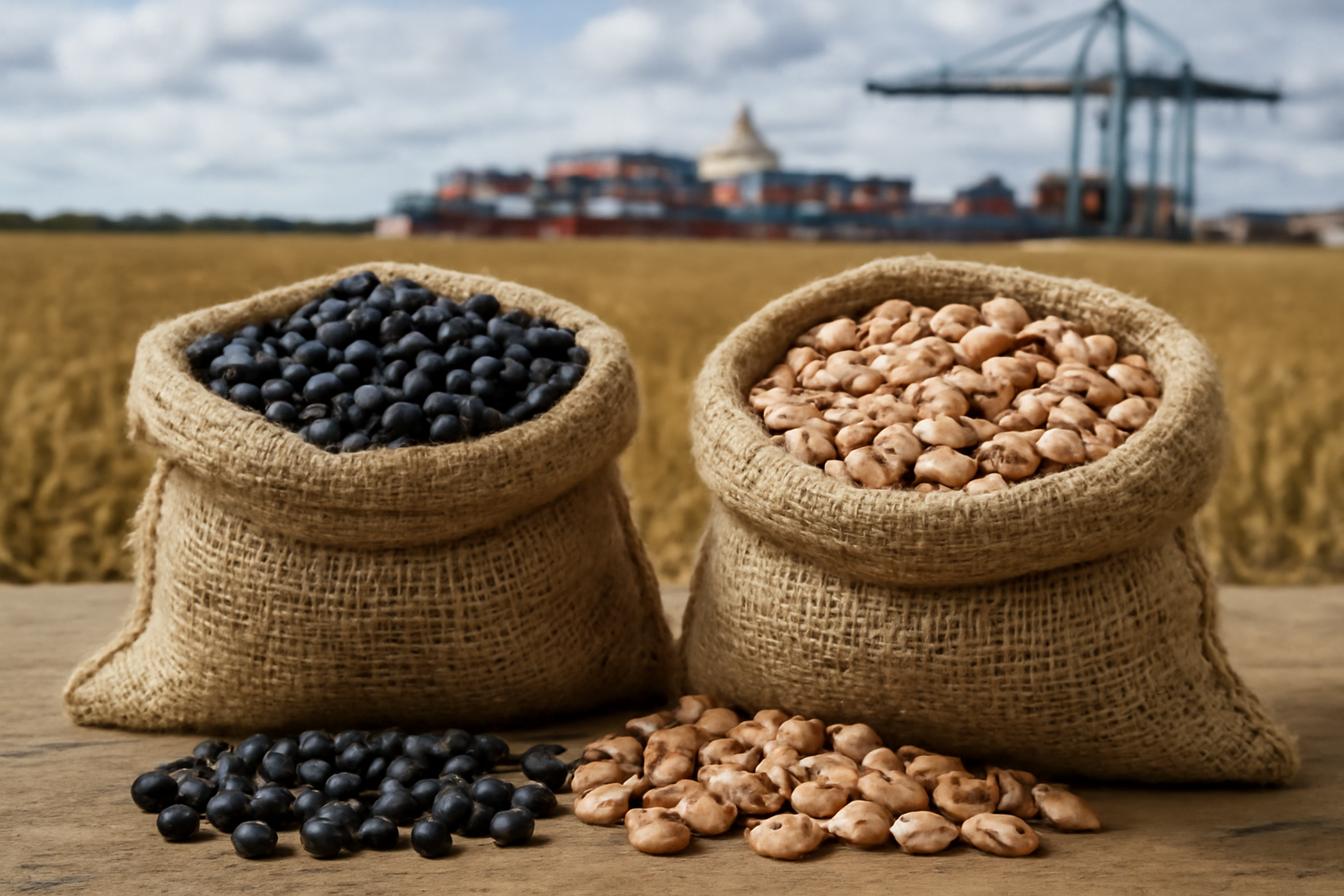
Black and pinto beans will be in short supply this year after dry bean production was reduced around the world, including in Canada, according to The Western Producer. The report describes a broad-based decline rather than a single failed harvest, which leaves buyers of these two classes with fewer alternative origins to fall back on.
The publication did not put a figure on the size of the reduction, name the other producing countries involved, or quantify carry-in stocks. That absence of hard numbers is itself relevant for the trade: with no published volume estimate to anchor negotiations, price discovery over the coming months is likely to run ahead of the balance sheet.
Two bean classes, two separate demand bases
Black and pinto beans are traded as distinct classes and are not readily interchangeable. Black beans move into Latin American and Caribbean cuisine, into canned and prepared foods and into food service, where colour and cooking behaviour are part of the finished product. Pinto beans are the backbone of refried and canned bean lines and of North American retail packs. A processor whose label reads black beans cannot quietly substitute navy or great northern beans; the specification is the product.
That rigidity is what turns a production shortfall into a pricing event. In classes where substitution is easy, buyers move down the quality ladder or across to a competing pulse when supply tightens. In black and pinto beans the substitution options are narrow, so demand stays inelastic and the adjustment happens through price and contract terms rather than through switching.
Canada's place in the supply picture
Canada is among the origins where output was reduced, according to The Western Producer. Canadian dry bean production is largely export-oriented and heavily contracted with processors, which means a smaller crop is felt quickly by overseas buyers rather than absorbed by domestic consumption. Growers still holding unsold beans are in an unusually strong negotiating position for a crop year, while processors that did not cover their requirements early face a thinner offer sheet.
What tighter supply means down the chain
- Canners and packers face higher raw material costs and, in black and pinto lines specifically, limited scope to reformulate around the shortage.
- Importers dependent on a single origin carry more risk this season, because a shortfall spread across several producing regions removes the usual option of re-routing to another supplier.
- Growers with beans in store gain leverage, and new-crop contracts are likely to be offered earlier and on stronger terms to secure acres.
- Food service and retail buyers working to fixed annual price lists are the most exposed, since their contracts were set before the shortfall became visible.
Quality is the second variable. Reduced production can be accompanied by weaker grading outcomes, including smaller seed size, colour defects and a higher pick, which shrinks the pool of beans meeting premium specifications even further. Buyers with tight specs may find the effective shortage larger than the headline production decline suggests.
What to watch
The near-term signals are new-crop contracting terms in Canada and the United States, planting intentions in the main producing regions and the pace at which processors move to cover requirements. Confirmation of the scale of the decline will come from official production estimates and from export data as the shipping programme develops. Until then, the trade is working from a qualitative supply warning rather than a measured one, and positions taken now will be built on that gap.