Biofuel Expansion Could Widen Brazil's Cost Advantage in Meat Production, Rabobank Projections Show
Rabobank projections reported by Canal Rural indicate that the expansion of corn ethanol and biodiesel in Brazil will increase the domestic supply of animal feed ingredients. Feed is the largest single cost in poultry, pork and feedlot beef, so the shift would reinforce Brazil's competitive position in meat production. The volume of additional co-products depends on fuel blending policy rather than on livestock demand.
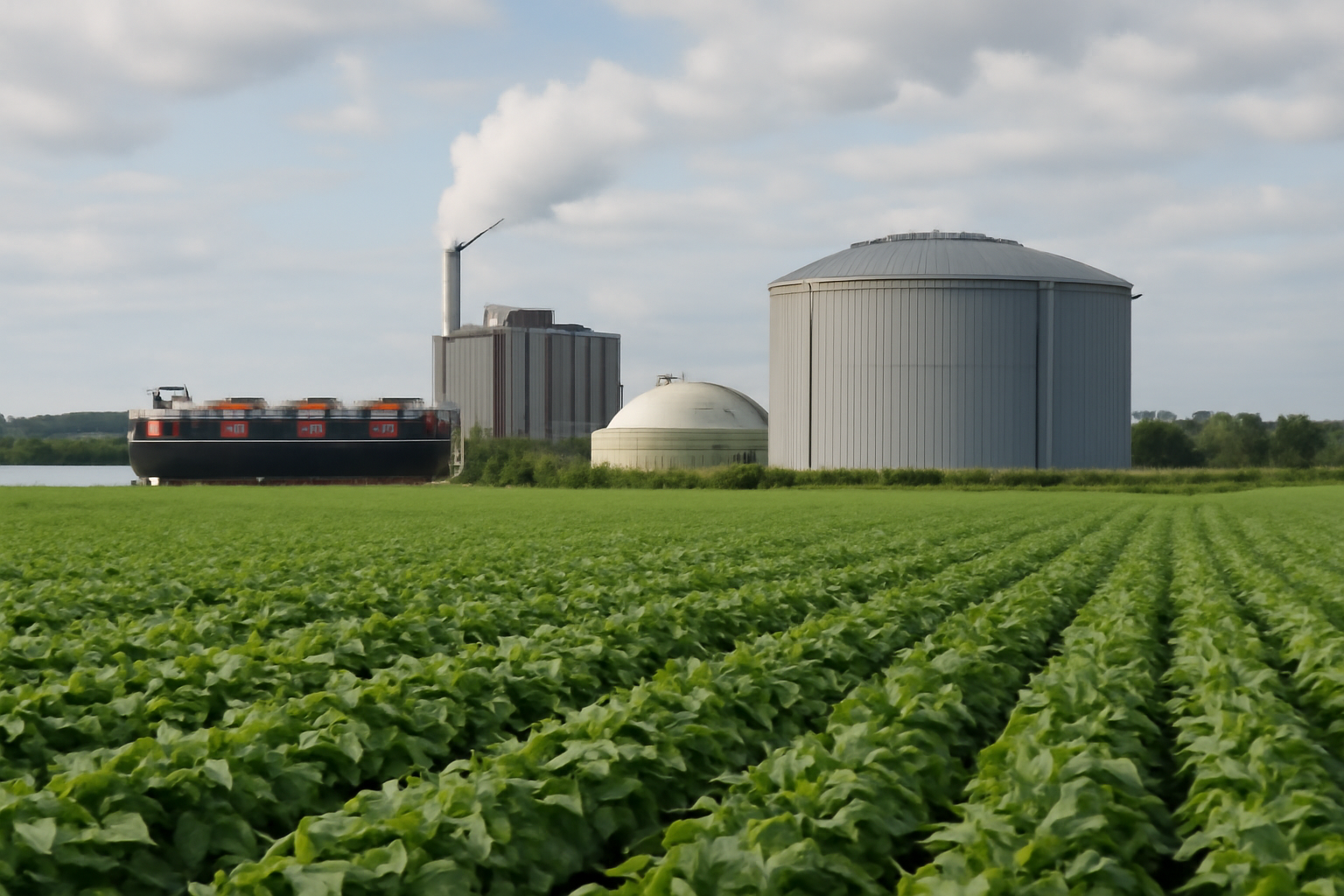
Brazil's expanding biofuel industry could strengthen the country's competitive position in meat production, according to Rabobank projections reported by the Brazilian agribusiness outlet Canal Rural. The bank expects growth in corn ethanol and biodiesel output to increase the domestic supply of feed ingredients, the largest single cost in poultry, pork and confined beef production.
Canal Rural presented the finding as a study based on Rabobank projections. The mechanism behind it is straightforward: neither fuel is produced without leaving a protein- and energy-rich residue that ends up in animal rations. As biofuel volumes grow, the volume of those co-products grows with them, and they are placed in the domestic feed market rather than leaving the country as raw grain or beans.
Co-products are the link between fuel and feed
Corn ethanol production separates starch for fermentation and leaves distillers grains, sold dry or wet to feed mills and to integrated livestock operations. Biodiesel works through the oilseed crush: the more vegetable oil the fuel chain absorbs, the more oilseed has to be processed, and each tonne crushed yields far more protein meal than oil. In both cases the fuel drives the investment decision and the feed ingredient is the by-product, which means feed supply expands on the back of energy demand rather than livestock demand.
That separation is what makes the projection relevant for producers. Feed ingredient availability in Brazil has historically tracked the grain and oilseed harvest and the pull of export demand. If a growing share of corn and soybeans is processed domestically for fuel, the resulting meal and grains stay inside the country by default, close to the poultry and pork clusters that consume them.
Where the meat chains stand to gain
For meat producers the effect runs through ration cost and supply security. Rabobank's projections, as reported by Canal Rural, point to more feed ingredients available on the domestic market, which touches the three confined protein chains most directly:
- Poultry, where feed accounts for the bulk of production cost and flocks turn over fastest, so a cheaper ration reaches unit costs quickly.
- Pork, where integrators buy both energy and protein ingredients and can substitute between meals according to relative prices.
- Feedlot beef, where grain-based finishing diets make margins sensitive to corn and meal quotations.
Policy sets the volume
The caveat is that biofuel output is not set by the meat market. Blending mandates, fuel regulation and fuel prices determine how much ethanol and biodiesel is produced, and therefore how much co-product reaches feed mills. A slowdown in biofuel investment, or a change in blending rules, would reduce the additional feed supply the projection assumes, with no corresponding change in livestock demand. The feed benefit arrives on an energy policy timetable.
What to watch
The signals for the sector are the pace at which new corn ethanol capacity comes online, the direction of blending policy, oilseed crush volumes, and the price relationship between corn, protein meal and distillers grains. Rabobank's projections were reported by Canal Rural without a published figure for the additional feed volume, so the size of the effect remains to be quantified. The direction, the bank argues, favours Brazilian meat producers competing on cost in export markets.