Bihar mushroom output rises from 60 to 42,190 tonnes in 11 years
Bihar’s mushroom production has increased from 60 tonnes in 2013-14 to 42,190 tonnes, according to an Indian Council of Agricultural Research report cited by Jagran. The expansion is creating new demand for processing, cold-chain capacity and market access as the state also seeks further growth in makhana.
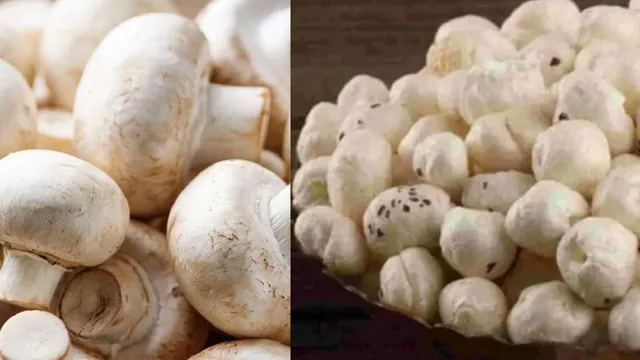
Mushroom production expands rapidly
Bihar’s mushroom output has risen from 60 tonnes in 2013-14 to 42,190 tonnes, marking a major expansion over 11 years. Jagran, citing a recent report from the Indian Council of Agricultural Research, said the state has become India’s leading mushroom producer and has held that position since 2022.
Bihar now accounts for 12.02% of India’s total mushroom production, compared with 10.82% in 2020. India ranks fourth globally in mushroom production, although its exports remain limited. Bihar’s growth has therefore been driven primarily by domestic consumption and the spread of small-scale production rather than by overseas demand.
Low entry costs support farm diversification
Mushroom cultivation does not require fertile land or a specific outdoor climate. Producers can grow it on racks in huts or enclosed rooms using straw, compost and spawn. These relatively modest requirements make the crop accessible to low-income households and allow farmers to add production without acquiring significant areas of agricultural land.
Jagran described mushrooms as a low-cost source of income, nutrition and economic opportunities for women. The production model is particularly relevant in a densely populated state where access to land and capital can constrain conventional farming. Indoor cultivation can also provide an additional activity for rural households outside the main field-crop cycle.
Rapid output growth, however, raises commercial challenges. Fresh mushrooms are perishable, making reliable collection, cooling, transport and sales channels essential. Jagran said improved processing infrastructure and market linkages would enable the industry to make a larger contribution to Bihar’s economy. Processed, dried or preserved products could extend shelf life and widen the geographic reach of producers.
Makhana follows a different growth path
Bihar is also a leading producer of makhana, or fox nuts. According to Jagran, India produces 80% of the world’s makhana and Bihar supplies 80% of India’s output. The state also represents approximately the same share of India’s makhana exports, although domestic buyers still account for most consumption. Mithila Makhana received a geographical indication tag in 2022, improving its branding and export prospects.
Unlike mushrooms, makhana production is concentrated in ponds and waterlogged areas and requires substantial labor, specialist skills and investment. Production may be approaching its current upper range, but Bihar has set a target of expanding the cultivated area to 70,000 hectares by 2030. Mushrooms, by contrast, are presented as having greater room for further output growth because cultivation can be distributed across enclosed spaces.
Jagran cited market research valuing India’s mushroom market at approximately ₹11,992 crore in 2024 and projecting it to reach ₹24,753 crore by 2030, with growth of 12.84%. Its makhana figures appear internally inconsistent: the publication reported a value of ₹92,900 crore in 2025 and a forecast of ₹19,950 crore by 2034 while also stating an 8.85% compound growth rate. The mushroom production figures nevertheless show that Bihar’s next constraint is increasingly likely to be processing and distribution capacity rather than cultivation alone.