Bihar Leads India in Mushroom Production After Output Reaches 42,190 Tonnes
Bihar’s mushroom production rose from 60 metric tonnes in 2013/14 to 42,190 metric tonnes in 2023/24, making it India’s leading producing state. Government programs supported the expansion, although the available source material does not identify individual schemes or their budgets.
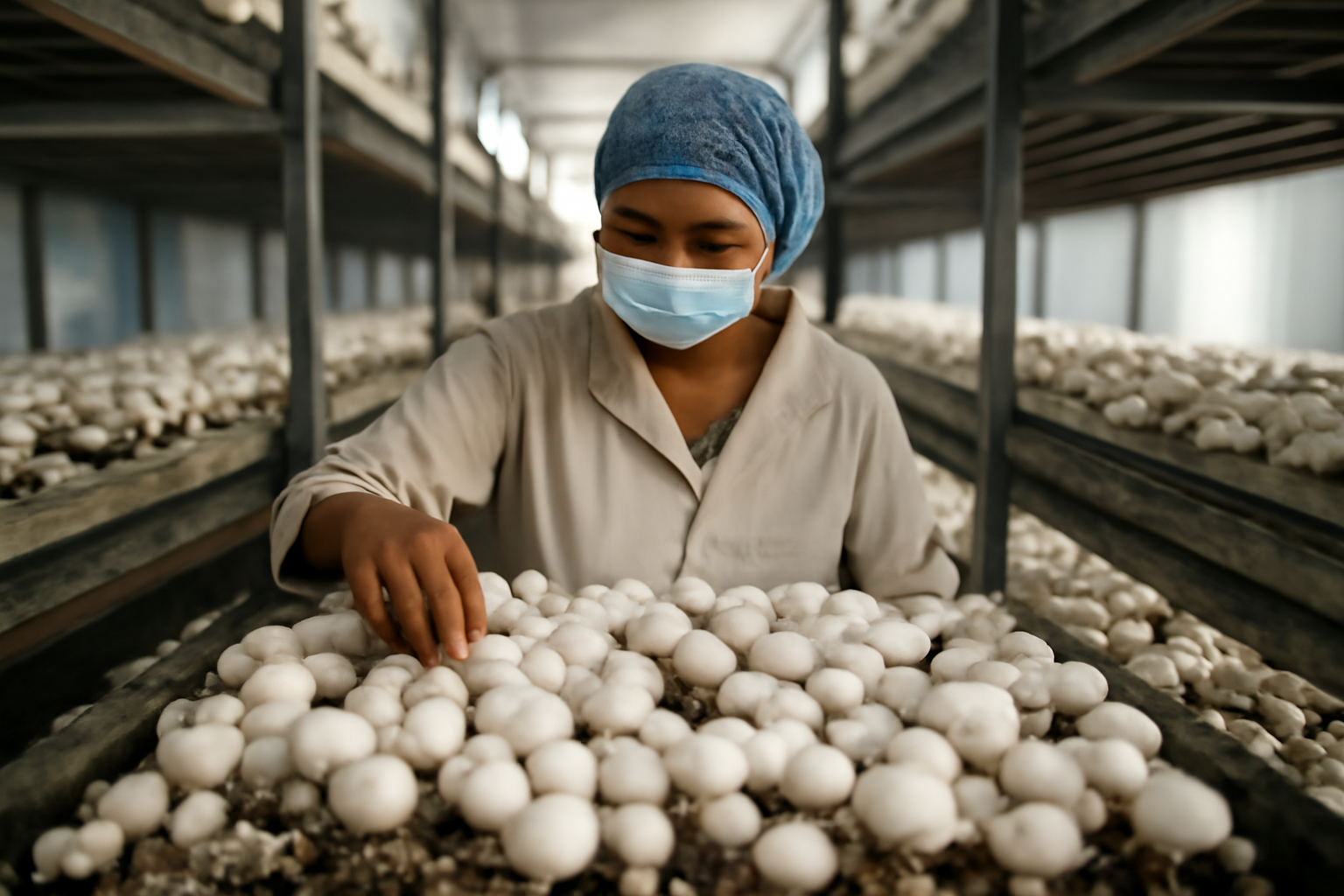
Output rises from 60 to 42,190 tonnes
Bihar has become India’s leading mushroom-producing state after a decade of rapid output growth. Production increased from 0.06 thousand metric tonnes, or 60 metric tonnes, in the 2013/14 season to 42.19 thousand metric tonnes, or 42,190 metric tonnes, in 2023/24.
The change represents an increase of more than 700 times over ten years. It also marks Bihar’s emergence from a very small production base into a significant source of mushrooms for the Indian market. The figures describe total output, but the available source material does not provide a breakdown by mushroom variety, district, farm size or production system.
Government support accompanies expansion
Government programs were cited as supporting the sector’s rise. The source material, however, does not name the individual schemes, specify their launch dates or disclose the amount of public funding involved. It also does not separate the contribution of government assistance from investment by growers, processors or other private-sector participants.
Even without those details, the scale of the increase indicates that mushroom cultivation has moved beyond isolated activity in Bihar. Raising annual output by 42,130 metric tonnes from the 2013/14 level requires a much larger production base as well as regular access to growing material, labor, technical knowledge and markets. Because mushrooms are perishable, expansion also increases the importance of timely collection, storage, processing and distribution.
Higher volumes reshape the market
For producers, the state’s new position creates opportunities to build larger and more consistent supply programs. It may also intensify competition among growers if local demand, processing capacity and distribution do not expand at the same pace as production. Reliable quality standards and predictable delivery volumes become more important as commercial buyers handle a larger crop.
Processors and traders will need to assess how much of Bihar’s output can be sold fresh and how much requires preservation or processing. The available information does not state Bihar’s domestic sales, interstate shipments, exports, farm-gate prices or processing capacity, so the commercial destination of the additional volume cannot yet be quantified. Those indicators will determine whether the production surge results in stronger grower income or greater pressure on prices during peak supply periods.
Next phase depends on market infrastructure
Bihar’s rise to first place is a production milestone, but maintaining that position will depend on the systems surrounding cultivation. Cold handling, transport, buyer access, processing and production planning will influence how efficiently the state absorbs 42,190 metric tonnes of annual output.
More detailed reporting on varieties, yields, cultivated area, prices and sales channels would allow producers and investors to judge the sector’s productivity and profitability. For now, the ten-year increase establishes Bihar as a major Indian mushroom production center and places greater attention on the infrastructure needed to market its expanding crop.