Bihar institutions unite to expand spice production, processing and export access
RPCAU and India’s Spices Board have brought growers, producer organizations and exporters together to strengthen Bihar’s spice value chain. The initiative focuses on quality testing, traceability, processing, direct buyer access and premium prices for farmers.
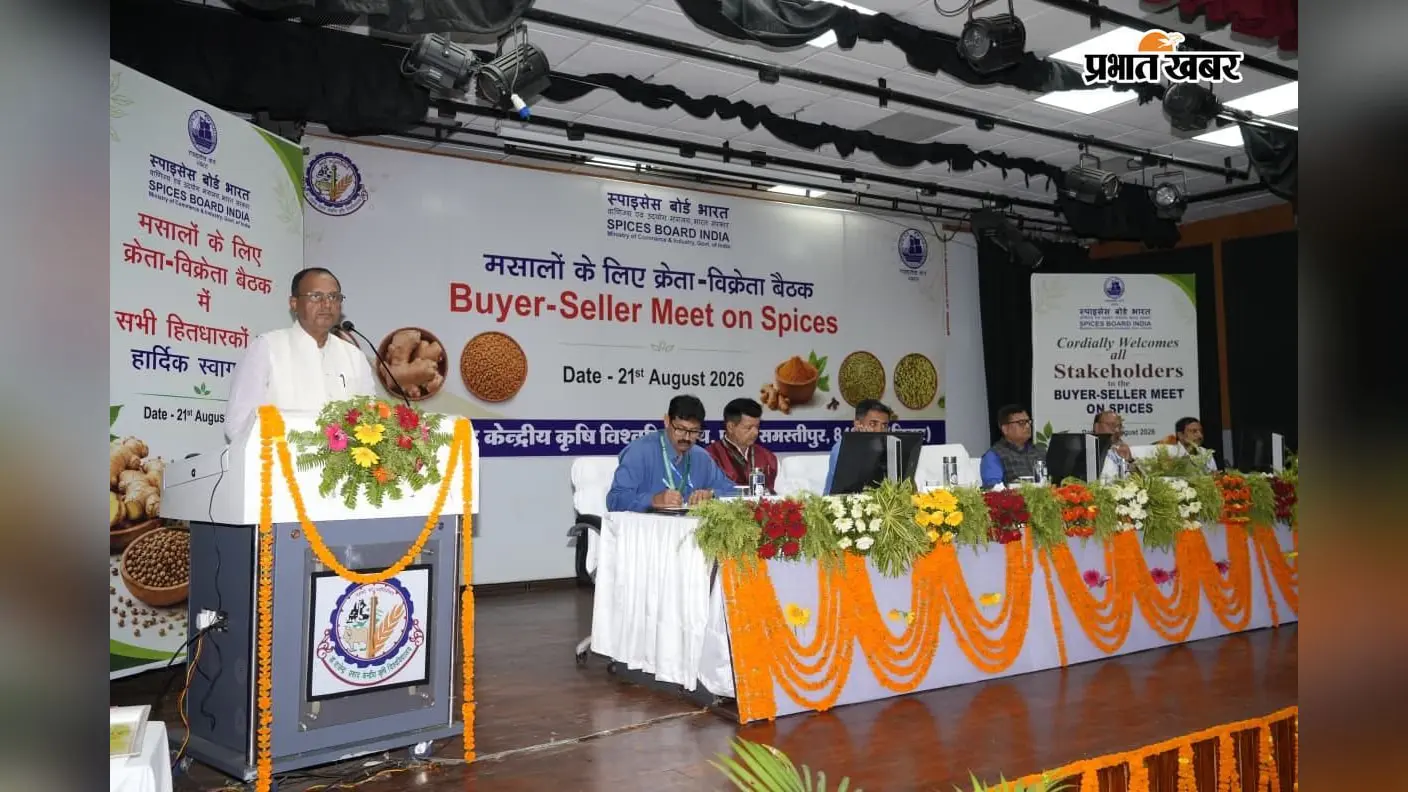
Growers and exporters meet in Pusa
Dr. Rajendra Prasad Central Agricultural University, or RPCAU, and the Spices Board under India’s Ministry of Commerce and Industry have launched a coordinated effort to improve Bihar’s position in the spice sector. The institutions organized a buyer-seller meeting at the university’s Vidyapati Auditorium in Pusa on Friday, bringing producers into direct contact with potential commercial partners.
According to Prabhat Khabar, more than 200 spice farmers, members of farmer producer organizations, traders, scientists and students attended. The event also attracted around 53 exporters from across India, including Kerala and Assam. Discussions covered business opportunities, stronger relationships between exporters, farmers and FPOs, value addition and broader market access.
Production potential meets market constraints
RPCAU Vice-Chancellor Dr. P. S. Pandey said Bihar’s agricultural and climatic conditions are suitable for turmeric, ginger, coriander, fenugreek and other high-value spices. He argued that the state’s main challenge is not production itself, but weak commercial linkages, quality assurance, marketing, exports and value addition.
The production opportunity extends across several districts. Spices Board Marketing Director Bashisth Narayan Jha identified Samastipur, Muzaffarpur, Vaishali, Champaran, Darbhanga, Madhubani, Begusarai, Nalanda, Gaya and Bhagalpur as areas capable of producing high-quality turmeric, ginger, chilli and seed spices.
Jha said the Spices Board has designated Bihar as a priority state and regards RPCAU as an important stakeholder. He put India’s spice export contribution at more than 420 billion rupees and said Bihar still has substantial untapped export potential. No state production, processing-capacity or export target was announced at the meeting.
Quality, traceability and direct sales
The partnership aims to reduce the role of intermediaries, establish traceability, promote geographical indication registration and help farmers obtain premium prices. These measures are important for export-oriented supply chains, where buyers require consistent product specifications and evidence of origin and handling.
RPCAU plans to support FPOs with technical knowledge covering marketing, exports and quality planting material. The university also intends to develop improved spice varieties, post-harvest technologies and market-linkage models. Its stated objective is to help farmers move beyond primary cultivation and operate as agricultural entrepreneurs.
Dr. Pandey asked the Spices Board to support the establishment of a quality-testing laboratory at the university. A local laboratory could shorten the route between production, testing and commercial approval. Until such capacity is created, the board said its Quality Evaluation Laboratory in Kolkata would provide support for quality testing, export promotion and capacity building.
Processing will determine commercial impact
Direct meetings with exporters can give growers and FPOs clearer information about varieties, quality standards, volumes and delivery requirements. They do not, however, replace the need for cleaning, drying, grading, storage, packaging and reliable aggregation. Developing those functions will determine whether Bihar can supply consistent lots rather than sell fragmented volumes through conventional channels.
The initiative therefore links agricultural research with post-harvest management and buyer access. RPCAU and the Spices Board said they would work to connect farmers directly with exporters, while the technical sessions focused on strengthening the entire value chain. The next commercial test will be whether these institutional commitments produce repeat purchases, traceable supplies and higher farm-gate prices.