Big Motor Sale’s 11,165 bookings point to changing vehicle demand in Thailand
Thailand’s Big Motor Sale recorded 11,165 vehicle bookings between 21 and 30 August 2026. Thairath reported that Chinese brands captured more than half of disclosed bookings, while new-energy SUVs featured prominently among the leading models.
Chinese brands gain ground in event bookings
Thailand’s Big Motor Sale recorded 11,165 vehicle bookings during its 21–30 August 2026 run, offering a snapshot of changing demand among the country’s retail car buyers. According to Thairath, Chery, represented by Omoda and Jaecoo, and other newer Chinese brands secured more than half of the bookings disclosed for the event.
The result indicates that buyers attending the show were placing greater weight on equipment, technology and pricing than on long-standing brand loyalty. Thairath argued that concerns traditionally associated with younger brands, including manufacturer reputation and resale value, were no longer preventing customers from placing orders when the product and price proposition met their requirements.
The booking total is not a complete ranking of Thailand’s carmakers. Several major manufacturers declined to disclose their results, including Toyota, Honda, Mitsubishi, Nissan, BYD, Denza, Geely, GWM, MG, X-Peng, BMW, Mini and Tesla. Motorcycle brands and divisions including Thai Honda and Yamaha also withheld figures, as did iCAUR and Maxus. The omissions limit direct comparisons between participants and mean that the reported share of Chinese brands applies to the figures made public rather than necessarily to every order placed at the event.
EV, REEV and PHEV models shape retail demand
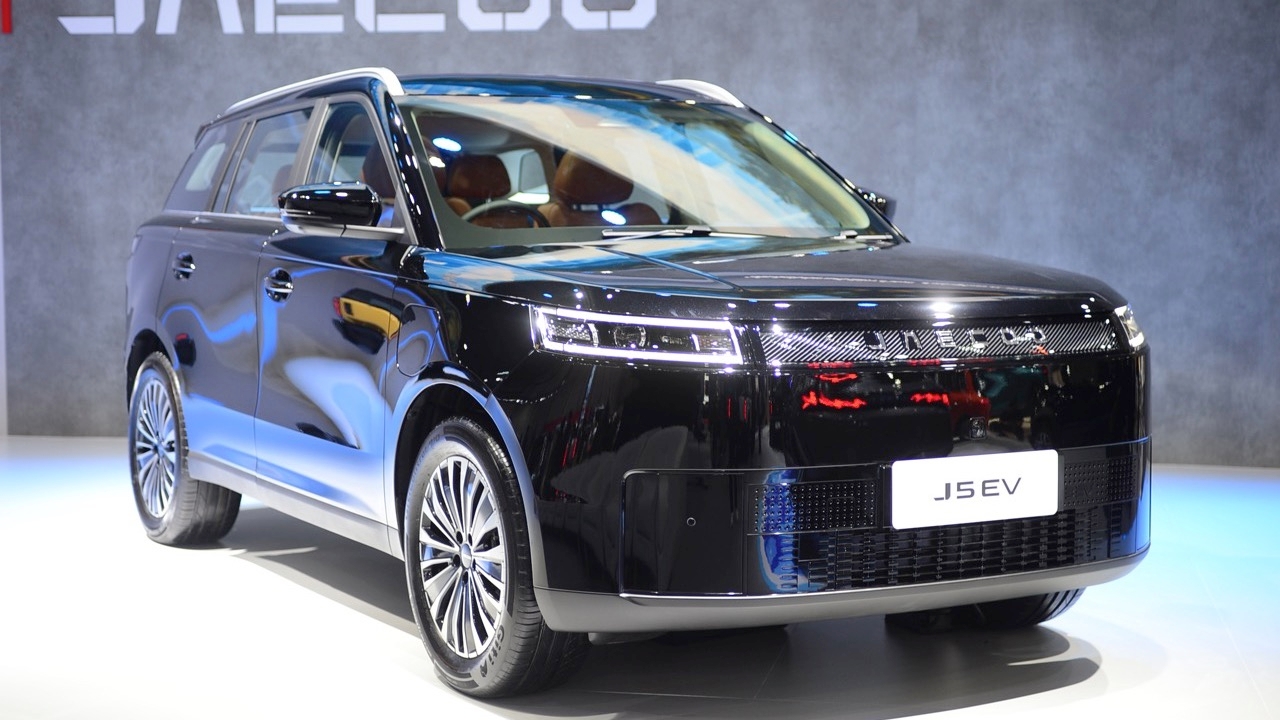
New-energy vehicles were prominent among the models generating strong bookings. The category included battery-electric vehicles, plug-in hybrids and range-extended electric vehicles, or REEVs. Thairath highlighted the Jaecoo 6T REEV and Jaecoo 5 EV as examples of demand in the B-SUV and C-SUV segments.
The model mix suggests that show visitors ready to purchase were actively seeking newer propulsion technology, particularly in popular sport utility vehicle formats. This matters for manufacturers because competition is no longer confined to the choice between internal-combustion and fully electric cars. REEV and PHEV products give consumers additional options where charging access, driving range or fuel flexibility remain important considerations.
Pricing and standard equipment are also becoming central competitive tools. Chinese manufacturers have used technology-rich specifications and product positioning to challenge established brands in passenger vehicles. The Big Motor Sale results indicate that this approach is converting interest into bookings, at least among customers attending a purchase-oriented automotive event.
Established manufacturers retain strength outside the show
Event bookings should not be treated as equivalent to annual registrations or total market share. Thairath noted that large Japanese manufacturers still benefit from accumulated sales in hybrid passenger cars, pickup trucks, commercial vehicles and corporate fleets. Those categories provide a broader base than the retail passenger-car demand visible at a motor show.
Nevertheless, the event offers a useful measure of current consumer intentions. Chinese brands appear to be winning passenger-vehicle customers more quickly, particularly where buyers compare technology and price directly across multiple manufacturers. For Japanese groups, the pressure is concentrated in the part of the market where individual buyers can switch brands without the procurement requirements that influence fleet and commercial sales.
The decision by numerous manufacturers not to disclose bookings adds uncertainty but is itself relevant to how motor-show results are communicated. Thairath described non-disclosure as a public-relations strategy that prevents unfavorable comparisons. Without complete brand-level figures, the 11,165 total cannot establish a definitive competitive ranking, but it does show that new-energy powertrains and newer Chinese marques have become important factors in Thailand’s retail vehicle market.