Belgian competition authority sanctions Südzucker unit Raffinerie Tirlemontoise over beet contracts
The Belgian Competition Authority has established an abuse of economic dependence by Raffinerie Tirlemontoise, the Südzucker group's Belgian sugar business, closing a file opened by a 2018 complaint. Commitments on beet purchase price and pulp remuneration clauses become binding from the 2027 campaign. The new beet campaign opens on 5 October with Belgian yields down to 15-16 tonnes of sugar per hectare.
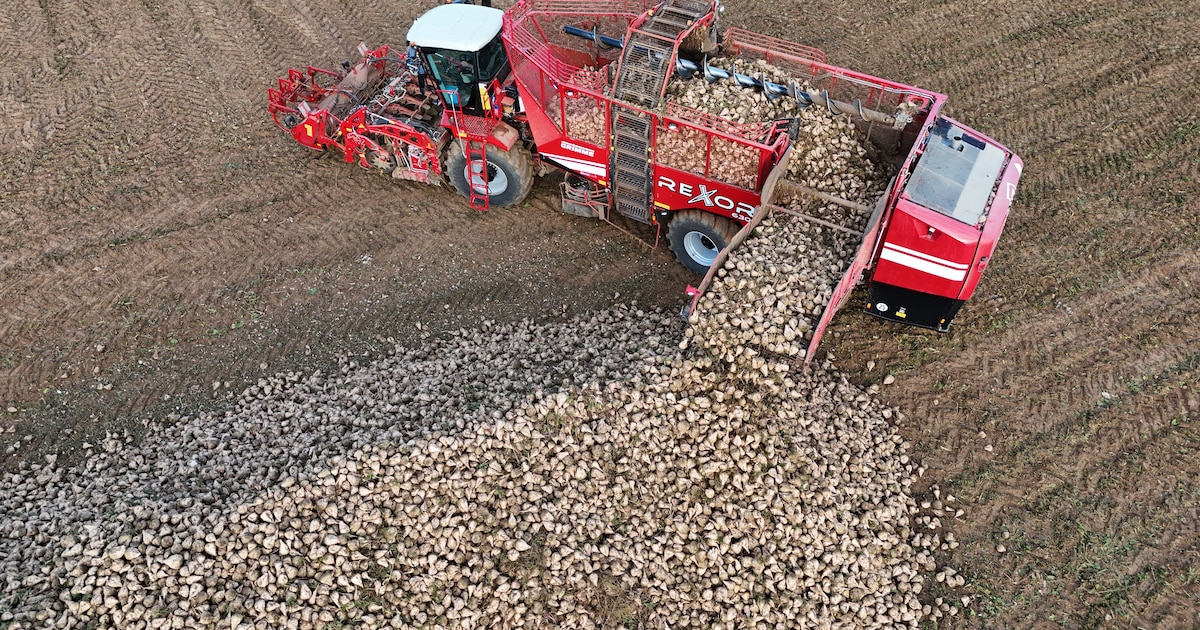
Regulator finds abuse of economic dependence
The Belgian Competition Authority (Autorité belge de la Concurrence, ABC) has sanctioned Raffinerie Tirlemontoise, the Belgian sugar producer belonging to Germany's Südzucker group, over its conduct towards sugar-beet growers, L'Avenir reported. The decision closes a file that began with a complaint lodged in 2018.
The authority established an “abuse of economic dependence”, finding that the refiner's position of market dominance allowed it to impose “unfair conditions on one or more trading partners that do not have a reasonable equivalent alternative”. On that basis, the ABC considers that “competition is liable to be affected”.
Beet price and pulp clauses to be rewritten
Raffinerie Tirlemontoise contested the objections but offered a package of commitments during the procedure, which the ABC has made binding from the 2027 beet campaign. The company will amend contractual clauses “relating to the determination of the purchase price of sugar beet and to the remuneration of its pulp residue”. It will also no longer be able to make payment for the current harvest conditional on obligations covering the following year's campaign — a mechanism that linked settlement of one crop to commitments for the next.
“It is binding and mandatory,” Damien Gérard, auditor general at the ABC, told L'Avenir. “There will be more transparency and less uncertainty in the beet campaign.” The final conditions are still under negotiation, and the authority declined to give further detail at this stage.
Jan Ingels, chief executive of Raffinerie Tirlemontoise, said in a statement that the company had “participated constructively in this process” and that “when certain agreements can be made clearer, more transparent, more predictable and more balanced, we also want to take that step”. The same statement specified that “the commitments do not constitute a recognition of an infringement of competition law”. Growers welcomed the outcome: “That is our reading, and I hope RT will have the same,” said Vincent Demanet, vice-president of the Confédération des betteraviers belges (CBB).
Campaign opens on 5 October with yields near average
The new beet campaign begins on 5 October, ahead of the commitments taking effect. Demanet described the outlook for Belgian beet as encouraging compared with neighbouring producers: “In France and Germany, it's a disaster. We are doing well.” He said Belgian growers have ranked first in Europe on sugar yield per hectare for the fourth consecutive year, reversing a position held two decades ago by Champagne.
Drought has pushed yields below last year's level while leaving them within the range of recent seasons. Output will fall from more than 18 tonnes of sugar per hectare to 15-16 tonnes, according to Demanet. Sampling points to a result in line with the average of the past six to seven years. The crop was well advanced at the end of June and recovered after rain in late August. “It is not the catastrophe that was announced,” he said.
Price threshold and global supply
Prices remain the binding constraint. Demanet put the profitability threshold above 600 euros per tonne of sugar, against a current quotation of slightly more than 500 euros per tonne. That gap of roughly 100 euros defines the economics of the campaign now opening.
Supply signals point in growers' favour. Alongside lower French and German beet crops, cane sugar output in Brazil and India is also expected to decline, which Demanet attributed to the oil crisis. Both countries can turn cane into either sugar or ethanol. “They will therefore make more ethanol and that will put less sugar on the market,” he said.