Belgian apple and pear harvest falls after drought, heat and hail
Belgium expects to harvest 166 million kg of apples and 364 million kg of pears in 2026. The apple crop is 22% below the five-year average, while pear production is down 7% as drought, heat, hail and shrinking acreage weigh on supply.
Apple crop drops 22% below five-year average
Belgian fruit growers expect to harvest 166 million kg of apples and 364 million kg of pears in 2026, with both crops below average after a dry, hot summer and repeated hailstorms. The estimates were prepared by the Flemish Agency for Agriculture and Fisheries, the Association of Belgian Horticultural Cooperatives, producer organisations and the Boerenbond following a survey of about 100 Belgian fruit farms, according to De Morgen and HLN.
The projected apple harvest is 22% below the five-year average. Weather damage contributed to the decline, but the continuing reduction in cultivated area is the main factor. Belgium’s apple acreage has contracted by one quarter since the 2020-2021 season, reducing the sector’s production base even before this season’s adverse conditions.
Dry and warm weather placed additional pressure on orchards, while several hailstorms damaged hard fruit during the growing season. The result will be fewer Belgian apples suitable for supermarket shelves. A substantially larger share of the harvested crop is expected to go to industrial processing because hail left significant volumes below fresh-market quality standards.
Water shortage limits pear size
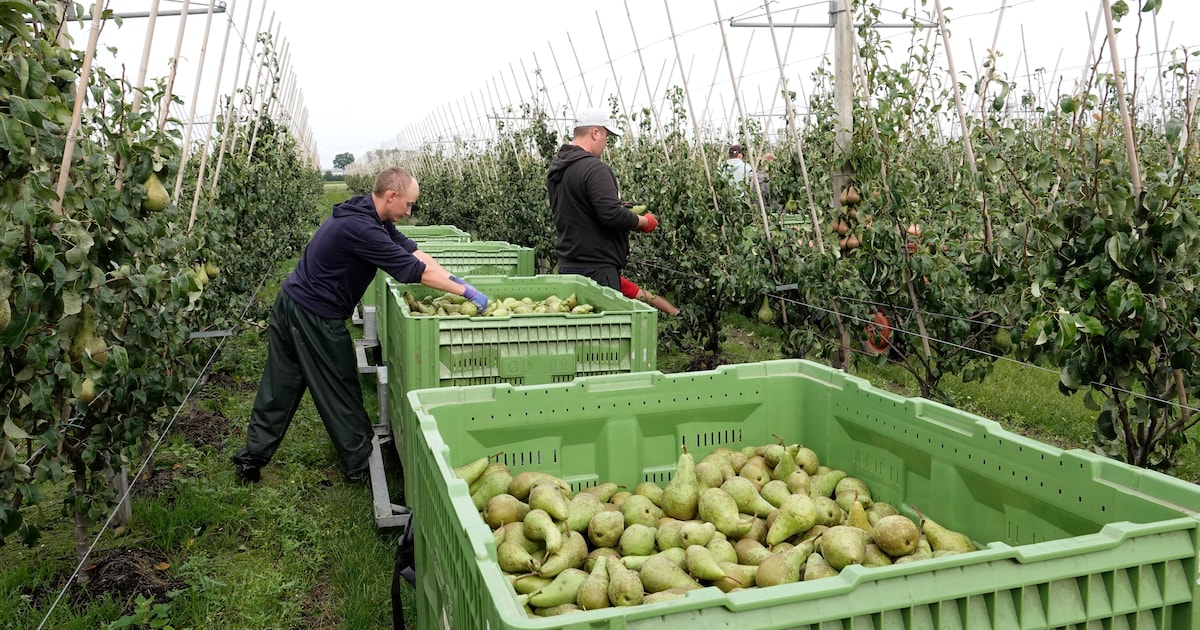
Belgian farms forecast pear production of 364 million kg, a decline of 7%. The country has 10,619 hectares planted with pear trees. Heat and insufficient water made the season difficult, and the resulting fruit is expected to be smaller, although sector representatives say its flavour should be particularly strong.
The effects differ across the two crops. Apple supply is being reduced by both long-term acreage contraction and immediate weather damage. Pear orchards retain a large planted area, but drought is affecting fruit size and therefore the volume and grading profile available to packers, retailers and other buyers.
Growers have been investing in irrigation, hail protection and other innovations to limit weather losses. The sector is also diversifying its offer through new pear varieties. This season’s estimates show why those investments matter: hail can redirect fruit from higher-value retail channels into processing, while water shortages can reduce marketable weight even where trees continue to bear fruit.
EU apple and pear supply also below normal
Belgium’s smaller crop comes as production is also expected to decline elsewhere in Europe. Preliminary estimates put the European Union apple harvest at 9.5 million tonnes, 11% below a normal crop. EU pear production is forecast at 1.9 million tonnes, 7% below normal.
Lower output across the EU means Belgian buyers cannot assume that weaker domestic availability will be offset by abundant regional supply. The changing split between fresh-market and processing apples will also matter for packing houses and processors: retail-grade fruit will be scarcer, while industrial channels are expected to receive a larger share of Belgium’s apple crop.
Industry organisations identify climate change, unpredictable international market developments, restrictions affecting essential crop-protection products, labour availability and growing administrative requirements among the main challenges for the coming season. Producers also face a proliferation of production specifications and what the sector describes as limited EU support for agriculture. For growers, the immediate task is to market a smaller and more uneven crop; for processors and retailers, it is to manage a supply mix shaped as much by quality damage and fruit size as by total tonnage.