US Envoy Says Belarusian Fertilizer Supplies to America May Require Talks With Russia
US special envoy Coale said potential new arrangements between Washington and Minsk on Belarusian fertilizer supplies may require negotiations with Russia, according to TASS. No volumes, timelines, companies or legal mechanism were disclosed. Belarus has no seaports of its own, and its potash exports currently move through Russian terminals.
Envoy points to a three-way track
Any resumption of Belarusian fertilizer shipments to the United States may hinge on a negotiating track that includes Russia, US special envoy Coale said in comments reported by the Russian state news agency TASS. According to TASS, Coale pointed to talks with Moscow as a possible condition for new arrangements between Washington and Minsk on fertilizer supplies. The remark frames the issue as trilateral rather than bilateral, even though the commercial counterparties would be American buyers and Belarusian producers.
TASS did not report volumes, product grades, delivery timelines, contract values or the companies that would be involved, and the report carries no confirmation or comment from Minsk or Moscow. No legal instrument — licence, exemption or waiver — was described. For the market that leaves a stated political direction without the parameters that determine whether cargo can actually move.
Why Moscow sits inside a bilateral file
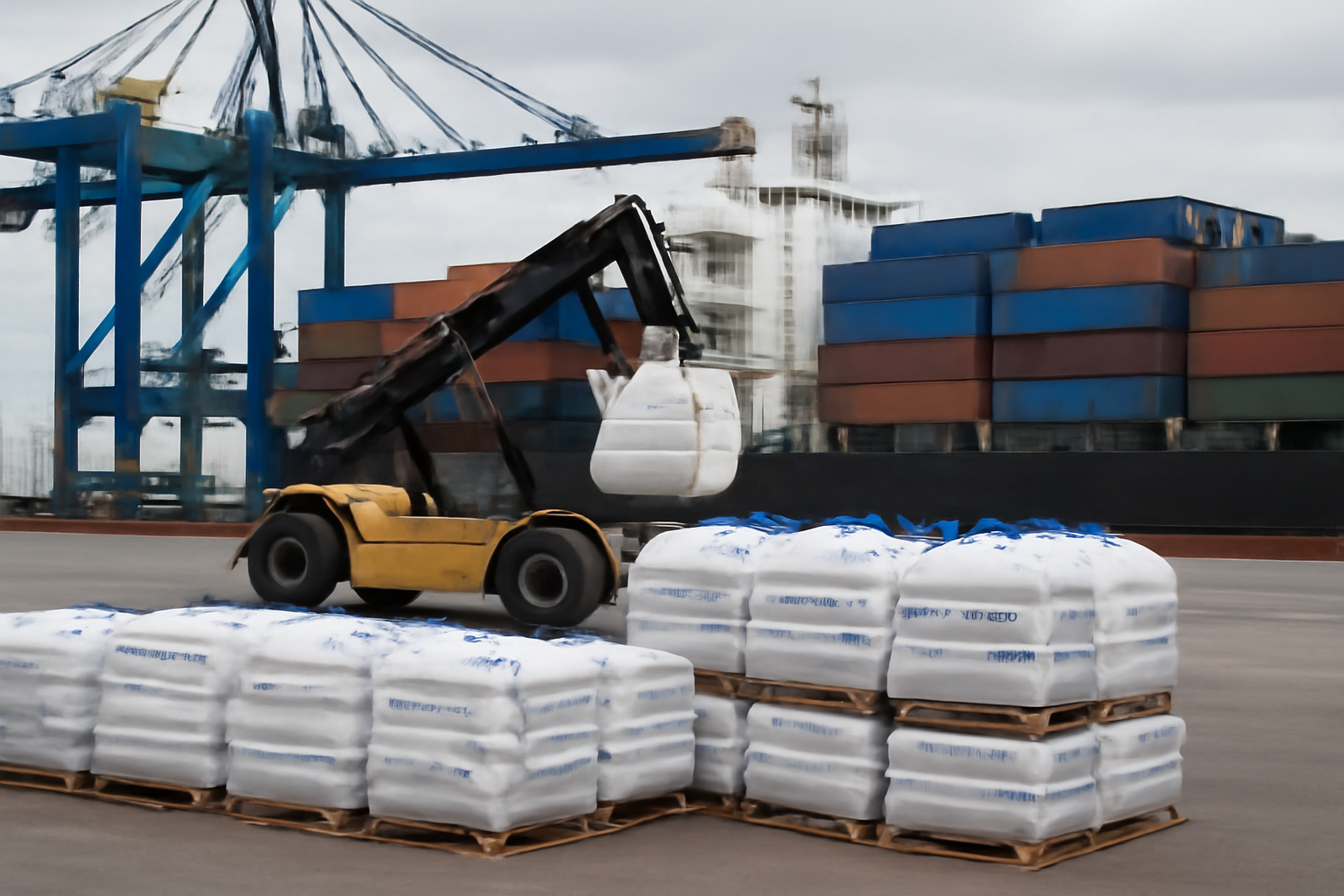
Belarus is one of the world's largest producers of potash fertilizer and has no seacoast. Its potash historically reached overseas buyers through Baltic ports, and after that transit route was closed to Belarusian cargo, shipments were redirected eastwards through Russian ports. Export capacity therefore depends on rail access, berth allocation and handling agreements outside Belarusian jurisdiction.
That is the practical reason a Washington-Minsk understanding can require Moscow. Sanctions relief on the Belarusian side would settle who may buy and sell; it would not by itself settle how tonnes reach a vessel. Any supply programme aimed at US ports would need a routing solution as firm as the licence behind it.
Sanctions wording decides what ships
For traders the operative questions are legal rather than political: which entities are covered, whether relief comes as a general authorisation or case by case, and whether it extends to transit, freight, insurance and payment. Banks screen named counterparties and ownership structures, and marine insurers price residual risk. Both work from published texts, not from official statements.
A narrow carve-out that permits the sale but leaves logistics or banking restricted would not generate flows. Broad authorisation covering the whole chain — producer, trader, rail, port, vessel and payment — would allow volumes to return quickly, because productive capacity and a customer base both already exist. The gap between those two outcomes is a matter of drafting.
What market participants will watch
- the legal form of any US relief and its duration
- which Belarusian producing and trading entities are named
- routing and port arrangements, including any Russian handling role
- payment, freight and insurance channels available to buyers
Until those elements are published, US importers and blenders have no basis on which to contract Belarusian material, and existing supply relationships stay in place. Competing potash suppliers have an interest in the detail as well, since additional Belarusian tonnage offered into the Atlantic basin would compete directly with their volumes. As reported by TASS, Coale's comment sets a direction of travel and names the obstacle; it does not yet describe a transaction.