Belarus Supplies 20 Tonnes of Winter Rapeseed Seed to Russia's Oryol Region
A 20-tonne lot of winter rapeseed seed of the Viten variety arrived in Russia's Oryol region from Belarus in September 2026, the Rosselkhoznadzor directorate for the Oryol and Kursk regions said. Inspectors checked the shipping documents and took samples for laboratory analysis before clearing the seed for use. The material is destined for the region's autumn sowing campaign.
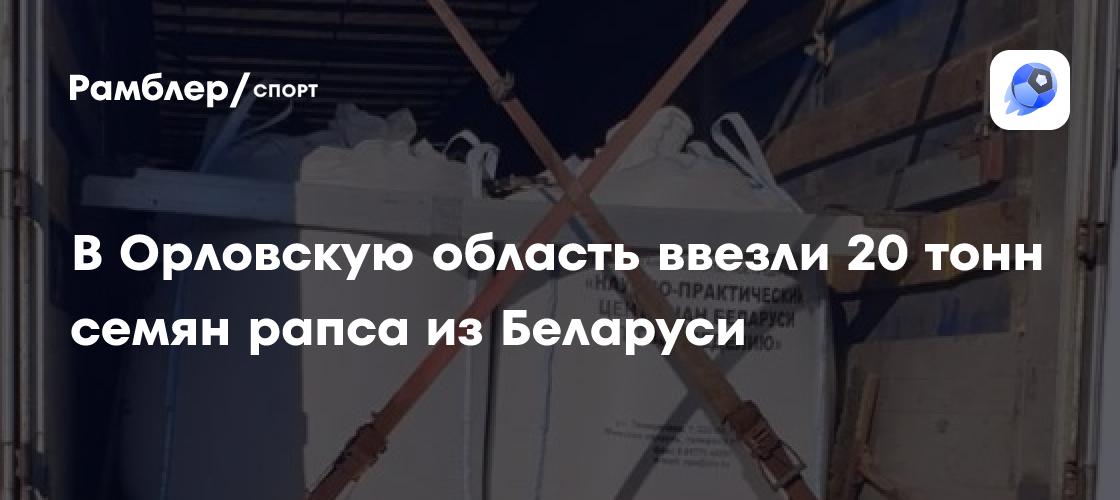
A 20-tonne consignment cleared for autumn sowing
A consignment of 20 tonnes of winter rapeseed seed of the Viten variety was brought into Russia's Oryol region from Belarus in September 2026, according to the Rosselkhoznadzor directorate for the Oryol and Kursk regions. The lot was consigned to a local company and was released for use after inspection.
The delivery was reported by the Oryol edition of Komsomolskaya Pravda, citing the agency. The material is planting seed rather than commercial oilseed: it is intended for the region's autumn sowing campaign. The recipient was described only as a local company and was not named, and Rosselkhoznadzor said checks on imported product are continuing.
Documents checked, samples taken
The consignment was handled under quarantine phytosanitary control. Inspectors examined the accompanying trade documents and drew samples for laboratory analysis. On completion of the checks, the agency established that the seed complied with the requirements of the Russian Federation and was fit for its intended use.
Seed and planting material sit in the highest-risk category of phytosanitary control, because pathogens, insect pests and weed seeds travel with a lot and can establish in a new territory. A failed sample can lead to treatment, refusal of entry or return of a consignment — an outcome that, in the case of seed, effectively writes off a planting plan rather than merely delaying a cargo.
Arrival lands at the edge of the drilling window
Winter rapeseed is drilled in late summer and early autumn so that plants build a rosette and a root system before dormancy. Sowing too late leaves crops that overwinter poorly and are more likely to be written off in spring. A lot cleared in September therefore has to move from the border to the drill within weeks, which puts a premium on how quickly documentary and laboratory checks are completed. Certified seed also has to be distributed, treated where required and delivered to individual fields before drilling starts.
Oryol region lies in Russia's Central Black Earth belt, where rapeseed competes for area with winter wheat, barley, sunflower and soybeans. The crop is processed into oil, a large share of which is export-oriented, and into meal used in domestic compound feed. Because winterkill risk sits with the farmer rather than the processor, variety choice and seed quality carry more weight in rapeseed than in most field crops, and buyers of planting material tend to stay with varieties that have performed locally.
Trade context and open questions
Belarus and Russia trade agricultural inputs inside the Eurasian Economic Union and the Union State framework, without customs duties between them, although plant health controls still apply when a consignment crosses. Seed and planting material form part of that flow alongside machinery, fertiliser and processed food. The reported consignment, however, leaves several commercial details unstated:
- the names of the Belarusian supplier and the Russian buyer;
- the contract value or the price per tonne;
- the area the seed is expected to cover;
- whether further shipments are scheduled this season.
Rosselkhoznadzor's statement that control over imported product continues suggests this consignment is unlikely to be the only one inspected in the region during the current sowing period. Neither report gave figures for the region's planned winter rapeseed area or for total seed imports from Belarus. For input traders, the practical takeaway is procedural: lots moving in September are cleared on documents and laboratory samples, and the speed of that step, rather than the tonnage, decides whether the seed reaches the field on time.