Lukashenko Says All Belarusian Potash Volumes Are Contracted, Leaving Nothing for Western Markets
President Alexander Lukashenko said every available volume of Belarusian potash fertiliser is already contracted for export, ruling out supplies to Western markets this year. Customs chief Vladimir Orlovsky reported that the eastern direction now accounts for 85% of Belarusian exports and imports. The statement follows the lifting of US sanctions on the Belarusian potash producer and one small shipment to the United States.
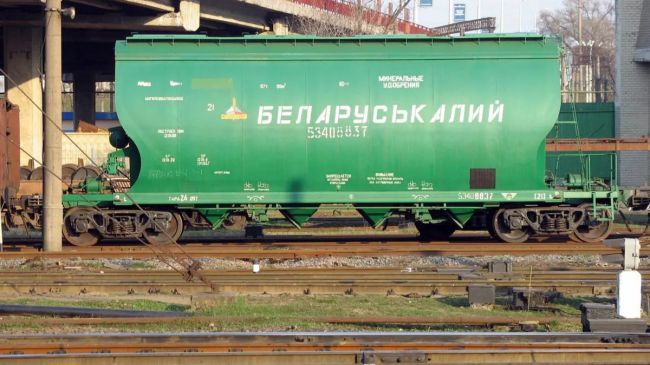
All available volumes of Belarusian potash fertiliser have already been contracted for export, President Alexander Lukashenko said, ruling out supplies to Western markets in the current year. He spoke on Monday in Minsk while receiving a report from Vladimir Orlovsky, chairman of the State Customs Committee, EADaily reported on 21 September 2026.
“As far as I am informed by the prime minister and the government, we have managed to reorient to the east. The talks with the Americans are evidence of that,” Lukashenko said in remarks distributed by the presidential press service. “Even if we wanted to supply somewhere else, to Western markets, we simply do not have those volumes — everything is contracted.” He said output had already been committed for the current year, which is why large tonnages cannot be offered to the American side.
Customs data underline the eastern shift
Orlovsky told the meeting that the eastern direction now accounts for 85% of all Belarusian exports and imports handled by Belarusian enterprises. He also reported growth in customs payments to the state budget.
- 85% of export and import flows for Belarusian enterprises run in the eastern direction, according to the State Customs Committee.
- Customs payments to the state budget rose 3.5% over eight months.
- Growth in the current month has reached 5.2%.
Lukashenko said that rough economic attacks from European Union countries and the West in general “have not gone anywhere”, while the reorientation of trade flows to the east continues. He also asked Orlovsky about deliveries of goods from unfriendly countries that imposed sanctions on Belarus, and about the system for confirming the expectation of goods, known by its Russian abbreviation SPOT, introduced by Russia.
Sanctions relief has not produced volume
The United States earlier lifted sanctions on the Belarusian potash producer, EADaily recalled. Lukashenko subsequently reported a small consignment of potash shipped to the United States. Monday's remarks set the limit on what can follow: Minsk continues to cite negotiations with American buyers, but the president says no significant tonnage is available while existing contracts run.
Notably, Lukashenko presented the talks with the Americans as evidence of the eastward reorientation rather than as a step back toward Western markets. The argument is that Belarus can afford to decline Western business precisely because its output is already placed elsewhere.
What the statement does not say
Neither the customs report nor the president's remarks contained production or export figures for potash. No tonnages, contract counterparties, destinations or prices were disclosed, and the expiry of current commitments was indicated only by the reference to the current year.
Potash is traded largely under annual and multi-year supply agreements, so a claim that volumes are all contracted describes ordinary commercial practice rather than a sanctions-driven restriction. The customs figures cited at the meeting refer to Belarusian foreign trade as a whole, not to potash specifically; no commodity breakdown was provided. For importers in Europe and North America the operational takeaway is narrow but firm: on Minsk's own account, the removal of US restrictions on the Belarusian producer has not created spot availability, and incremental volumes would have to wait for the next contracting round or come from other suppliers.