Belarus Lifts Peat Product Exports by 23%, With China and CIS as Top Buyers
Belarus has increased exports of peat-based nutrient soils, substrates and fertilisers by 23%, with China and CIS states the most active buyers, according to MIR 24. Demand for heating briquettes has fallen while processed growing media move to the front of the industry. A Vitebsk region site extracts about 200 tonnes a day from reserves of 2.5 billion tonnes.
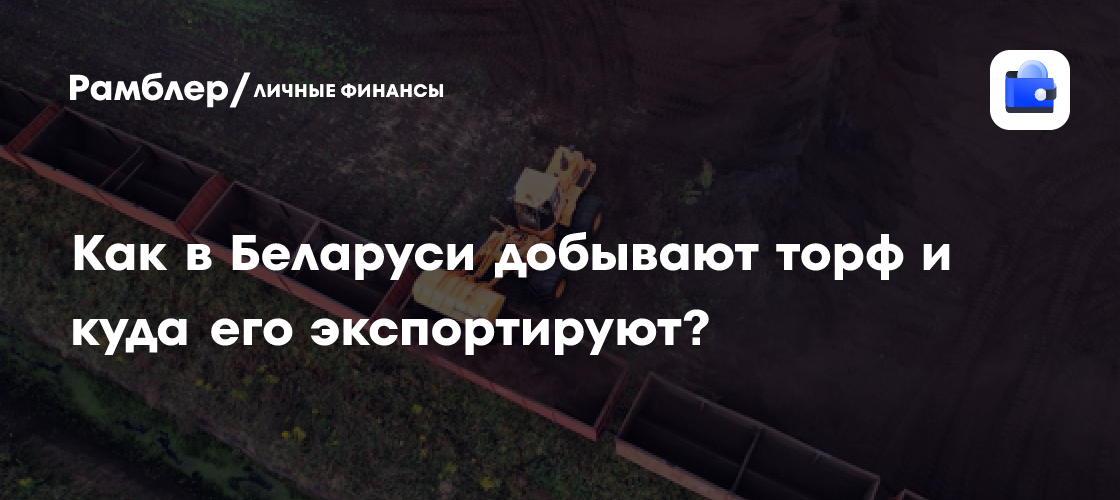
Belarus has increased exports of peat-based products — nutrient soils, growing substrates and fertilisers for agriculture — by 23%, with China and the countries of the Commonwealth of Independent States the most active buyers, according to a report by the broadcaster MIR 24 filmed at an extraction site in the Vitebsk region.
The report, prepared by correspondent Yelena Kozlova, did not specify the period covered by the 23% increase, the volumes shipped or the value of the trade. It presented the export growth as part of a broader repositioning of the Belarusian peat industry, away from fuel and towards processed products for horticulture, floriculture and forestry.
Demand moves from briquettes to substrates
Demand for peat briquettes used in heating has fallen noticeably, MIR 24 reported, and another application has come to the fore: nutrient soils, substrates and fertilisers for forestry and floriculture. Raw peat is processed to give it new properties and form before the finished product is shipped abroad, with China named among the strategic destinations.
The two product families behave differently in the market. Briquettes are a bulk energy commodity that competes on delivered cost per unit of heat, while substrates and potting soils are sold on formulation, structure and consistency, and are bought by nurseries, greenhouse operators and forestry services.
Reserves measured in centuries
At the deposit in the Vitebsk region featured in the report, about 200 tonnes of peat are extracted per day. The country uses only a small part of its resource base: out of 2.5 billion tonnes of peat, about 300 million tonnes have been designated for industrial development, a volume described in the report as sufficient for at least the next 100 years.
Extraction is seasonal and preparation-heavy. Fields have to be drained, cleared and levelled so that a new season can start without lost time, and crews prepare the next section while machinery is still leaving the previous one, said Igor Basov, head of a peat extraction section, who has spent 37 years in the profession. “The work is honestly hard. I am not exaggerating, I live here. The extraction season is on now,” he said.
A custom soil for the Chinese market
The most specific export case described in the report is a made-to-order growing medium for China. Andrei Gaganov, deputy director general for industrial and agricultural production at the utility enterprise Vitebskoblgaz, said Chinese buyers required a soil of a particular formulation for cultivating yellowhorn (Xanthoceras sorbifolium). The recipe was developed together with the Botanical Garden of the Academy of Sciences, set out in technical specifications and put into production. “New types of products and new opportunities have opened up for us,” he said.
Domestic supply and land restoration
Peat is also being directed at land restoration inside Belarus. “We see our peat being used to restore degraded land. It is a problem, and we have it as well. That is why we supply, and will continue to supply, the domestic market with exactly the kind of product that allows us to restore the soil,” said Valery Kovalev, director general of the state production association Beltopgaz.
Work does not stop when a deposit is exhausted: cut-over areas are rehabilitated and returned to nature. Belarus has already rewetted 73,000 hectares of such land, according to MIR 24.
The report did not name individual buyers in China, break shipments down by CIS market, or give prices for the exported soils and substrates. It also gave no figure for total peat output or for the share of production that goes to export.