Belarus cuts price-controlled goods list from 199 to 76
Belarus has reduced the number of goods covered by consumer price regulation from 199 to 76, removing most non-food and less frequently purchased items. At the same time, controls will cover bread, meat, poultry and fish products prepared inside retail outlets.
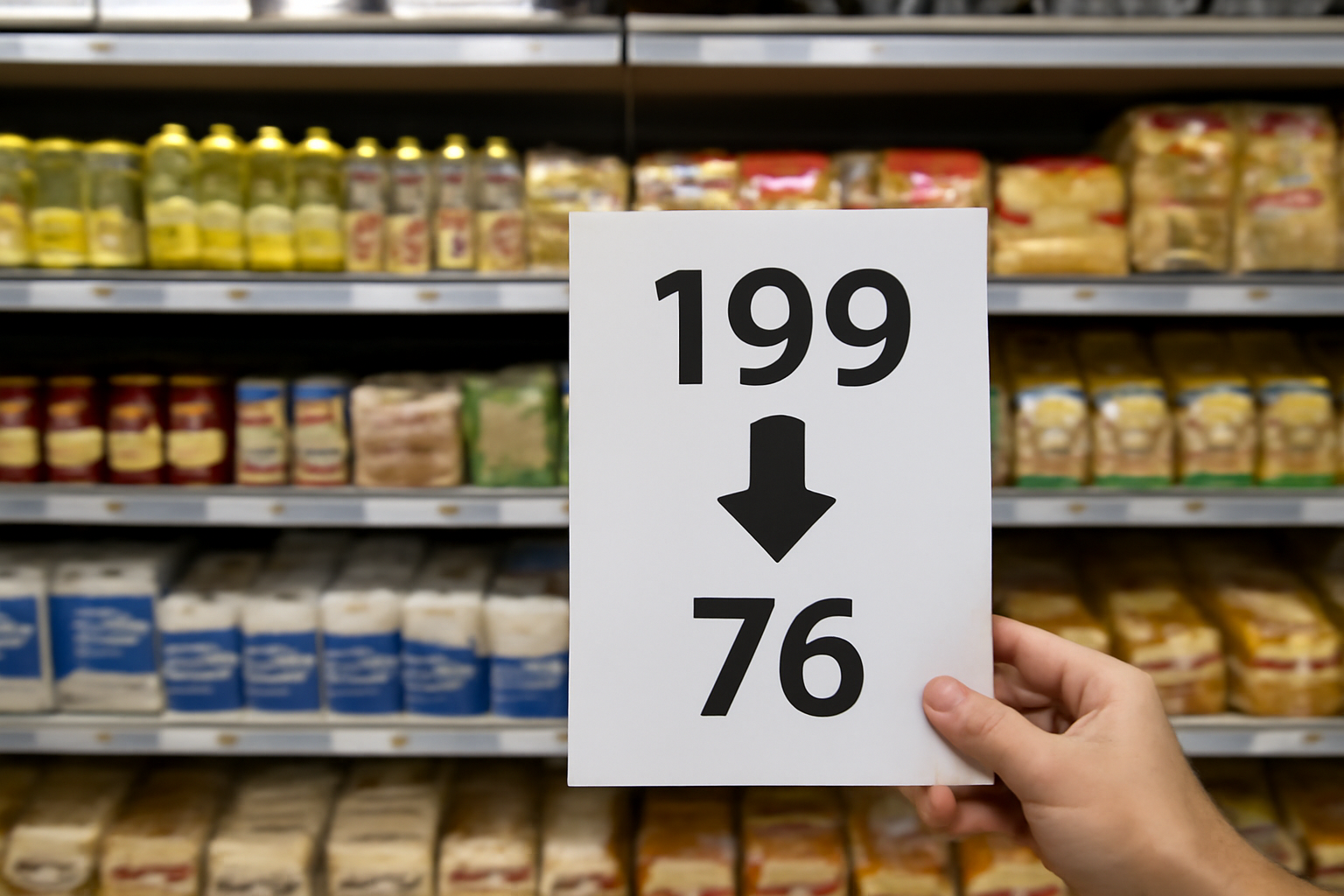
Controlled list narrowed to 76 goods
Belarus has reduced the list of goods subject to consumer price regulation from 199 positions to 76. The revision removes almost all non-food products and a number of goods that are not considered everyday purchases. Price controls have operated in the country since 2022, when the original list covered about 300 positions, and the government has gradually narrowed its scope.
Belmarket identified the reduction from 199 to 76 as one of the main changes in the revised system. Products removed from regulation include milk, kefir and sour cream sold in glass containers, as well as citrus fruit and chewing gum. The selection indicates that the authorities are concentrating controls on a smaller basket of products with greater importance for regular household spending.
SB reported that a more stable consumer-price environment, moderate inflation growth and confident forecasts provided the basis for another easing of regulation. Many non-food products have recorded falling prices, supporting the decision to remove them from the controlled list. The Ministry of Antimonopoly Regulation and Trade has said that goods can be returned to regulation if their prices rise sharply.
Retail-made food receives targeted controls
The broader easing is accompanied by tighter oversight of certain foods produced inside shops and retail chains. According to BELTA, regulated items will include bakery products and the processing of meat, chicken and fish, including the preparation of lightly salted fish. These products had previously occupied a different position from packaged goods supplied to retailers by outside manufacturers.
The change matters for retail chains that operate bakeries, butcher counters, kitchens or fish-processing sections. Their pricing of these products will now be subject to the regulated framework even as many other goods leave it. For suppliers, the distinction between factory-made merchandise and products processed at the point of sale may become more important in negotiations over wholesale prices, retail margins and product positioning.
The authorities have also changed maximum permitted markups on dairy products and tea, regardless of the country of origin. This makes the rules relevant to both Belarusian suppliers and foreign exporters serving the market. The available material does not specify the new markup rates, so the direct effect on individual products will depend on the detailed limits applied by retailers.
Implications for imports and domestic suppliers
The removal of citrus fruit and selected dairy formats from the list gives importers and distributors more freedom to pass through changes in purchase prices, freight costs and exchange rates. Citrus is inherently import-dependent in Belarus, while tea is also exposed to international supply conditions. However, the continued regulation of markups on tea means liberalization is not uniform across imported consumer goods.
Domestic food has secured a strong position in Belarusian shopping baskets, limiting the expected market impact of higher prices for some imported products. For foreign suppliers, competition with locally produced substitutes will therefore remain a constraint even where formal price controls are lifted. Importers may gain pricing flexibility, but they will still need to protect volumes in a market where consumers can switch to domestic products.
The reform is an easing of a system rather than its removal. Belarus has moved from about 300 regulated positions in 2022 to 199 and now 76, while retaining the option to restore controls after abrupt price increases. Exporters and distributors should consequently monitor both the remaining product list and retail-level enforcement, particularly for dairy products, tea, bread, meat, poultry and fish.