British Columbia premier puts $12 billion F-35 deal and American coal into Canada's tariff response
British Columbia Premier David Eby is urging Ottawa to widen Canada's answer to the latest United States tariffs beyond matching import duties. His two most prominent proposals are reconsidering the $12 billion F-35 fighter jet purchase from the United States and putting shipments of American coal on the table. No federal decision on either idea has been announced.
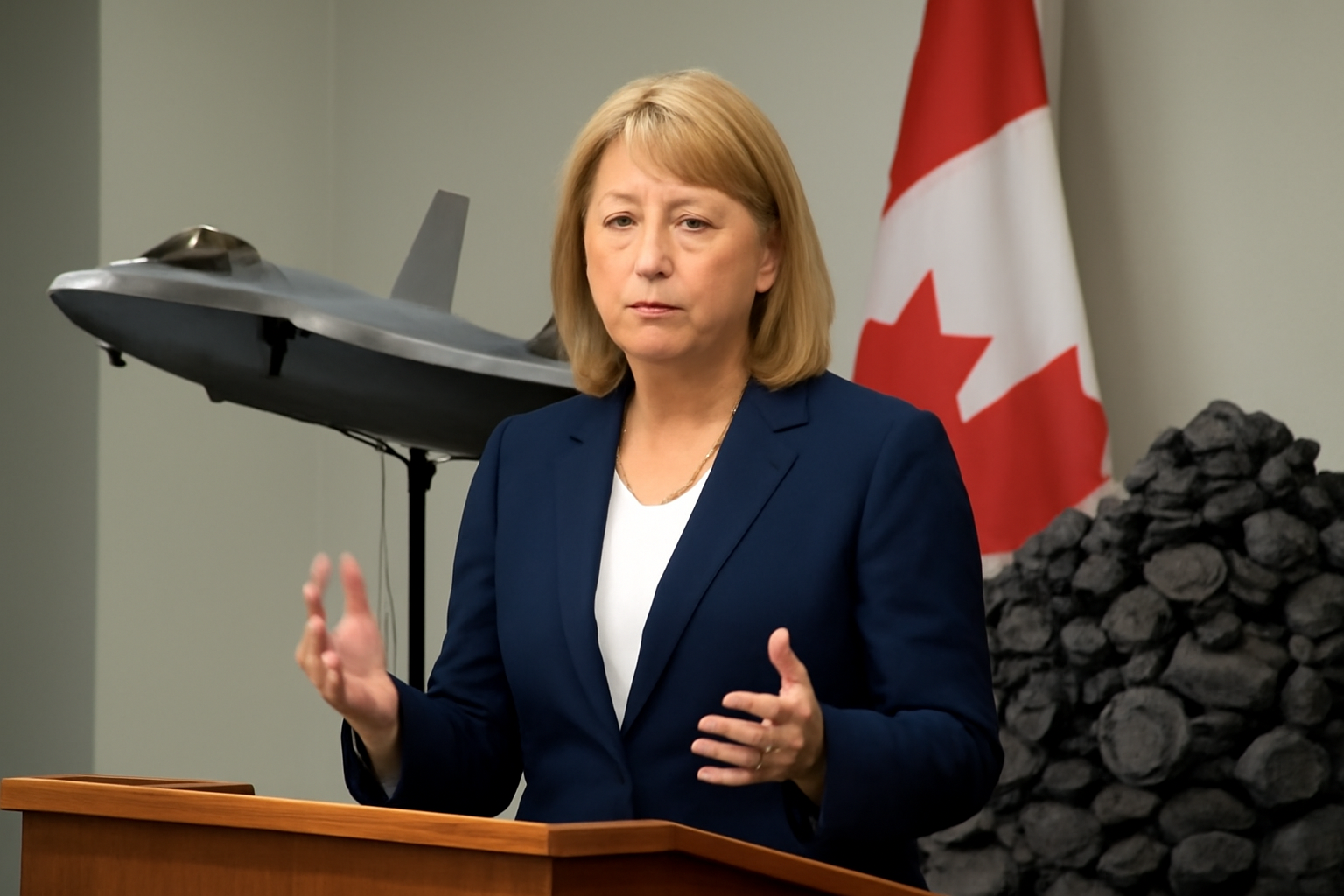
British Columbia Premier David Eby is pressing the federal government to broaden Canada's response to the latest United States tariffs, arguing that matching import duties item by item no longer covers the situation. Two of his proposals stand out: reconsidering the $12 billion purchase of F-35 fighter jets from the United States, and putting shipments of American coal on the table.
The intervention changes the terms of the Canadian debate. The question in Ottawa has so far been mainly which US imports should carry retaliatory tariffs. Eby is arguing that Canada also controls large purchases from US suppliers and transit routes that American exporters depend on, and that both belong in the response alongside tariffs. He has directed the appeal at Prime Minister Mark Carney, whose government sets procurement and export policy.
A procurement contract used as leverage
The F-35 file is the largest identifiable item on the list, reported at $12 billion. It differs from a tariff in a basic way. A tariff raises the price of goods already crossing the border and is paid, in the first instance, by domestic importers. A procurement decision is a direct payment of public money to a foreign supplier, and it can be delayed, reduced or cancelled without touching a customs schedule.
The reporting describes Eby's position as reconsideration rather than an outright call for cancellation, and does not set out how many aircraft or which delivery tranches would be affected. That distinction matters for suppliers and for the wider defence industrial base: a pause in a multi-year order and a termination have different consequences for production planning, for the Canadian firms in the supply chain, and for the air force's transition schedule. Any change would also carry costs for Canada, including an alternative aircraft, new training and sustainment arrangements, and interoperability questions with allied air forces.
Coal moving through British Columbia
The second proposal concerns infrastructure rather than purchases. American coal reaches overseas buyers through west coast terminals in British Columbia, which makes the province a link in a US export chain rather than the consumer of the cargo. Restricting or taxing that traffic would target US producers without adding to a Canadian import bill.
The available reporting does not specify volumes, the instrument or a timeline. That gap is significant. An export levy, a port access restriction and a licensing regime would each land differently on producers, terminal operators, railways and the Asian utilities that buy the coal, and each would take a different length of time to put in place. Terminal and rail operators in British Columbia handle the tonnage, so a measure aimed at US producers would also fall on Canadian logistics revenue.
Federal authority, provincial pressure
Eby can propose but not implement. Export controls, defence procurement and tariff schedules sit with the federal government; a premier's role is to press Ottawa and to speak for the industries in the province affected by the outcome. British Columbia's exposure runs in both directions: its ports and railways carry US cargo that would be the target of one proposal, while its forestry, mining and energy exporters are exposed to US measures.
No federal decision on either proposal has been announced. For companies on both sides of the border, the practical questions are narrow ones: whether Ottawa adopts a non-tariff track at all, whether the F-35 contract is reopened and in what form, and whether coal transiting Canadian terminals becomes a policy instrument. Until the federal government responds, the proposals are inputs into a decision rather than measures with dates attached.