Bayer advances new soybean traits, short-stature corn and herbicide pipeline
Bayer plans to introduce 10 blockbuster agricultural products over the next 10 years, each with sales potential above €500 million. Its pipeline spans short-stature corn, multi-herbicide-tolerant soybeans, new crop-protection molecules, hybrid wheat and oilseeds for sustainable aviation fuel.
Bayer sets target for 10 agricultural blockbusters
Bayer has outlined a pipeline of seed traits, crop-protection products and gene-edited crops intended to produce 10 blockbuster products over the next 10 years. The German group expects each product to have sales potential exceeding €500 million, according to La Nación, which reported from the Bayer Innovation Showcase in Huxley, Iowa.
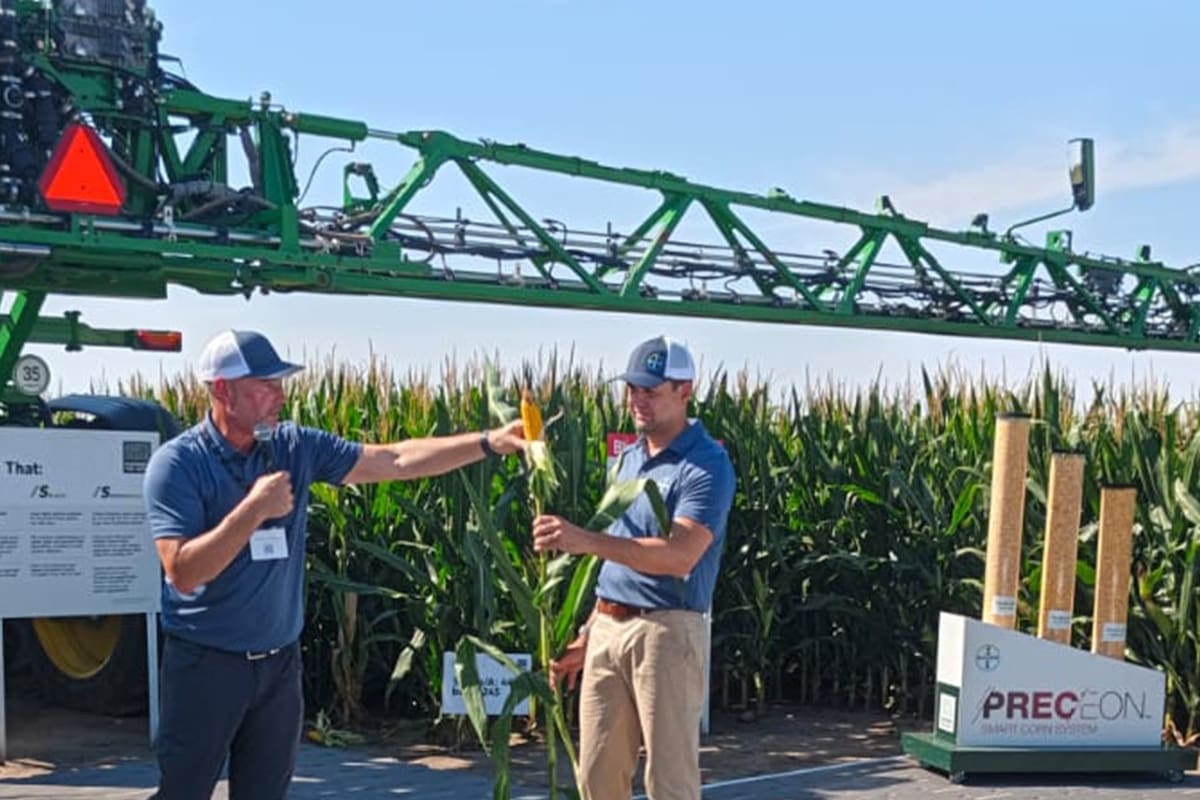
Two products are already on the global market: the Preceon short-stature corn system and the Plenexos insecticide. Preceon produces corn plants that are 30% to 40% shorter, reducing lodging risk, supporting higher planting density and allowing machinery to enter fields for fertilizer and crop-protection applications throughout the growing cycle. Bayer aims to bring the system to 10.5 million hectares by 2035.
Preceon is already offered in Mexico, Italy, Spain and the United States. A limited commercial launch in Argentina will involve about 1,000 seed bags and 20 producers in the new season. Bayer initially sees the system serving late-planted corn there, although it ultimately intends to address the full crop.
Soybean technologies target North and South America
Vyconic, a soybean technology providing tolerance to five herbicides, is scheduled to debut next year in the United States and Canada. Bayer expects the trait to enter elite varieties that have demonstrated higher yields and plans to follow it with its HT5 platform.
For South America, Bayer is concentrating first on Brazil with Intacta 5+. The technology combines tolerance to five herbicides with broader protection against nine caterpillar species and is scheduled for the 2027/2028 season. Bayer expects combined sales from Vyconic and Intacta 5+ to exceed €3 billion. La Nación reported that wider soybean technology deployment in Argentina remains linked to resolving intellectual-property recognition.
The company is also developing a gene-edited soybean with modified plant architecture. The objective is to reduce lodging in high-yielding varieties that grow taller, with availability planned for the beginning of the next decade. A fourth-generation soybean insect trait, IP4, is being developed for Brazil to control major pests including soybean looper and false looper.
New molecules address resistance and input use
Icafolin is described by Bayer as the first herbicide with a new mode of action against emerged weeds in broadacre crops in more than 30 years. The company estimates sales potential of €750 million by the middle of the 2030s. It is intended to give growers another tool against difficult resistant weeds and help interrupt resistance cycles.
Bayer said its artificial-intelligence-supported CropKey research platform has contributed to a pipeline containing more than 15 new modes of action under investigation. The system evaluates efficacy, safety and sustainability from the beginning of molecule design. A broad-spectrum soybean fungicide discovered through CropKey has advanced to Phase II and is viewed by the company as another potential blockbuster.
Plenexos, meanwhile, is designed to control a broad range of pests while allowing growers to use up to 75% less active ingredient. Following its introduction in Colombia, Bayer plans launches in Mexico, Brazil and the United States. The portfolio also includes fifth-generation herbicide tolerance in corn and soybeans, adding PPO-herbicide tolerance, and CRW4, a fourth-generation trait targeting corn rootworm.
Pipeline extends to wheat and aviation fuel crops
Bayer plans to commercialize hybrid wheat in Europe and North America at the beginning of the 2030s. It is also working with camelina, canola and CoverCress as feedstocks for sustainable aviation fuel. CoverCress is a winter oilseed developed through breeding and gene editing of an invasive plant.
The investment comes from a company that generated more than €45 billion in total sales last year. Crop Science contributed €21.6 billion, compared with €17.8 billion from pharmaceuticals and €5.8 billion from consumer health. Bayer says artificial intelligence is becoming central to accelerating discovery and converting biological research into commercial products, but the pipeline’s market impact will depend on regulatory approvals, grower adoption and field performance across distinct production regions.