Battery demand drives R$750 million graphite investment in Brazil
Brazil holds about 25% of global graphite reserves but accounts for only around 4% of production. Graphcoa and Atlas Critical Minerals are advancing projects as battery, energy storage and power infrastructure demand expands.
Large reserves, limited production
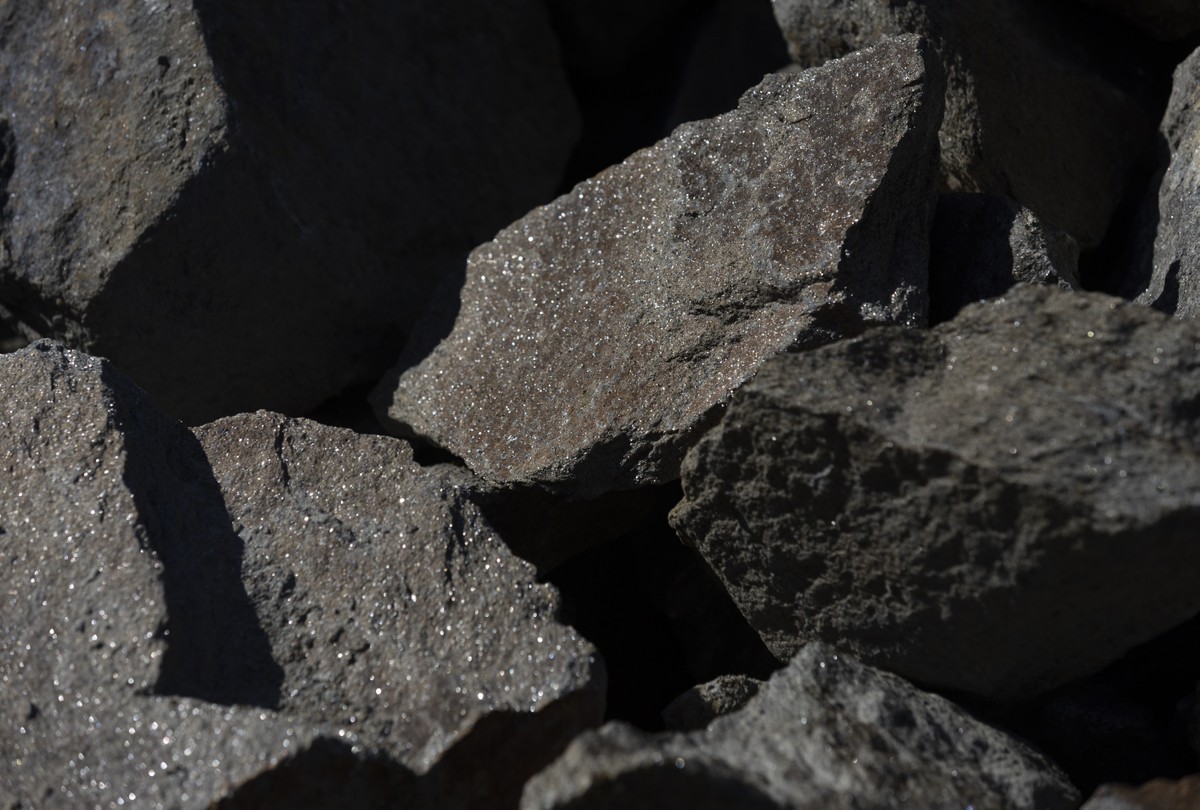
Brazilian graphite projects are attracting new capital as electric vehicles, energy storage and power infrastructure lift demand for the mineral. Brazil holds approximately 25% of global graphite reserves, placing it second behind China at 28%, according to Valor Econômico. Yet the country accounts for only about 4% of global production, while China supplies 79%.
The gap between Brazil’s geological position and its current output presents an opportunity for miners and processors seeking alternatives within a highly concentrated market. Natural purified graphite is used in battery anodes, which store and release energy and represent the largest component by weight in a typical lithium-ion battery. Graphite also conducts heat and electricity, supporting its use in distribution networks, wind turbines, solar photovoltaic systems and other energy infrastructure.
Demand has grown by an average of about 10% annually in recent years, the International Energy Agency reported, well above the roughly 1% average for base metals such as aluminium, lead and zinc. The energy sector generated about 75% of graphite demand growth in 2025, up from 70% in 2024.
Graphcoa builds an integrated battery supply chain
Graphcoa plans to invest R$750 million in the Jordânia Graphite Project in Minas Gerais’ Jequitinhonha Valley. The company started environmental licensing in 2025 and has held a public hearing with the local community. Extraction is expected to begin in the second half of 2027, followed by commercial operations in the second half of 2029.
Graphcoa is controlled by Appian Capital Brazil. The Jordânia commitment comes in addition to US$70 million, equivalent to about R$400 million, already invested in the construction of a plant in Itagimirim, Bahia, and in technical studies. These investments are intended to connect Brazilian mining and processing with downstream battery-material production in the United States.
Graphcoa’s principal customer is Allied Graphite, a sister company based in the United States. Graphcoa produces high-purity graphite concentrate in Brazil, while Allied is developing the technology and industrial capacity to manufacture coated spherical purified graphite, or CSPG, an essential input for lithium-ion batteries. Graphcoa executive director Ricardo Alves told Valor Econômico that the company does not export raw ore and that most processing takes place in Brazil.
Atlas targets batteries and nuclear applications
Atlas Critical Minerals is also expanding its Brazilian graphite position. The Nasdaq-listed company consolidated a continuous mineralized corridor of more than 11 kilometres in Minas Gerais in March after acquiring an additional mineral right connecting existing concessions. The project now covers 2,822 hectares. Atlas said in July that all 20 holes completed in its initial diamond-drilling campaign intersected near-surface graphite.
Purification tests brought the concentrate to 5N, or nuclear-grade, purity, according to the company. Founder and chief executive Marc Fogassa said automotive batteries remain graphite’s largest market, but Atlas is also evaluating potential demand from small modular nuclear reactors used to supply electricity to artificial-intelligence data centres. The emerging projects could help Brazil convert its reserve base into processed products for battery and specialist industrial markets, although their impact on global supply will depend on licensing, construction and the successful start of commercial production.