Banana prices rebound after weak summer as supply and weather risks reshape the market
The banana market has recovered rapidly since late August, with green bananas now selling for €15-€16.50. High production weighed on prices earlier in the year, while smaller fruit, rising costs and changing trade routes are creating fresh uncertainty.
Demand returns after an unusually poor summer
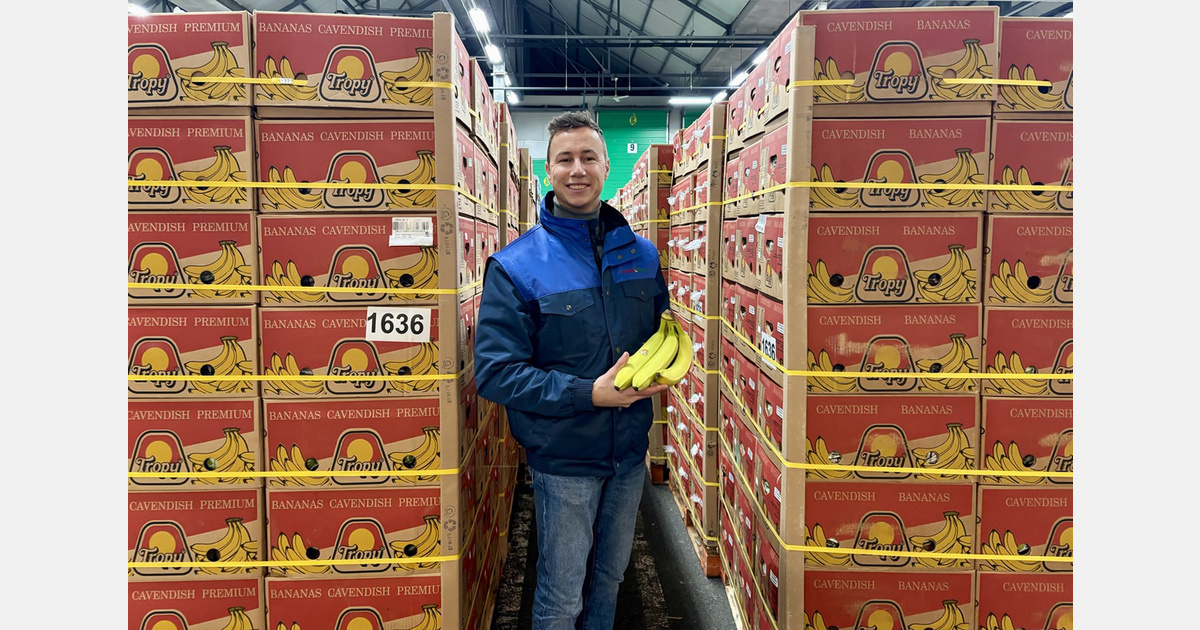
The banana market has recovered sharply after one of its weakest summers in years, according to Mark Greeve of importer Anaco & Greeve. Demand for organic bananas was virtually absent during the summer, while consumption of conventional fruit also fell to a low. The subsequent improvement has made current prices appear particularly high, although Greeve said this largely reflects the depressed level from which the market is recovering.
The weakness was driven partly by abundant production. Greeve told FreshPlaza that banana supply was high both during the summer and earlier in the year. That contrasted with the previous year, when the market had too little fruit. Even in the first three months of this year, prices did not reach the elevated levels occasionally recorded in earlier periods. The market began to recover at the end of August and has since returned to what Greeve described as reasonable pricing. Green bananas are currently trading at €15-€16.50.
Weather is reducing fruit size
Attention is now turning to production conditions in Latin America. Market participants are discussing the potential effect of El Niño, but Greeve said it remains too early to make a reliable assessment of its impact on output. Current weather conditions are already affecting crops: Costa Rica has experienced excessively wet weather for an extended period, Colombia has lacked sunlight and Ecuador has not been particularly warm.
These conditions have resulted in somewhat smaller banana sizes. It is not yet clear how much of that development can be attributed directly to El Niño. The uncertainty matters because reduced sizing can affect the volume of fruit meeting particular commercial specifications, even when overall production remains available. It also complicates expectations over whether the current price recovery can be sustained in the coming weeks.
Importers diversify as trade routes change
Anaco & Greeve began sourcing bananas from Venezuela this year and is seeking to diversify its supplier base further. Guatemala is becoming a more important source, while the company continues to examine imports from India. Egyptian bananas are also attracting greater attention, although the importer remains uncertain whether India and Egypt can consistently meet the same quality requirements as established suppliers.
Demand patterns in producing and destination markets are also changing. A growing middle class in Central and South America allows producing countries to sell more bananas domestically. At the same time, former Eastern Bloc countries are increasingly importing directly, reducing the Netherlands’ role as a hub for green bananas. Africa remains a growing market and is currently served by the company mainly through transit ports in Turkey and Morocco.
Container logistics have operated without significant disruption this year, in contrast to serious circulation problems in previous years. The commercial pressure has instead shifted to costs. High freight expenses and diesel prices are making distribution from the Netherlands to markets such as Belgium and Germany less attractive, squeezing margins while operating costs rise. Organic bananas offer a more positive signal: supermarkets are expanding their organic ranges, and more wholesale customers are moving into the category. That growth could provide a higher-value outlet, but the broader market must still balance recovering demand against ample supply, uncertain weather and increasingly direct trade routes.