Austria to put up to €200 million into EU's fourth hydrogen auction
Austria intends to provide up to €200 million in national funding for the EU's fourth hydrogen auction, expected in December 2026, half the amount it offered in 2024. The same EAG monitoring report shows the renewables share of Austrian electricity consumption fell to 78% in 2025 from 94%, as hydropower output dropped 26.6%.
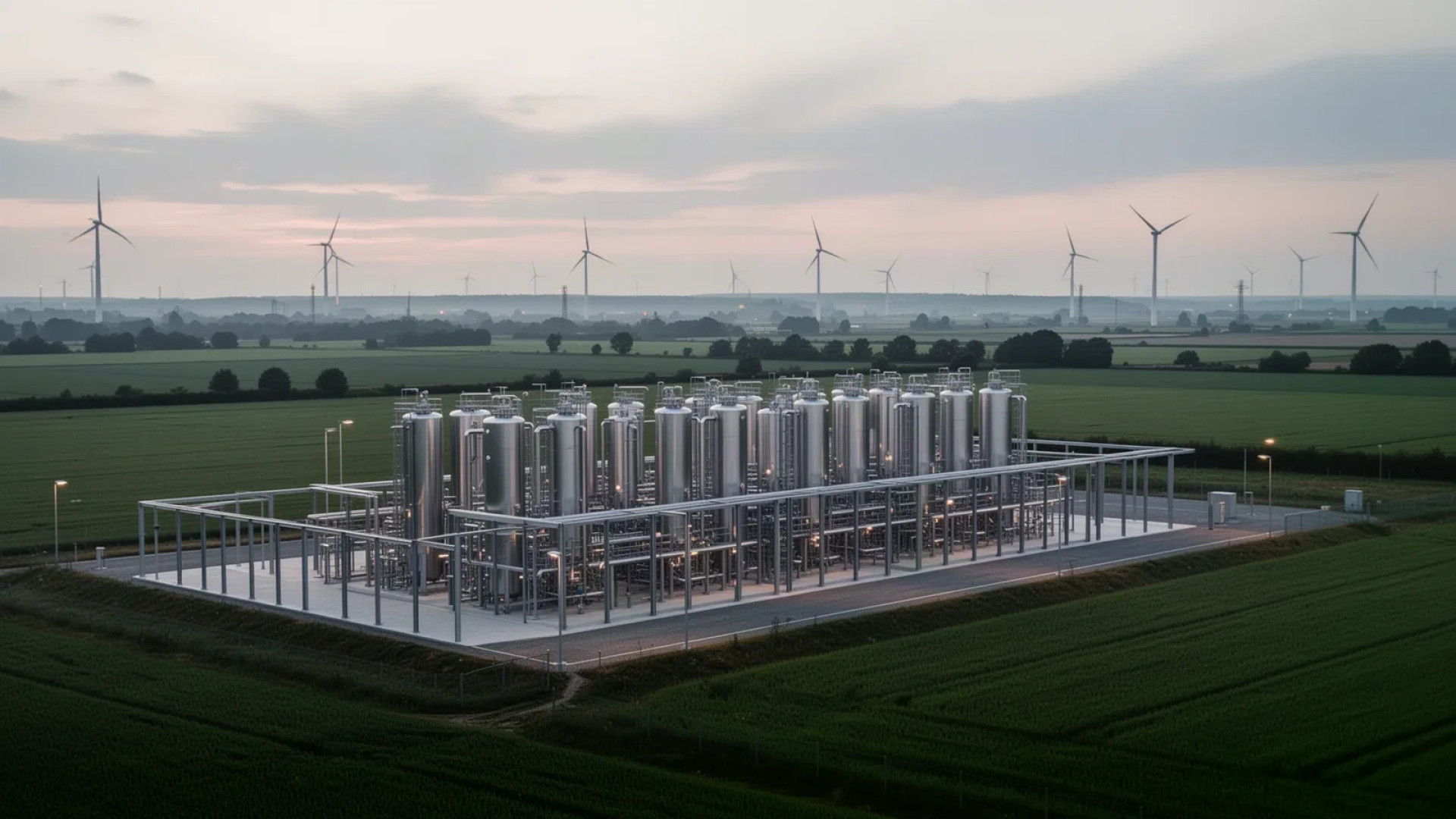
Austria intends to provide up to €200 million in national funding for the European Union's fourth hydrogen auction, which is expected to take place in December 2026, boerse-express.com reported, citing material from the current monitoring report under the Renewables Expansion Act (EAG). The support would again run through the "Auction-as-a-Service" model that Austria applied in 2024.
€200 million for the fourth EU hydrogen auction
The European Commission has earmarked a total budget of €500 million for this auction round. Of that, €350 million is reserved for renewable hydrogen (RFNBO) and €150 million for RFNBO or electrolytic low-carbon hydrogen. The Auction-as-a-Service mechanism lets member states add national money for domestic projects that clear the European bidding process.
In the previous round in 2024, the Austrian federal government made up to €400 million available. Four Austrian projects with a combined electrolysis capacity of 171 MW received funding commitments worth roughly €275 million in total. The new ceiling of €200 million is half the sum offered two years earlier.
Among the supported ventures is an OMV project that is to produce up to 28,000 tonnes of green hydrogen a year for the Schwechat refinery. The project volume stands at €600 million, combining national funding of €123 million with a European Investment Bank loan of €450 million. Hy4IND, a project of Wiener Stadtwerke, was awarded a premium of €0.98 per kilogram. Payments run for a maximum of ten years and are based on actual certified production.
Renewables share of consumption falls to 78%
The 2026 EAG monitoring report from regulator E-Control documents a substantial build-out of renewable generation capacity. Between 2021 and 2025, Austria installed around 10,200 MW of additional capacity, exceeding the EAG's calculated target path by about a quarter. Photovoltaics led the growth: generation rose 28% year on year in 2025 to 9.8 TWh, with 1,600 MW of new capacity added in that year alone.
Despite the additions, the share of renewables in Austrian electricity consumption fell to 78% in 2025 after 94% in 2024. E-Control attributes this primarily to a 26.6% drop in hydropower generation to 24.4 GWh, the lowest level since 2020. Meeting the 2030 target requires a further 27 TWh, according to the regulator, equivalent to an annual addition of 1,640 MW split as follows:
- photovoltaics: 1,100 GWh
- wind power: 1,000 GWh
- hydropower: 500 GWh
- biomass: 100 GWh
Renewable gases lag furthest behind. The 2030 target stands at 5 TWh, while feed-in in 2025 amounted to just 0.16 TWh.
Battery connection requests exceed 30,000 MW
Storage has become a central element of the future energy strategy. By mid-2026, E-Control had registered grid connection requests for battery storage with a combined capacity of more than 30,000 MW, which corresponds to an oversubscription of up to tenfold.
New rules for citizen energy models and peer-to-peer electricity trading are due to take effect on 1 October 2026. The number of renewable energy communities had risen to almost 6,000 by mid-2026.
Grid fees become the next battleground
On network charges, the regulator plans to adopt a framework ordinance in the first half of October 2026. Industry association PV&B Austria has criticised the planned rules on exemptions from grid fees: standalone battery storage is to be relieved under certain conditions, while hybrid storage coupled to photovoltaic or wind installations is not.
The association pointed out that battery storage could save up to €15 billion in grid costs over the long term, and called for exemptions to be assessed on the basis of actual grid relief rather than the form of the project.