Australian dairy exporters face tighter EU antibiotic-use requirements
Australian dairy farmers supplying the European Union are expected to comply with new EU guidelines on antibiotic use within weeks. The requirements create an additional regulatory hurdle for farms and dairy companies serving the bloc.
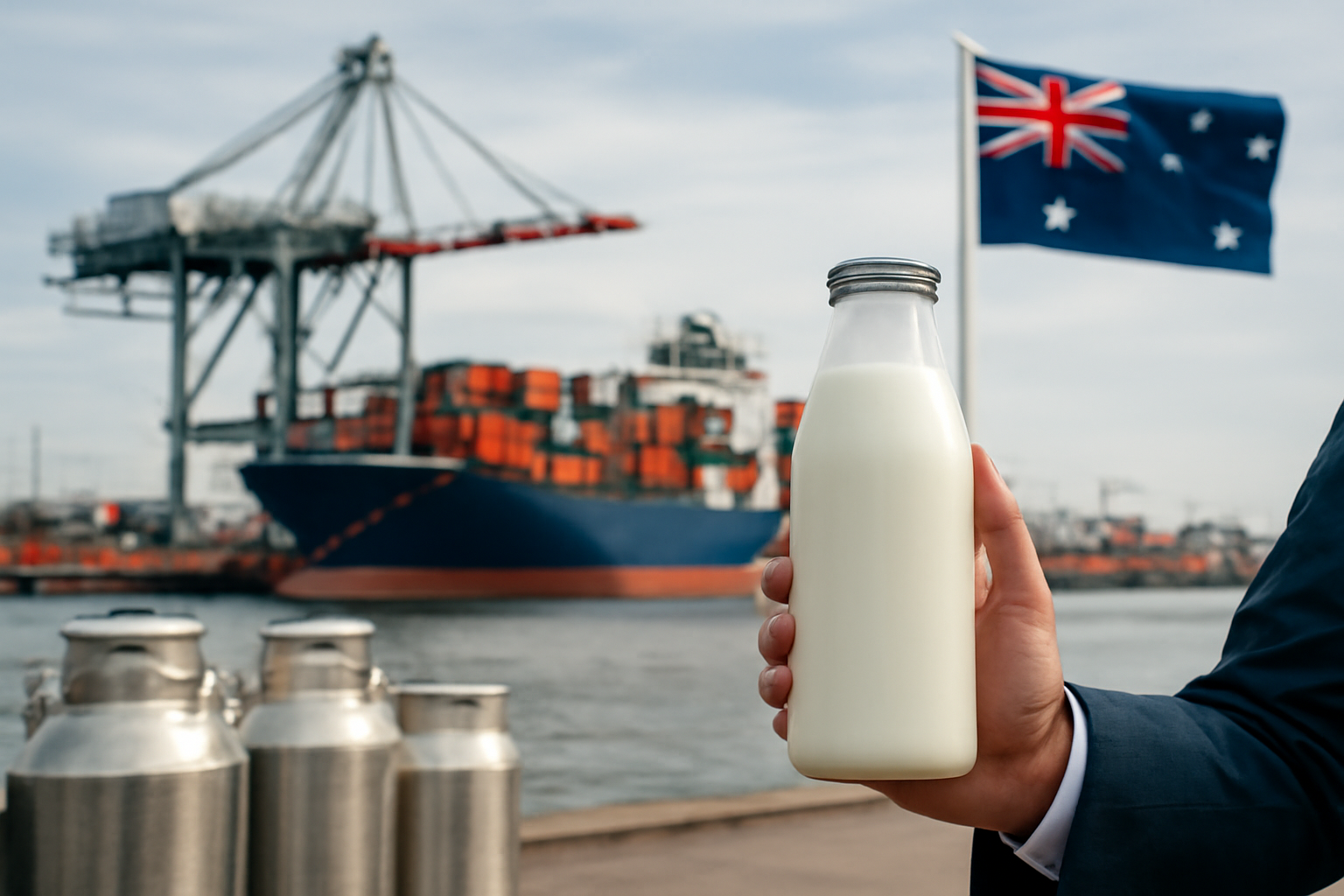
New compliance requirement approaches
Australian dairy farmers whose products are exported to the European Union are preparing to follow new EU guidelines governing antibiotic use. The Weekly Times reports that the requirements are due to apply within a few weeks, giving affected suppliers a short period in which to ensure that their practices meet the rules.
The measure creates another condition of access to the EU market for Australian dairy products. It is relevant not only to farms directly connected with export programs, but also to processors and exporters responsible for demonstrating that products entering the bloc comply with European requirements.
The available source material does not specify the exact implementation date, the medicines covered or the documentation that exporters will have to provide. It also does not identify penalties for non-compliance. Those details will determine the scale of the operational burden and whether farms need to change treatment protocols, record-keeping procedures or supplier declarations.
Compliance extends through the supply chain
Antibiotic use begins at farm level, but export compliance normally depends on information moving through the entire commercial chain. Farmers must be able to support the claims attached to their milk, while processors and exporters need sufficient evidence for consignments intended for the EU.
For companies sourcing milk from multiple farms, the new guidelines could make supplier verification more important. A failure by one participating farm to meet the required standard may complicate the status of milk entering a shared processing system. Export-oriented businesses therefore have an incentive to clarify eligibility before products are manufactured or allocated to European customers.
The short reported timeline also raises practical questions. Farmers need clear instructions on which practices are permitted, what records must be retained and how compliance will be assessed. Processors must determine whether existing assurance programs capture the information demanded by the EU or whether additional checks are required.
Market access is the central issue
The rules represent a regulatory hurdle rather than a reported ban on Australian dairy products. Farmers that do not supply EU-bound chains may not face the same immediate commercial pressure, while those serving the bloc will need to treat compliance as a condition of retaining that market channel.
No figures have been provided for the volume or value of Australian dairy trade affected by the change. The source material also gives no estimate of compliance costs. Without those numbers, it is not possible to quantify the financial exposure for farms, processors or exporters.
The commercial impact will depend on how broadly the guidelines apply and how quickly Australian supply chains can document conformity. If current farm practices already meet the substance of the EU requirements, the main task may be verification. If the rules require changes in antibiotic management, affected suppliers could face a more demanding adjustment within the reported period of a few weeks.
Exporters await operational detail
For dairy businesses, the immediate priority is certainty over the final requirements and the evidence needed at the border. Clear guidance will be necessary to prevent compliant products from being delayed because of incomplete records or inconsistent interpretations across farms, processors and export channels.
The development also underlines the role of production standards in agricultural market access. For Australian suppliers targeting the EU, meeting the buyer’s regulatory framework is part of maintaining commercial access, even when the underlying production takes place outside Europe.