Australia considered tougher emissions rules for individual coal power stations
Australia’s Labor government considered bringing individual coal-fired power stations under tougher Safeguard Mechanism obligations but rejected the proposal as too difficult. The debate highlights the tension between accelerating emissions cuts and maintaining reliable electricity supply as coal capacity closes.
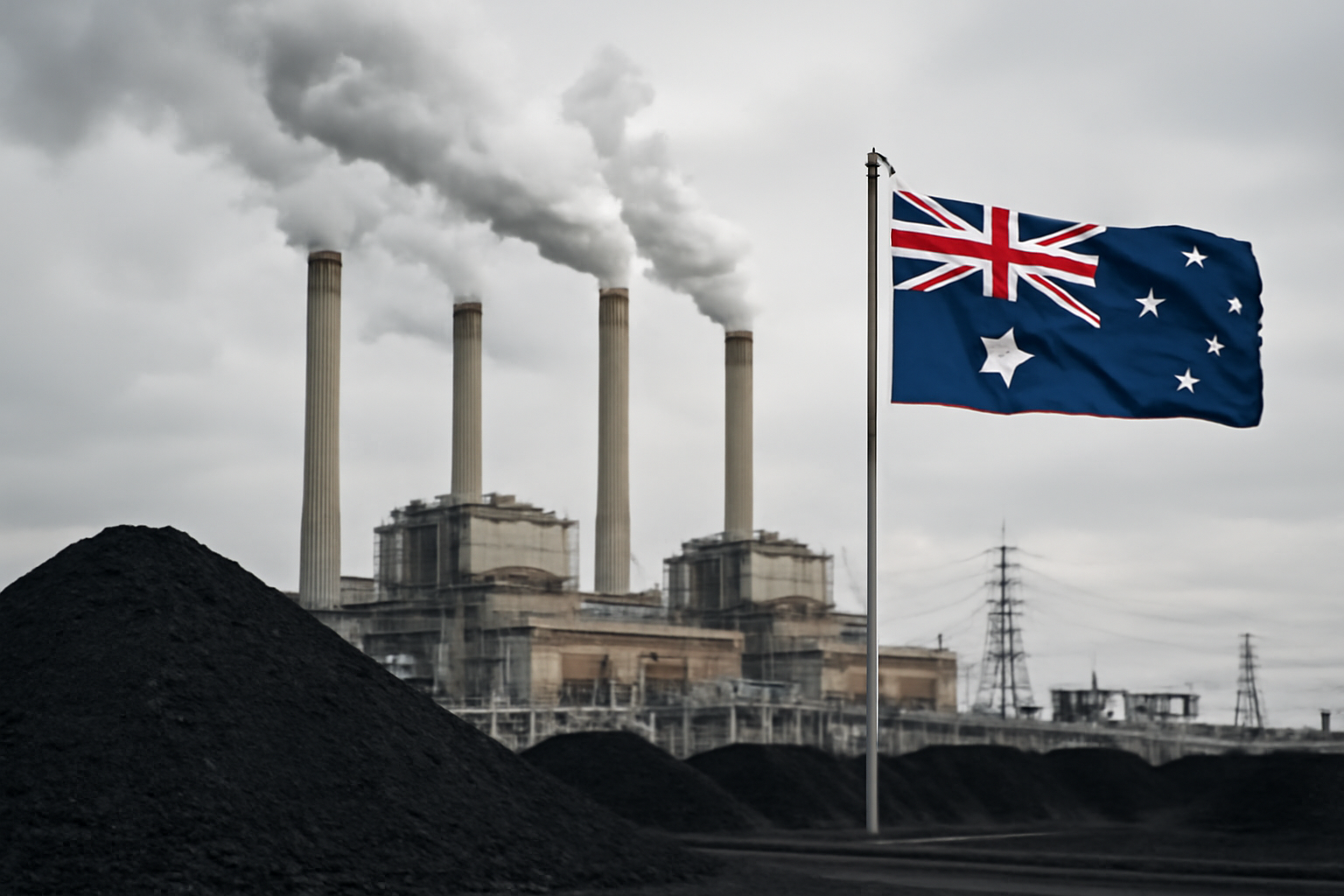
Plant-specific obligations were considered
Australia’s federal Labor government considered applying tougher emissions obligations to individual coal-fired power stations through its Safeguard Mechanism, according to The Australian. The government ultimately decided that the proposal was too difficult to implement. The decision leaves grid-connected generators operating under the electricity sector’s existing collective emissions framework rather than separate limits for each plant.
The proposal could have changed the economics and operating timetable of coal generation. A plant exceeding its individual limit might have needed to reduce output, cut its emissions intensity or meet additional compliance costs. For generators already approaching retirement, those obligations could have brought closure decisions forward. They could also have affected wholesale electricity supply if replacement generation, storage and network capacity were not available at the same time.
Electricity receives different treatment
The Department of Climate Change, Energy, the Environment and Water describes the Safeguard Mechanism as the government’s policy for reducing emissions at Australia’s largest industrial facilities. It generally covers facilities emitting more than 100,000 tonnes of carbon dioxide equivalent a year, including mining, oil and gas production, manufacturing, transport and waste operations.
Grid-connected electricity generation is treated differently. The sector has a single collective baseline covering generators connected to Australia’s main electricity grids. Individual generators do not face facility-level limits while total sector emissions remain below that baseline. This arrangement separates power stations from most large industrial sites regulated individually under the mechanism.
The mechanism began in 2016 and was reformed in 2023. Baselines for covered facilities generally decline by 4.9% annually to 2030. The policy supports Australia’s targets of reducing emissions by 43% from 2005 levels by 2030 and reaching net zero by 2050. Applying that model directly to individual coal generators would therefore have represented a significant extension of the current framework.
Closure speed meets supply risk
The government’s decision reflects the operational difficulty of imposing tighter plant-level constraints on an electricity system that must balance supply and demand continuously. Coal stations provide generation capacity that cannot necessarily be replaced immediately when a unit reduces output or closes. Faster retirements would increase pressure on new renewable generation, storage, transmission and other dispatchable capacity to arrive before existing supply disappears.
For coal-plant owners, the rejected option removes an additional plant-specific emissions constraint, but it does not eliminate commercial pressure from ageing assets or competing generation. Electricity retailers and large power users retain an interest in the order and timing of closures because an uncoordinated withdrawal of capacity can influence wholesale availability and contracting conditions.
The debate also shows that the Safeguard Mechanism remains a possible policy route for addressing power-sector emissions, even though electricity currently has special treatment. The government’s rejection of this proposal preserves the present design, while leaving the timetable for coal closures to be shaped by plant economics, announced retirement plans and the speed at which replacement electricity infrastructure becomes available.