Australia’s Hunter region repurposes coal power sites for batteries and renewables
Former coal-fired power sites in New South Wales’ Hunter region are being converted into hubs for batteries, renewable generation and energy-intensive industries. The investment pipeline is growing as mine and power-station closures threaten thousands of jobs and a large share of local government revenue.
Battery projects move onto former coal sites
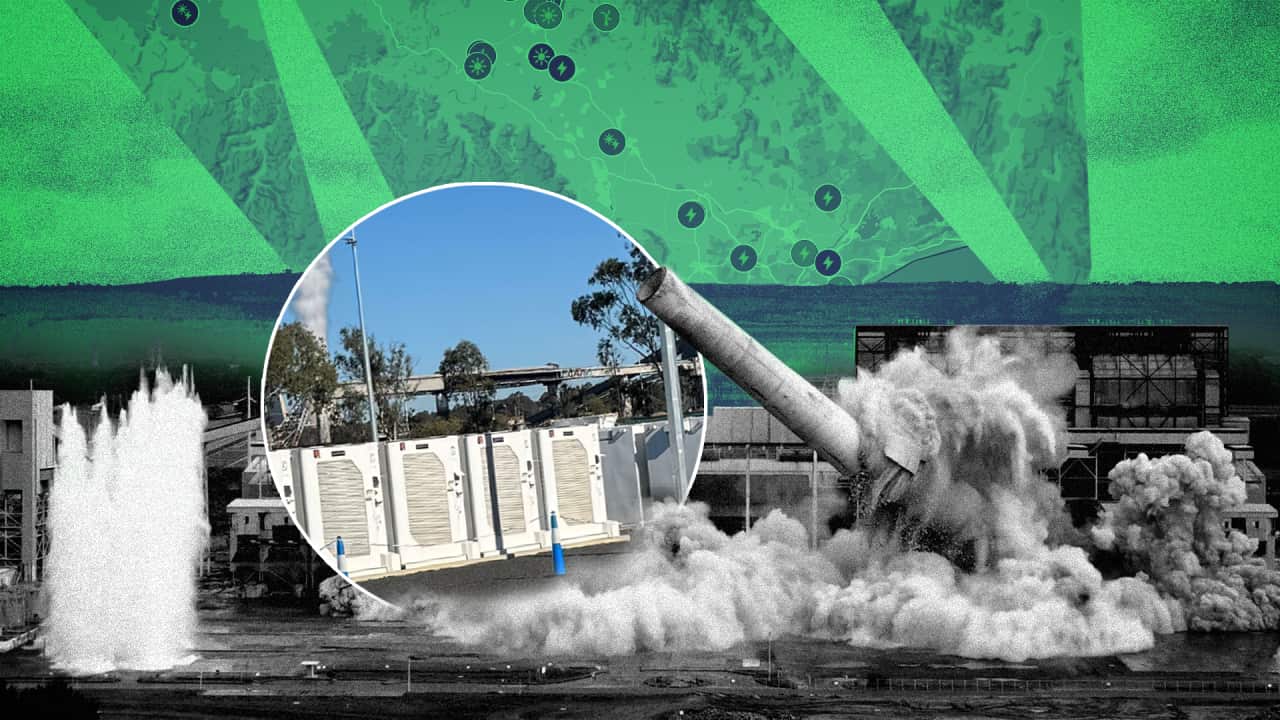
Former coal-fired power sites in Australia’s Hunter region are being repurposed for battery storage and renewable energy as New South Wales prepares for further power-station and mine closures. At Liddell near Muswellbrook, the 169-metre chimneys of the decommissioned coal plant were demolished earlier this year after standing for more than 50 years. A new battery installed beside the former boilers was expected to enter operation within weeks of SBS News visiting the site.
The Liddell development is one of eight approved battery projects at various stages of construction across Muswellbrook, Lake Macquarie, Newcastle City, Singleton, Port Stephens and Central Coast. Two batteries are already operating near Lake Macquarie, including what SBS News described as Australia’s most powerful battery. Eight solar and wind projects have also received approval, with additional developments in the pipeline.
Muswellbrook attracts a wider industrial pipeline
Muswellbrook mayor Jeffrey Drayton told SBS News that around 20 renewable energy projects had been proposed in the council area. They include solar, wind and hydro developments and a proposed 2.4-gigawatt Denman battery. The project would have 4.8GW of storage capacity and 2.4GW of discharge capacity, enough to supply more than one million homes—roughly one-third of all households in New South Wales—for about two hours if approved.
A further 14 renewable projects are in the pipeline. More than 40 businesses expressed interest in establishing operations around Muswellbrook during the past 12 months, according to Drayton. The proposals include a large data centre, manufacturing, agribusiness and facilities for recycling renewable energy components. Battery and renewable plants require relatively few permanent workers after construction, but reliable electricity could support employment in these adjacent industries.
Mine closures put jobs and revenue at risk
Coal nevertheless remains central to the Hunter economy. The broader region has 21 operating coal mines, more than half of the mines in New South Wales. Mining supplies an estimated 56 per cent of Muswellbrook Council’s rate revenue. Five Hunter mines are due to close within four years, while the future of another three remains uncertain.
The council received state approval this year to charge mining operators 25.9 per cent above the standard rate cap of 3.1 per cent. The measure is expected to raise about A$6 million in additional revenue in 2026/27, bringing the total to A$21 million. The council plans to direct the additional income into economic development. Drayton said the closure of BHP’s Mt Arthur and Glencore’s Mangoola open-cut mines alone could eliminate around 12,000 direct and indirect jobs by 2030.
Yancoal, a major Australian coal exporter, has also announced that its Ashton mine near Singleton will close in early 2028, almost eight years earlier than expected. The company cited significant technical challenges, operational risks, changing market conditions and rising input and regulatory costs. SBS News reported that hundreds of jobs could disappear over the following 18 months.
Existing grid connections shape the transition
The Hunter-Central Coast became one of five New South Wales Renewable Energy Zones in 2022. Such zones concentrate large projects near transmission infrastructure, giving former power stations a potential second life as hubs connecting batteries, renewable generation and electricity-dependent manufacturers.
Since 2012, three coal-fired power stations in New South Wales have been decommissioned, and four more are scheduled to close over the next 15 years. Bayswater, Eraring and Vales Point are in the Hunter region, while at least five local coal-power sites have been earmarked for battery projects. The shift preserves valuable grid access, but replacing coal-related employment and municipal income will depend on whether the proposed industrial projects proceed at sufficient scale and speed.