Atlas reports high-grade graphite intersections at Minas Gerais project
Atlas Critical Minerals says all 20 initial drill holes at its project in Minas Gerais intersected graphite across an exploration area of about 11 km. The early results, including near-surface mineralization and successful purification to 5N purity, support further evaluation but do not yet constitute a commercial resource estimate.
Graphite intersected in all initial holes
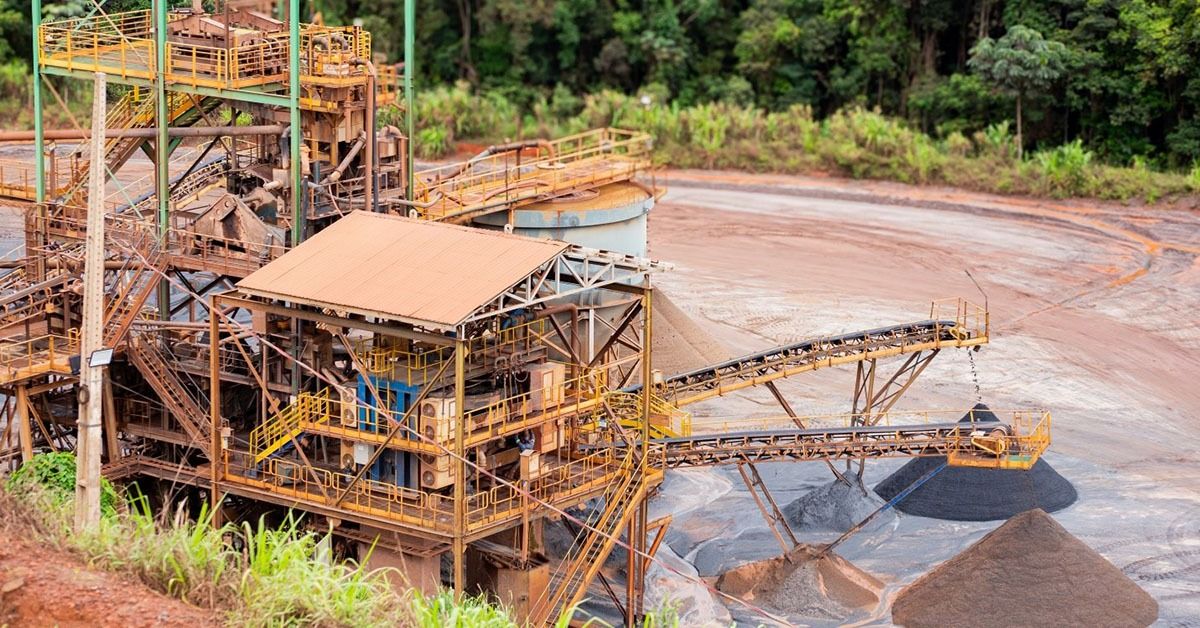
Atlas Critical Minerals has reported high-quality natural graphite from its exploration project around Araçuaí in the Jequitinhonha Valley of Minas Gerais, Brazil. According to Diário do Comércio, all 20 drill holes completed so far intersected graphite, with mineralization identified across practically the entire exploration area of about 11 km and commonly located close to the surface.
The company, whose shares trade on Nasdaq under the ticker ATCX, said one of the reported intersections extended for almost 34 metres at a grade close to 8% graphitic carbon. Founder, chairman and chief executive Marc Fogassa said the first results validated the exploration work conducted to date. He also noted that much of the mineralization was near the surface, a characteristic that could favor development through open-pit mining.
Purity tests strengthen the project’s technical case
The drilling results add to surface samples containing as much as 19.4% graphitic carbon. Purification tests have also produced a concentrate with 5N purity, classified in the source report as nuclear grade. Diário do Comércio described these results as placing the deposit among the higher grades reported for natural flake graphite and within the top global quality range for the mineral.
These figures remain early exploration indicators rather than a declared mineral resource or reserve. The information provided does not include a resource tonnage, recovery rate, production schedule, capital requirement or operating-cost estimate. Further drilling and technical studies will therefore be needed to determine the continuity, scale and commercial economics of the mineralization.
Brazil seeks a larger role in critical minerals
Graphite is used in electric-vehicle batteries, brake pads and dry lubricants, as well as in agricultural applications such as seed separation and equipment lubrication. The combination of battery demand and established industrial uses gives high-quality natural graphite strategic relevance for miners, processors and manufacturers seeking new sources of supply.
The Minas Gerais project could reinforce Brazil’s position in critical-mineral value chains if subsequent work confirms a mineable resource and a viable processing route. Its location in the Jequitinhonha Valley also creates the possibility of additional mining and processing activity in the state, although no investment decision, plant capacity or start-up date was disclosed.
Diário do Comércio reported that the global graphite market could reach $36.4 billion by 2030, supported by electric vehicles and energy systems. Atlas is presenting the drilling results to capital markets as evidence of Brazil’s potential to capture a larger share of that market. For investors and industrial buyers, the next decisive information will be a formal resource assessment and economic studies showing whether the reported grades and purity can be converted into consistent, commercially competitive output.