Asian Natural Rubber Futures Rise as Tighter Supply and Lower Inventories Support Prices
Natural rubber futures advanced across Tokyo, Shanghai and Singapore as expectations of tighter supply and falling exchange inventories supported buying. Thailand’s domestic RSS3 price slipped, while Vietnamese processors kept procurement prices unchanged.
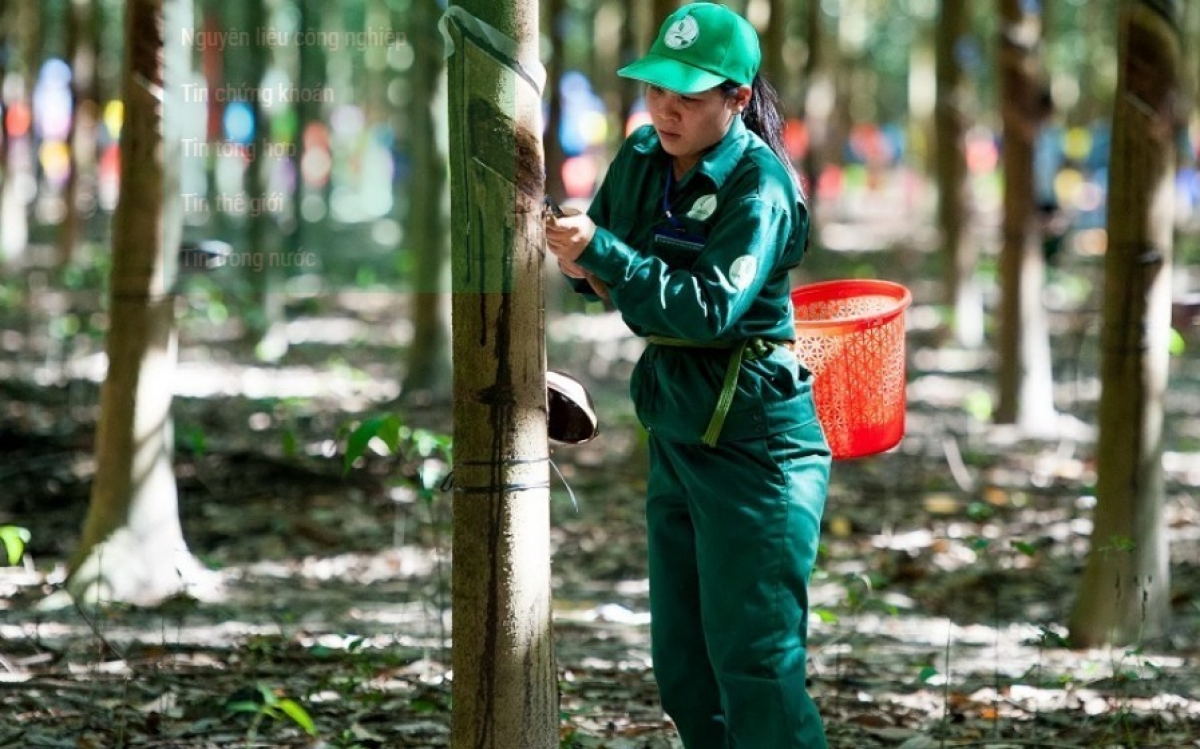
Rubber contracts advance across Asian exchanges
Natural rubber futures rose across major Asian exchanges as expectations of tighter supply, declining official inventories and improving regional consumption strengthened market sentiment. The gains covered several contract months in Tokyo, Shanghai and Singapore, indicating broad buying interest rather than a move confined to a single benchmark.
According to Thoi Bao Tai Chinh Vietnam, the August RSS3 contract on Japan’s TOCOM closed at 460 yen per kilogram, up 1.37%. The September contract gained 0.99% to 444.40 yen per kilogram. RSS3 is a widely traded ribbed smoked sheet grade used by tire makers and other industrial consumers.
On the Shanghai Futures Exchange, the September natural rubber contract increased 1.83% to 17,830 yuan per tonne. The October contract reached 17,840 yuan per tonne, a gain of 1.71%. The most actively traded October butadiene rubber contract rose by 315 yuan, or 2.24%, to 14,355 yuan per tonne.
Singapore gains while Thai spot price slips
Singapore Exchange contracts also moved higher. September TSR20 rubber settled at 238.80 cents per kilogram, up 1.06%, while the November contract advanced 1.13% to 233 cents per kilogram. TSR20 is a technically specified natural rubber grade central to international tire-industry trade.
The coordinated rise in exchange prices contrasted with Thailand’s domestic market. Thai RSS3 declined by 0.2 baht to 82 baht per kilogram. The divergence shows that stronger futures sentiment had not translated uniformly into physical prices across producing markets during the reported session.
Thoi Bao Tai Chinh Vietnam attributed the broader advance to expectations that natural rubber availability would narrow while consumption in Asia showed signs of improvement. Lower official inventories in warehouses monitored by the Shanghai Futures Exchange and the Shanghai International Energy Exchange also supported sentiment. Rising oil prices provided an additional influence by increasing the production cost of synthetic rubber, which can strengthen the competitive position of natural rubber.
Vietnamese procurement prices remain stable
Vietnam’s raw rubber market recorded no new price movement. Phu Rieng Rubber Company maintained its offer for cup lump at 390 dong per DRC unit and liquid latex at 420 dong per TSC unit.
MangYang Company quoted liquid latex at approximately 458-463 dong per TSC unit for grades two to one. Its cup-lump prices ranged from about 404 to 459 dong per DRC unit across the same grades.
Binh Long Company offered 540 dong per TSC degree per kilogram for rubber delivered to its factory and 530 dong per TSC unit per kilogram at production teams. Its price for cup lump with 60% dry rubber content was 18,000 dong per kilogram.
Ba Ria Rubber Company paid 420 dong per TSC degree per kilogram for liquid latex with a TSC of 25% to below 30%. Coagulated latex with a DRC of 35-44% was priced at 14,600 dong per kilogram, while raw latex was quoted at 18,100 dong per kilogram.
Inventory and energy costs remain key indicators
For producers, processors and tire manufacturers, the next direction will depend on whether declining exchange stocks reflect a sustained physical shortage. The simultaneous gains in natural and butadiene rubber suggest that both agricultural supply expectations and synthetic-rubber costs are influencing purchasing decisions. However, weaker Thai domestic RSS3 and unchanged Vietnamese procurement prices show that the regional physical market remains uneven.