Refrigerated rail shipment brings 135 tonnes of ASEAN fruit to Nanning
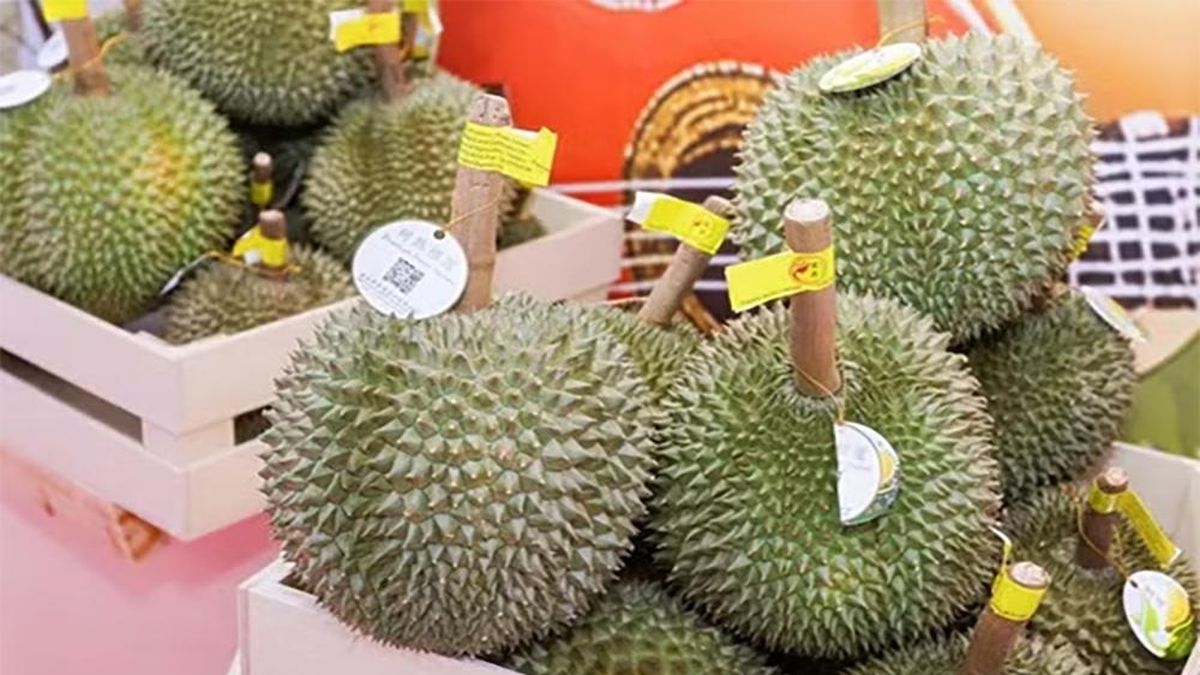
A cross-border refrigerated train carrying 135 tonnes of Thai durian and Vietnamese coconuts has cleared customs at Nanning International Railway Port. The eight-container shipment, valued at about 2.19 million yuan, tested a two-stage clearance system designed to accelerate deliveries of perishable produce.
Eight containers clear customs in Nanning
A cross-border refrigerated train carrying 135 tonnes of Thai durian and Vietnamese fresh coconuts has completed customs clearance and arrived at Nanning International Railway Port in Guangxi, China. According to Bao Bac Ninh, the shipment comprised eight containers with a total value of about 2.19 million yuan.
All the cargo was transferred directly to the China-ASEAN Fruit Trading Center within the railway port area. Part of the consignment will be sold in the local market, while the remainder will move by refrigerated truck into supply chains serving eastern, northern and northeastern China.
The shipment combines road and rail transport. The fruit was purchased directly from farms, packed and carried by road to Dong Dang station in Vietnam. From there, sealed containers entered the international rail service to China, limiting handling during the cross-border journey and helping maintain temperature control.
Two-stage procedure targets border delays
The cargo was handled under a pilot model described as “two-stage customs clearance with conditional departure from the supervised area.” The measure forms part of policies introduced by China’s General Administration of Customs to support Guangxi in developing an import-export fruit trading hub.
During the first stage, customs officials at the border determine whether the cargo is eligible to enter China. In the second, it is transferred directly to the specialist center, where relocation checks and consolidated quarantine procedures are completed before the fruit can enter commercial circulation. The approach is intended to reduce waiting times at the border, a critical issue for durian, fresh coconut and other temperature-sensitive products.
For producers and buyers, the system shifts part of the inspection process away from the entry point and closer to the distribution facility. Its commercial significance will depend on whether the procedure can deliver consistently shorter and predictable transit times as volumes increase.
Premium fruit sourced from Thailand and Vietnam
The Monthong durians were purchased in Chumphon, Thailand’s second-largest durian-producing province and an important supplier to China. Chumphon has about 539 square kilometres under cultivation, while its 2026 durian output is projected at 407,000 tonnes. The province’s geographical indication-protected durian brand had a market value exceeding 49 billion baht in 2025, according to Bao Bac Ninh.
The fresh coconuts came from Phu Tan in Vietnam’s Vinh Long province. The source describes the area as the country’s largest key coconut-growing region, accounting for more than 50% of national acreage and containing over 30,000 hectares certified organic under European Union and United States Department of Agriculture standards. The cargo also included Phu Tan wax coconuts, a premium Vietnamese variety with a higher commercial value than conventional green coconuts.
Nanning expands its distribution role
The service positions Nanning as a transfer point between Southeast Asian production areas and consumer markets across China. The China-ASEAN Fruit Trading Center provides a destination for clearance and local sales, while refrigerated road links extend the cargo’s reach beyond Guangxi.
The shipment demonstrates a logistics chain built around direct farm procurement, sealed-container rail transport, consolidated inspection and onward cold-chain distribution. For Thai and Vietnamese suppliers, its value lies not only in the 135-tonne consignment but also in testing whether rail and streamlined customs procedures can provide a repeatable route for premium perishable fruit entering the Chinese market.