Armenian lawmaker questions EAEU trade integrity over apricot market restrictions
Armenian ruling-party lawmaker Arman Yegoyan said restrictions affecting the apricot market undermine the EAEU’s credibility as a customs and trade union. He argued that unresolved barriers in agricultural trade also raise doubts about deeper integration, including a common gas market.
Apricot restrictions prompt wider trade questions
Armenian lawmaker Arman Yegoyan has questioned the integrity of the Eurasian Economic Union’s internal market, arguing that restrictions affecting apricot trade are incompatible with the bloc’s stated role as a customs union. His comments connect a dispute involving an agricultural product with broader concerns about whether the EAEU can deliver unrestricted trade and deeper market integration.
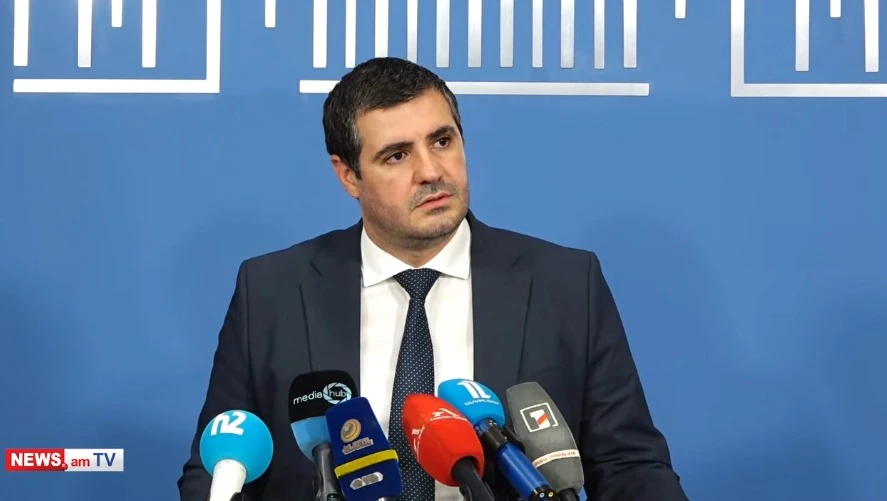
Speaking to journalists, Yegoyan, a member of Armenia’s ruling Civil Contract party, said a customs union should not contain sanctions, tariffs or barriers to trade. NEWS.am reported that he described instruments used to obstruct commerce as damaging not only to Armenia but also to the authority and functionality of the organization itself.
Yegoyan did not specify in the reported remarks what measures were limiting the apricot market, which country or institution had introduced them, or the volume of trade affected. The available report also provided no data on prices, shipments or losses. His argument was therefore directed primarily at the institutional principle: goods moving within a customs union should not face restrictions that undermine the purpose of membership.
Agricultural access linked to the gas market
The lawmaker used apricots as a test of the EAEU’s ability to operate larger integrated markets. “If the apricot market is restricted, how can we talk about the gas market?” he said, according to NEWS.am. The comparison places a seasonal agricultural commodity alongside a strategically important energy product, highlighting the gap Yegoyan sees between formal integration commitments and practical market access.
For producers and traders, the distinction matters. Agricultural goods can be particularly exposed to delays or market-access restrictions because their commercial window is limited. Although the report gives no operational details about the apricot measures, Yegoyan’s statement suggests that barriers involving even one product category can weaken confidence in the predictability of trade across the bloc.
The reference to gas broadens the issue beyond horticulture. An integrated gas market requires participating states to accept common rules and dependable access arrangements. Yegoyan’s position is that confidence in such a market is difficult to sustain if restrictions remain possible in ordinary merchandise trade. NEWS.am did not report any new gas-market measure or negotiation linked directly to his comments.
Armenia’s membership remains unchanged
Yegoyan also said Armenia remains a full member of the EAEU. According to him, the organization has no mechanism for excluding the country unless Armenia itself announces or initiates its withdrawal. The remarks came in response to questions about a Russian statement concerning the need for an appropriate referendum in Armenia, although the report said he did not clarify the Armenian side’s intentions.
He was also asked why Prime Minister Nikol Pashinyan had not raised Yerevan’s concerns at a recent meeting and had instead made statements characterized by the questioner as pointing in the opposite direction. Yegoyan replied that the prime minister did not need to repeat the same position “50 times.” The exchange leaves the government’s next steps unspecified: no formal challenge, timetable, proposed remedy or withdrawal initiative was identified in the report.
For EAEU market participants, the immediate significance lies less in a disclosed policy change than in the public criticism from a lawmaker belonging to Armenia’s governing party. Without details on the apricot restrictions, their commercial impact cannot be quantified. The statement nevertheless puts internal trade barriers, institutional credibility and energy-market integration into the same political debate, leaving producers and traders to watch whether the criticism leads to a documented dispute or concrete negotiations within the bloc.