Argentine beef consumption falls again to a historic low
Per-capita beef consumption in Argentina has dropped to a historic low as weak household purchasing power keeps domestic demand at its floor, according to LM Diario. The industry warns that the El Niño phenomenon could hit cattle-raising areas hard and push prices back up, leaving the chain with rising costs and a consumer unable to absorb them.
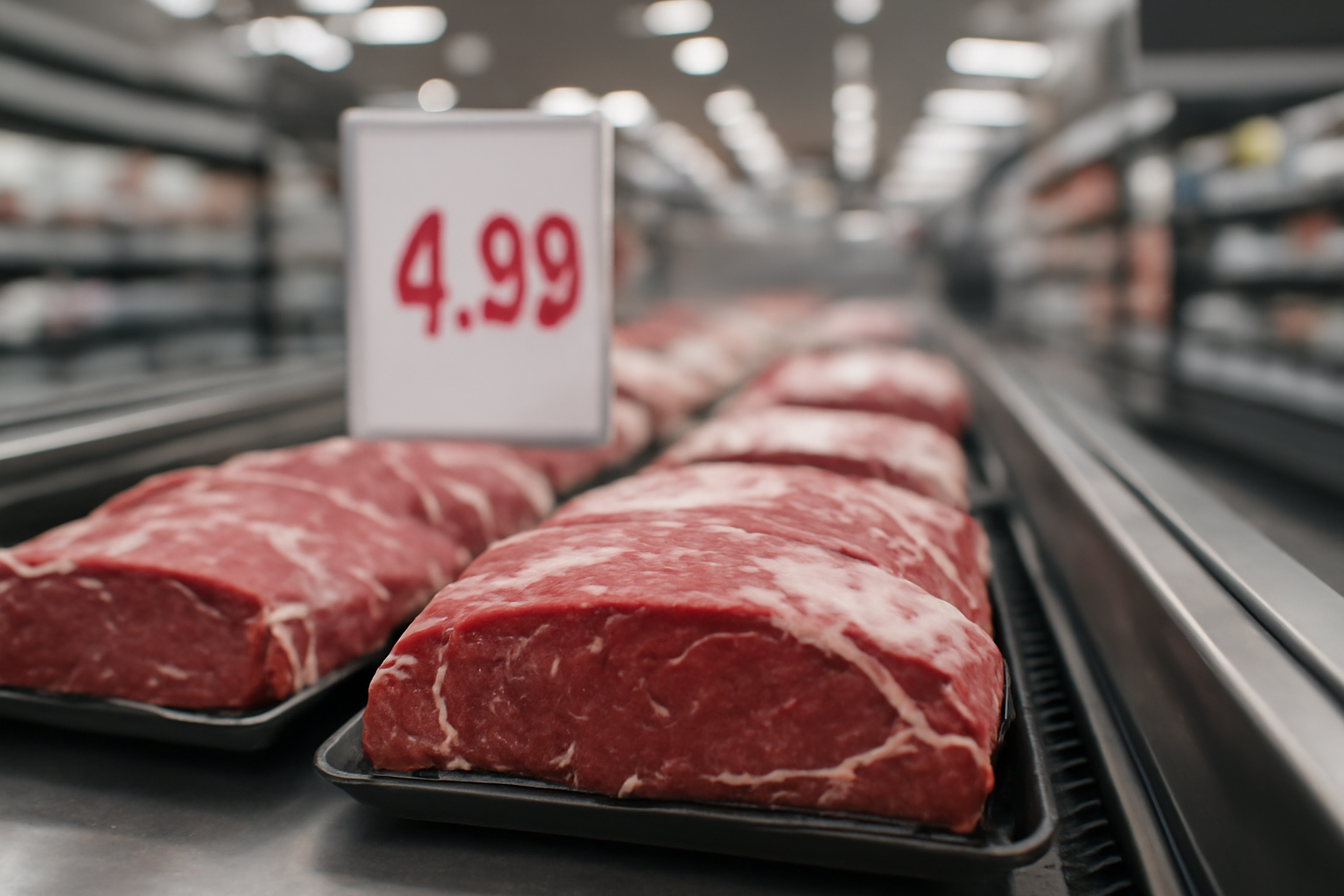
Per-capita beef consumption in Argentina has fallen again and reached a historic low, with weak household purchasing power holding domestic demand at its floor, according to LM Diario.
A demand-side decline
The fall is being driven by the consumer, not by a shortage of animals. LM Diario reports that the internal market is at rock bottom as a result of the loss of purchasing power, a dynamic that keeps eroding beef sales in a country that has long ranked among the world's heaviest beef eaters per head.
For the chain, that distinction matters. When consumption falls because buyers cannot afford the product rather than because meat is unavailable, price cuts have limited traction: volume moves only at levels that compress margins from the feedlot through the abattoir to the butcher counter. Beef is the most expensive of the animal proteins widely sold in Argentina, and it is the first line item households trade down when real incomes shrink.
Substitution is the mechanism. Chicken and pork sit below beef on the shelf, and when budgets tighten the cheaper proteins absorb the volume beef loses. Recovering that volume is slow: habits reset around the new price ratio, and demand does not return automatically when incomes stabilise. That is why a historic low matters beyond a single season, since it sets a lower baseline the chain then has to plan around.
Retailers and processors are left in a market where lower prices do not restore lost volume and higher prices accelerate substitution. That is the practical meaning of a historic low: it changes the mix of cuts that sell, shortens the tolerance for inventory, and pushes the chain toward whatever outlet still pays.
El Nino enters the outlook
The warning carried by LM Diario is that the El Nino phenomenon could hit cattle-raising areas hard and reheat prices. El Nino reshapes rainfall across Argentina's agricultural regions, and the sector's concern is the damage it could do to grazing land and to the condition of herds in the provinces where cattle are raised.
Weather shocks reach the meat counter with a lag. Producers under stress sell animals earlier, which lifts slaughter volumes and holds prices down in the short run, then leaves fewer animals available once the herd needs rebuilding. If that sequence plays out while domestic demand is already at a historic low, the market would face rising prices in front of a consumer base with no capacity to absorb them.
There is also a cost dimension. Adverse weather raises the cost of keeping animals, whether through lost grazing or through greater reliance on purchased feed, and those costs move into live cattle prices before they reach retail. Feedlots and processors buying animals feel it first and carry the difference until the counter absorbs it, which, with demand where it is, is far from guaranteed.
What the trade is watching
- Real household incomes, which set the ceiling on domestic beef demand.
- The development of El Nino and its effect on pastures and herd condition.
- Slaughter volumes, the earliest signal that producers are liquidating rather than holding stock.
- The balance between the domestic market and exports, since Argentina is among the world's significant beef suppliers and weak local demand frees up product for foreign buyers.
For now the pressure is domestic and immediate: consumption at a historic low, a chain working on compressed margins, and a weather risk that the sector itself has flagged as the factor most likely to move prices from here. LM Diario frames the combination as the central issue for Argentine cattle farming heading into the coming season.