Argentina's yerba mate domestic sales rise nearly 10% in August, first annual gain of 2026
Argentine packaging mills shipped 24,502,524 kilograms of yerba mate to the domestic market in August, almost 10 percent more than a year earlier and the first year-on-year increase of 2026. Exports also kept growing, lifting combined sales to 224,106,191 kilograms so far this year. Green leaf deliveries to drying plants, however, fell 8.4 percent over eight months.
Argentina's yerba mate sector posted its first year-on-year increase in domestic sales of 2026 in August, when packaging mills shipped 24,502,524 kilograms to the local market, almost 10 percent more than in the same month of 2025. The figures come from the Instituto Nacional de la Yerba Mate (INYM) and were reported by Clarin.
The August rebound lifted domestic sales for the first eight months to 186,091,018 kilograms, compared with 183,901,843 kilograms a year earlier. The cumulative gain of 2,189,175 kilograms amounts to barely more than 1 percent, a measure of how flat the local market had been through the first seven months of the year.
Exports extend a year-long run
Export volumes have been the steadier part of the business. Argentine ports shipped 38,015,173 kilograms of yerba mate in January-August, an increase of 3,313,867 kilograms over the same period of 2025. August alone accounted for 5,931,135 kilograms, against 5,288,010 kilograms in August of last year, according to INYM data cited by Clarin.
Taken together, the domestic and export markets absorbed 224,106,191 kilograms so far this year, against 218,603,143 kilograms in 2025. That is 5,503,867 kilograms more, or growth of 2.51 percent, with foreign sales contributing more of the additional volume than demand at home.
Half-kilo packs lead, kilo packs gain share
INYM data on formats show how packaged volume is split when it leaves the mills for retail shelves:
- 500-gram packs: 54.07 percent of shipments
- 1-kilogram packs: 40.28 percent
- 2,000-gram packs: 1.77 percent
- 250-gram packs: 0.59 percent
The balance covers other formats and unstamped yerba mate, generally destined for promotional use. A decade ago the half-kilo pack held 58 percent of the market and the kilo pack only 34 percent, so the larger format has taken share while both the 500-gram and the two-kilo presentations have lost ground.
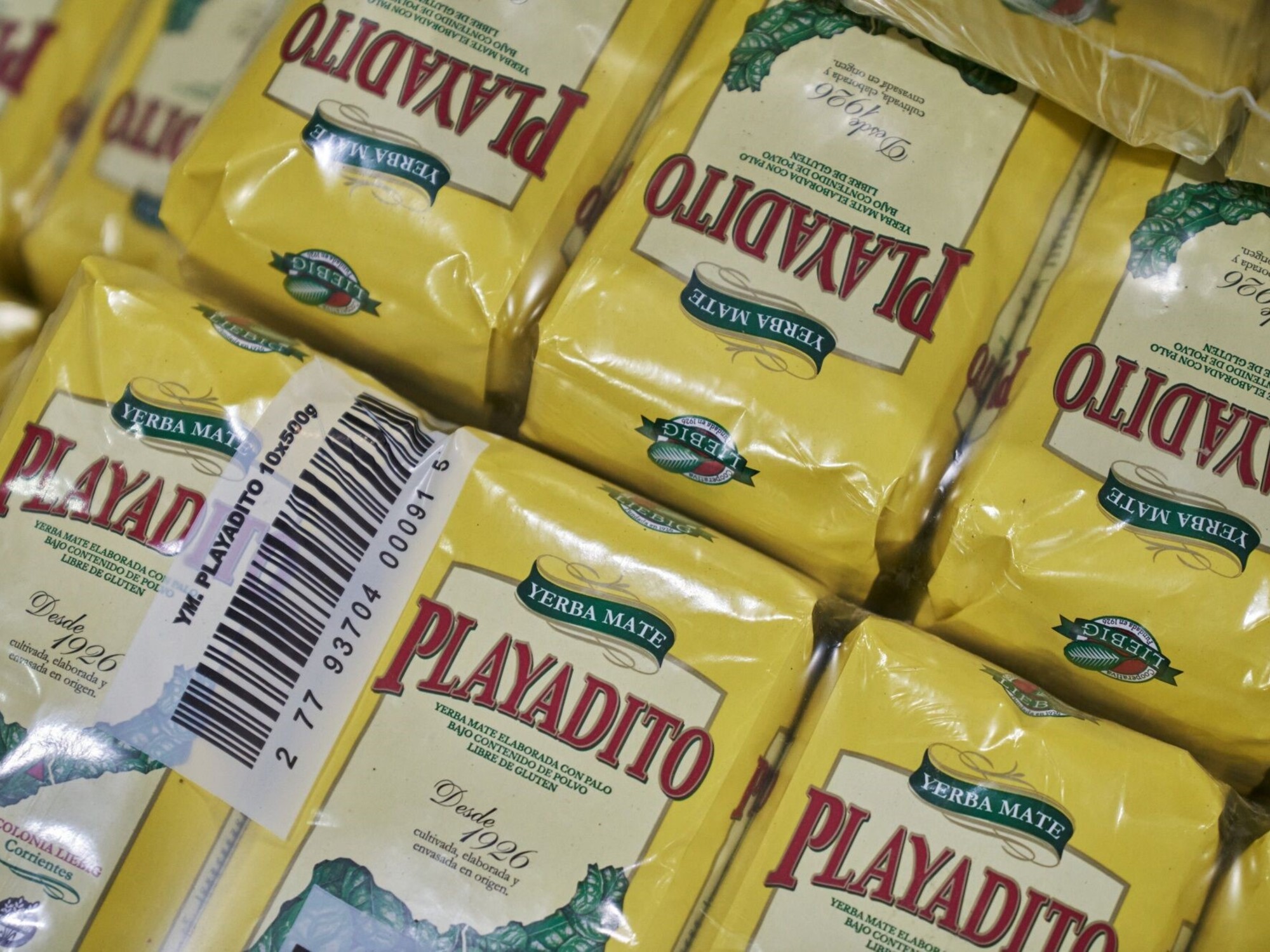
The supplier ranking is led by Cooperativa Agricola Colonia Liebig (Playadito), followed closely by Las Marias (Taragui), Establecimiento Santa Ana (CBSe), La Cachuera (Amanda) and Hrenuk (Rosamonte). Of the 186 million kilograms sold on the domestic market between January and August, those five companies supplied more than 117 million kilograms.
Green leaf harvest heads for one of its worst years
Stronger demand in both markets has not reached primary producers. Green leaf processed at drying plants fell to 138,806,424 kilograms in August, down from 146,593,222 kilograms in August 2025. Over the first eight months, raw material entering the dryers totalled 708,449,317 kilograms against 768,913,709 kilograms a year earlier, a decline of 60,464,392 kilograms, or 8.4 percent. Clarin reports the harvest is on course to be one of the weakest of the past five years.
At an average of 300 pesos per kilogram of green leaf delivered to the drying plant, the smaller harvest kept slightly more than 18 billion pesos out of the producing region's economy. Producer organisations estimate that the activity would need around 700 pesos per kilogram of green leaf to be profitable.
The primary segment remains the only part of the chain still in the red, held back both by the lower harvested volume and by the prices paid by the operations that industrialise the leaf. Mills are therefore entering the final months of the year selling more yerba mate at home and abroad while the raw material base behind those sales continues to contract.