Argentina’s 10 wood-pellet plants seek growth in agricultural processing
Argentina’s wood-pellet producers are targeting dairy, poultry and other heat-intensive agricultural industries as new sources of domestic demand. The country had about 10 production plants identified by 2025 and 1.3 million hectares of forest plantations supporting its biomass supply.
Sawmill residues become an industrial fuel
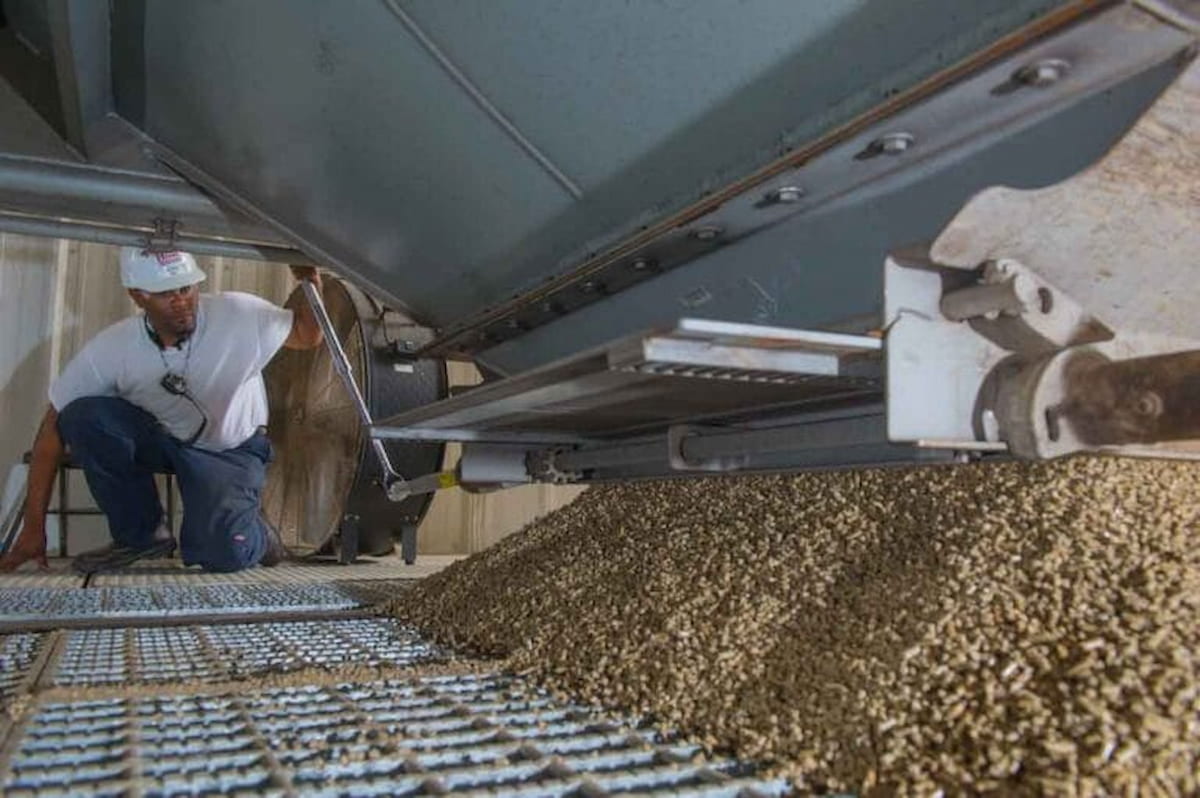
Argentina’s emerging wood-pellet industry is seeking customers in agricultural processing, turning sawdust, shavings and offcuts from sawmills into a standardized fuel for boilers and burners. According to BioEconomia.info, the pellets can generate steam, hot water and hot air for operations ranging from grain drying to meat processing.
The Argentine Forestry Industrial Council, known as CONFIAR, says one kilogram of wood pellets provides energy equivalent to 0.81 liters of liquefied petroleum gas. That comparison is central to the sector’s commercial pitch: agricultural companies that depend on continuous thermal energy could use pellets to reduce their exposure to conventional fuel costs or supply constraints.
Potential users identified by CONFIAR include dairy, poultry, pork and meat processors. Other applications include drying grain, tea and yerba mate, heating production facilities, and controlling temperatures in poultry houses and greenhouses. The opportunity therefore depends less on residential heating than on converting industrial sites with steady and measurable heat demand.
Ten plants supported by Argentina’s forestry base
About 10 pellet plants had been identified in Argentina by 2025, BioEconomia.info reported. Integrated producers include Lipsia, Victoria Maderas/Laharrague Chodorge, Enrique R. Zeni, EUCA-O and Acon Timber, which the publication describes as the country’s largest pellet producer. Several companies hold sustainable forest-management certifications and pellet-specific standards.
Feedstock availability is supported by approximately 1.3 million hectares of forest plantations, around 75% of them concentrated in Mesopotamia. Processing timber from this resource produces residual biomass that can be compacted into pellets, giving sawmills another outlet for material that historically created handling and storage problems.
Modern pellet systems offer automated feeding, remote monitoring and precise operating controls. Pellets also have a uniform shape, low moisture content and stable energy density, characteristics that support longer storage, efficient transport and use in more technically demanding equipment. For industrial buyers, however, these advantages must still be assessed against conversion costs, local fuel prices and the reliability of deliveries.
Domestic scale and export standards
The Argentine push comes as the international pellet market reaches record volumes. Global wood-pellet production rose 10% in 2025 to 53.5 million tonnes, while consumption reached 51.5 million tonnes, according to BioEconomia.info. The European Union produced about 19.5 million tonnes and consumed approximately 22 million tonnes in 2024.
Sweden, Germany and Austria have developed mature supply chains in which pellets compete with natural gas and liquefied petroleum gas in some industrial segments. Their experience gives Argentina two possible growth routes: build domestic demand among processors or meet the quality and certification requirements needed to supply international markets.
Neither route is automatic. Industrial customers compare fuel cost, logistics, security of supply, environmental requirements and equipment compatibility before changing energy systems. CONFIAR’s immediate priority is therefore to connect pellet producers with companies that need process heat. Success would create a market for forestry residues, broaden fuel options for agroindustry and provide Argentina’s existing plants with the demand needed to increase utilization.