Argentine lawmakers seek answers over delayed US access for oranges and mandarins
Two lawmakers from Entre Ríos have asked Argentina’s foreign minister for details on the stalled US approval of fresh Argentine oranges and mandarins. The industry estimates potential shipments at about 20,000 tonnes annually, worth more than US$20 million.
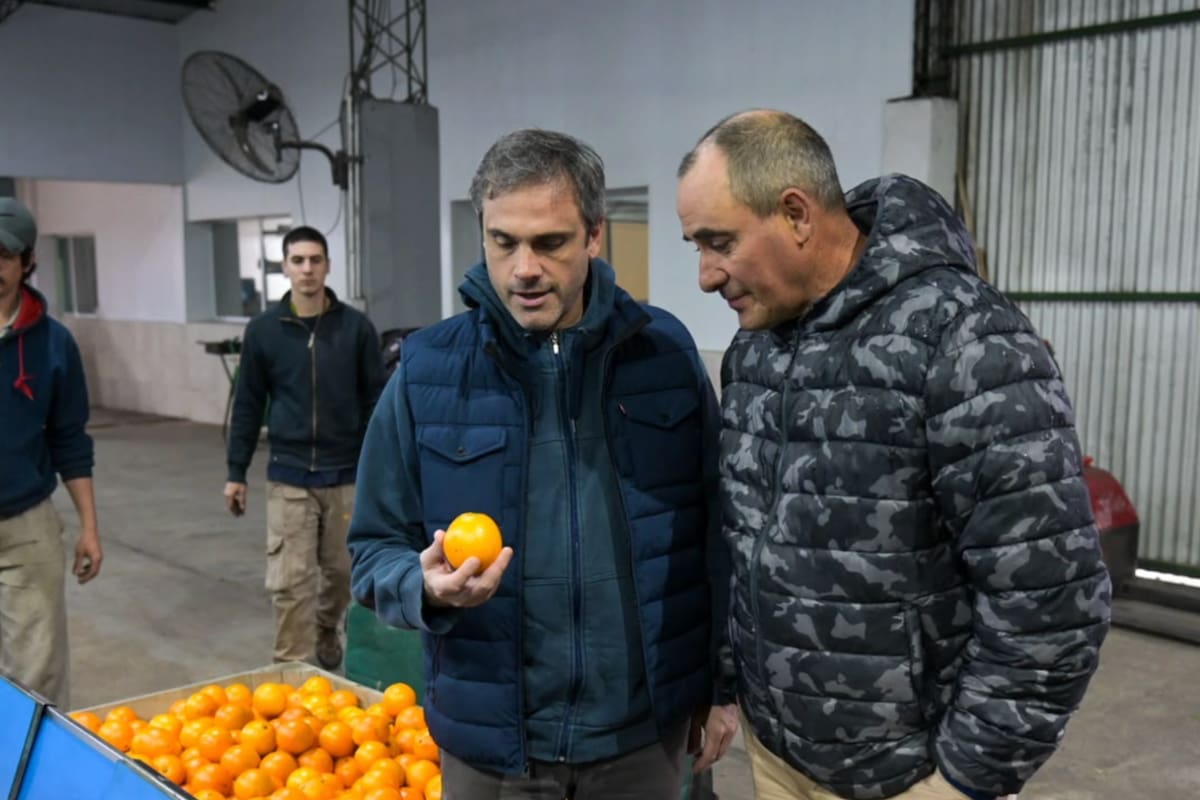
Lawmakers demand an update on market access
Two Argentine lawmakers have asked the government to explain why negotiations to secure access to the United States for fresh oranges and mandarins remain unresolved after more than a decade. National deputy Guillermo Michel and senator Adán Bahl, both Peronist representatives of Entre Ríos province, submitted a formal request to Foreign Minister Pablo Quirno seeking an updated account of the process.
According to La Nación, the lawmakers want the Foreign Ministry to identify the remaining steps on both the Argentine and US sides, disclose the latest exchanges with US plant-health authorities and explain the continued delay in publishing the Pest Risk Analysis. That document must be released for public comment before the approval process can advance toward effective market access.
Technical work completed, publication still pending
The negotiations began in 2008, according to the grounds accompanying Michel’s proposal. The bilateral technical stage involving Argentina’s National Service for Agrifood Health and Quality, known as Senasa, the US Animal and Plant Health Inspection Service and the US Department of Agriculture was completed in August 2019. Publication of the Pest Risk Analysis has remained outstanding since then.
The lawmakers also requested details of official communications received from APHIS and USDA since 2023, including any explanations supplied by US authorities for the delays. They asked what diplomatic, political and technical measures Argentina has taken to unblock the procedure and what specific action is planned with the two US agencies during 2026.
Argentina has also raised the issue multilaterally. Since November 2023, it has presented a Specific Trade Concern at the World Trade Organization’s Committee on Sanitary and Phytosanitary Measures over the delay in US authorization for Argentine sweet citrus. Michel and Bahl now want to know the estimated timetable for publication of the risk analysis and whether the remaining obstacles are technical, administrative or political.
Export opportunity for Entre Ríos
Sector estimates included in the lawmakers’ submission indicate that Argentina could export about 20,000 tonnes of sweet citrus to the United States each year, generating more than US$20 million in annual sales. The opportunity is particularly relevant to Entre Ríos, where citrus production is an important regional industry and access to another major destination could broaden the customer base for growers, packers and exporters.
Seasonality is central to the commercial case. Argentine fruit would enter the United States during the counter-season, meaning that its principal marketing period would not directly coincide with that of domestic US production. The lawmakers argue that this reduces the risk of direct seasonal competition while offering US buyers an additional source of fresh oranges and mandarins.
Bilateral agreement adds political pressure
The request comes after Argentina and the United States signed an Agreement on Reciprocal Trade and Investment in February 2026. The agreement includes objectives to reduce tariff and non-tariff barriers and facilitate commerce. Michel and Bahl contend that implementation has been uneven: Argentina has moved on commitments, while comparable progress on US access for Argentine citrus has not materialized.
Among Argentina’s measures, the lawmakers cited accession to the Patent Cooperation Treaty, changes to approval rules for imported vehicles and simplification of the import regime for used production lines. They asked whether sweet-citrus access was addressed during the bilateral trade negotiations and whether the government still treats it as a priority in relations with Washington. Their intervention increases pressure on the Foreign Ministry to establish whether the remaining delay is a regulatory backlog or a wider trade-policy dispute.