Argentina opens Hanoi attaché office to defend its lead in Vietnam's soybean meal market
Argentina has opened an agro-industrial attaché office in Hanoi, one of only six such posts worldwide, to protect its position as Vietnam's leading soybean meal supplier. Vietnam is now the single largest buyer of Argentine soymeal, ahead of Malaysia and Indonesia, and took $1.6 billion of soy-complex goods in 2025. Argentina's soybean chain earned about $21.44 billion last year, up 9.2%.
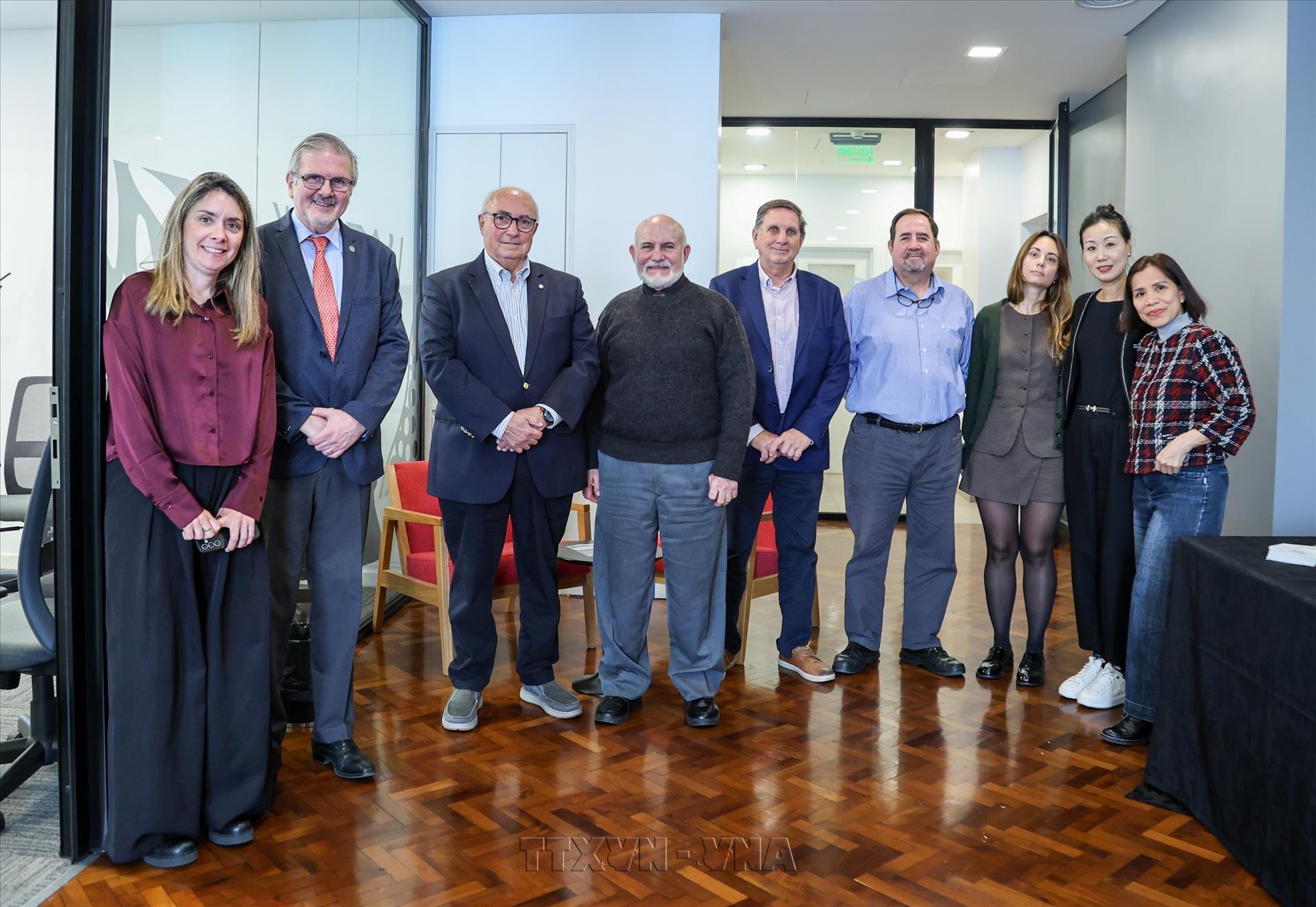
Argentina has set up a dedicated agro-industrial attaché office in Hanoi to protect its position as Vietnam's top supplier of soybean meal and to open the market to a broader range of Argentine farm goods, executives from the country's soybean industry said at a press conference in Buenos Aires on 23 September.
The Vietnam News Agency, reporting from Buenos Aires, said the office was inaugurated in July 2025. Ricardo Marra, president of the Buenos Aires Grain Exchange, said he travelled to Vietnam alongside representatives of Argentina's national agriculture directorate for the opening. Vietnam is one of only six countries worldwide where Argentina has chosen to place a dedicated agricultural representation.
Vietnam tops Argentina's soymeal customer list
Rodolfo Rossi, president of the Argentine Soybean Association (ACSoja), told the briefing that Southeast Asia is emerging as one of the world's major consumption hubs, and that Vietnam now ranks as the single largest importer of Argentine soybean meal, ahead of regional buyers such as Malaysia and Indonesia.
Marra said Vietnam has become the biggest customer for several Argentine farm products, soybean meal and corn in particular. He added that Vietnamese importers follow the market closely, taking daily price quotations directly from the Buenos Aires Grain Exchange. According to Marra, the Hanoi office is intended not only to support the soymeal trade but also to ease shipments of other Argentine goods, including meat.
A $21.44 billion export complex
The soybean value chain was Argentina's largest agricultural export earner in 2025, generating about $21.44 billion, up 9.2% from 2024 and accounting for 24.6% of the country's total goods exports, according to trade data presented at the conference. The breakdown was as follows:
- Soybean meal and cake: $8.57 billion
- Soybean oil: $7.22 billion
- Soybeans: $4.92 billion
- Leading destinations: China $4.79 billion, India $3.72 billion, Vietnam $1.6 billion
Argentina ranks first in the world in soybean oil exports, with a 48.3% global share in 2024, and second in soybean meal behind Brazil, with 21.7%. In raw soybeans it stands only fifth, at 2.3% of global exports — a reflection of an industry built on crushing at home rather than shipping unprocessed beans.
Trade flows shift from Europe to Southeast Asia
Ricardo Bergmann, vice president of ACSoja, said Argentine soybean meal was previously directed mainly at the European market, but new trade agreements and broader global trends have moved the centre of gravity towards Southeast Asia. Vietnam, he said, has become a core customer, buying large volumes to supply its livestock sector and its food industry.
Asked what it means that Vietnam was selected for one of the six offices, Bergmann pointed to the growth and purchasing power of the Southeast Asian economy. Argentina's competitive strength rests on agricultural production — soybeans, corn, wheat and beef — and overseas representations act as a direct bridge between that output and the markets where demand sits, he said.
Rosario to host WSRC12 in April 2027
The same briefing confirmed that Argentina will host the 12th World Soybean Research Conference (WSRC12) in April 2027 in Rosario, one of the country's most important agro-industrial and farm-export centres, known for soybeans, corn, vegetable oils and processed agricultural products. The announcement was made alongside leaders of the Buenos Aires Grain Exchange and ACSoja, with journalists from countries that hold key agricultural ties with Argentina in attendance.
For Vietnamese buyers, the practical effect of the Hanoi office is a permanent point of contact with Argentine suppliers and authorities on the ground, rather than contact routed through third markets. For Argentina, it is an attempt to hold a trade position in a flow that has already moved from Europe to Asia, and to use soybean meal volumes as the entry point for corn, wheat and beef.