Argentina's Alcohol Consumption Falls to Record Low of 15.7 Litres as Vineyard Area Shrinks
Per-capita alcohol consumption in Argentina closed 2025 at 15.7 litres, the lowest level on record, down from 16.3 litres a year earlier and far below the roughly 90 litres of the 1970s. Vineyard area fell to 196,220 hectares and wine exports dropped 6.8% to 1.93 million hectolitres, the weakest volume since 2004. Producers are turning to concentrated must and non-alcoholic wine to absorb surplus grapes and reach new buyers.
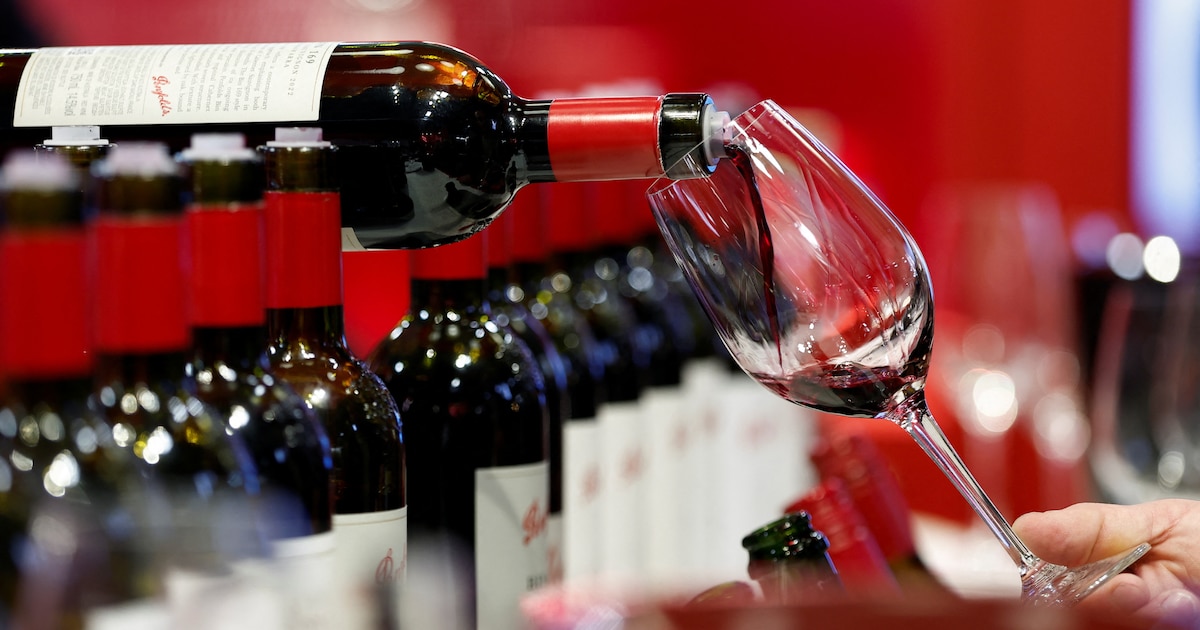
Alcohol consumption in Argentina closed 2025 at 15.7 litres per capita, the lowest level on record, down from 16.3 litres a year earlier, according to Infobae. The gap with earlier decades is far wider: during the 1970s the average stood at around 90 litres per person a year.
Infobae reports that the trend is not driven solely by Argentina's economic situation. In several markets worldwide, and particularly among younger consumers, alcohol has lost part of the place it held in social life and now competes with alternatives linked to wellness, exercise and other forms of recreational consumption.
For Alejandro Vigil, an oenologist and agricultural engineer, that cultural shift is the deepest component of a crisis that also has economic drivers. “I think it is a perfect storm where certain economic conditions in the world, and not only our own, come together with a change in habits, which is the fundamental and the deep part,” he said on the programme Infobae a la Tarde.
The retreat has also changed how wine is bought and drunk. Vigil said those who still drink tend to do so less often but devote a larger share of their budget to quality products. “People are drinking less, so the outlay is higher when they do drink. They have moved to the high-end segments, and that is what we are seeing in the global trend,” he said.
Younger consumers are one of the main drivers. New generations have been cutting alcohol intake for more than a decade and now show lower levels than middle-aged and older adults. Among those who still drink, beer ranks first and wine has been displaced by other beverages, while health, physical activity and lifestyle increasingly shape the relationship with alcohol. Vigil questioned the idea that young people have stopped drinking wine — “There is no clear evidence,” he said, adding that he sees young people gathering to drink good-quality wine in moderation. He also flagged the growth of cannabis as a recreational alternative the wine industry needs to watch.
Planted area and exports keep shrinking
The shift in demand has stopped being a purely commercial discussion and is now reshaping the production base. Argentina's vineyard area closed 2025 at 196,220 hectares, 3,726 fewer than the previous year and 12.4% below the level of a decade earlier. Mendoza lost 17,903 hectares over that period and San Juan a further 8,830; together the two provinces hold more than 90% of the country's planted area.
- Around 1,100 vineyards have closed in the past ten years.
- Wine exports reached 1.93 million hectolitres in 2025, down 6.8% year on year and the lowest volume since 2004.
- The 2026 harvest brought no relief: Mendoza recorded a fall of close to 9%, with late frosts and hail causing losses of up to 40% in some southern areas of the province, while San Juan was an exception with a rise of about 3%.
CONINAGRO's regional economies indicator has kept the sector in the red category for 41 consecutive months, from January 2023 to June 2026 — the longest stretch in that condition for any regional economy since the series began.
An oversupply shared with other producers
The problem is not exclusively Argentine. The world's main producing regions are facing the same combination of weaker demand, excess supply and lost profitability, to the point that some countries have begun paying growers to remove vines. France and Spain allocated funds for vineyard grubbing-up, while Italy, Australia and the United States also cut planted area. California, which accounts for around 80% of US wine production, removed close to 7% of its planted area during 2025, and more than half a million tonnes of grapes were left unpicked: with demand falling, some growers found it cheaper to leave the fruit on the vine than to cover harvesting costs.
The Californian case also shows how long changes in taste take to reach production. In 2004 the film Sideways, starring Paul Giamatti, helped popularise pinot noir in the United States while mocking merlot. Sales of pinot noir rose, growers expanded plantings and merlot demand fell. Two decades later, part of that area is meeting a different market — a reminder that a planting decision can take years to bear fruit while consumer preferences move much faster than a vineyard.
Searching for new outlets
Argentina now faces the question of what to do with hectares that no longer pay. While other countries have advanced with grubbing-up programmes, there is resistance within the local industry to treating vine removal as a sufficient answer, because the problem is not limited to volume and is also tied to the decline of international markets. One alternative is to divert part of the crop to concentrated must, a market where San Juan has long experience and currently sends around 60% of its grapes. That absorbs part of the surplus without solving the underlying challenge of finding profitable destinations for output designed over decades for a higher-consumption market.
Changing habits have also opened space for products that were marginal until recently. Non-alcoholic wine is one of them, and Vigil said Catena has been working on several lines for about two years in a segment he described as growing. The figure that caught his attention concerns the buyer profile: “More than 70% of the people who drink this beverage have never drunk wine.” For the sector that is a different opportunity from winning back traditional consumers. Vigil argued that alcohol no longer competes only with other drinks but with products and experiences that occupy the same share of leisure budgets, and that the industry must understand that competition to adapt to a consumer who drinks less but may pay more when they do.