Ambon Food Processors Sell Sago Noodles and Tuna Products Abroad
Two small food businesses in Ambon, the capital of Indonesia's Maluku province, have found buyers outside the country for locally processed goods, according to the regional edition of Kompas.com. Mi Sehat Cempaka makes noodles from sago, while Salt and Light works with tuna. No volumes, destination markets or contract values have been published.
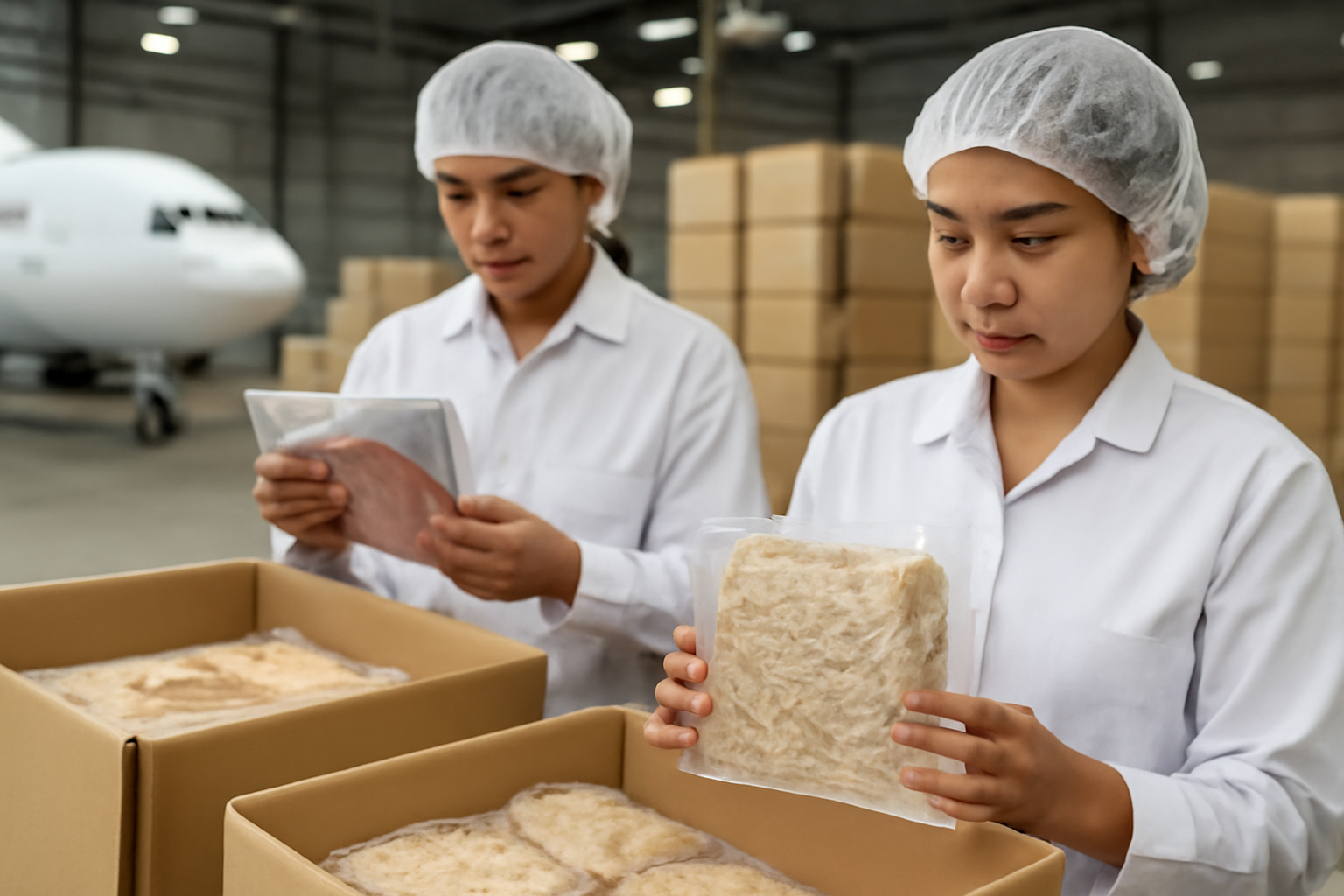
Two small food processors from Ambon, the capital of Indonesia's Maluku province, have found buyers outside the country for locally made products, the regional edition of Kompas.com reported. One is Mi Sehat Cempaka, which produces noodles from sago; the other is Salt and Light, which works with tuna.
Both sit at the same point in the value chain. Sago starch and tuna are widely traded in unprocessed form, and in these two cases the raw material is turned into a packaged consumer product in Ambon before it leaves the province. Kompas.com describes the two enterprises as having reached global markets, but publishes no volumes, destination countries or contract values.
Sago noodles and tuna in packaged form
Sago is a starch extracted from the pith of the sago palm and a long-standing staple in Maluku. In bulk form it competes with cassava, maize and potato starch, a segment where price is set by large-volume suppliers and the primary producer captures little of the final retail value. Turning it into packaged noodles changes the product being sold: instead of an agricultural raw material, it becomes a branded good with a label, a shelf life and a retail price.
Tuna follows the same logic. Fresh and frozen tuna is a commodity priced on international benchmarks and graded by buyers abroad. Processed tuna, once it is cooked, seasoned, packed and made shelf-stable, is sold on brand, format and consistency instead. Salt and Light operates in the second category, which is where processing margin and repeat retail demand sit.
- Mi Sehat Cempaka: noodles processed from sago, according to Kompas.com.
- Salt and Light: products based on tuna, according to Kompas.com.
Why certification decides the outcome
For a micro or small enterprise, the technical requirements for selling food abroad are usually the binding constraint rather than production capacity. Buyers in most import markets require documented food-safety systems, labelling in the destination language, declared allergen and nutritional information, and, for fish products, traceability back to the vessel or landing site. Tuna is the more demanding of the two products, because cold-chain control, histamine limits and origin documentation are costly for a small processor to maintain without outside support.
Sago noodles carry a lighter compliance load. They contain no wheat and therefore no gluten, which places them in a retail category that importers in Europe, North America and the Gulf stock separately and price above standard wheat pasta. The commercial question is whether that positioning can be held once order sizes grow and buyers begin to compare the product against established gluten-free brands.
Routes to foreign buyers for enterprises of this size are generally indirect. They run through trade fairs and buyer-matching events, consolidators that combine small consignments into a single shipment, diaspora retail channels, and online marketplaces that handle customs documentation on the seller's behalf. Each route trades margin for access: the consolidator or platform takes a share, but the producer avoids the fixed cost of building an export desk.
What the report does not disclose
The Kompas.com account identifies the two companies and their raw materials but gives no export volumes, buyer countries, prices or shipment frequency. Those figures determine whether the businesses are running trial consignments or standing supply arrangements, a distinction that matters for anyone assessing Maluku as a sourcing origin for processed sago and fish products.
For other processors in the province, the relevant signal is procedural. The paperwork, packaging and certification needed to place Maluku-made food with foreign buyers has been completed at micro-enterprise scale. That lowers the perceived risk for the next applicant, even without published trade figures to measure the effect.